


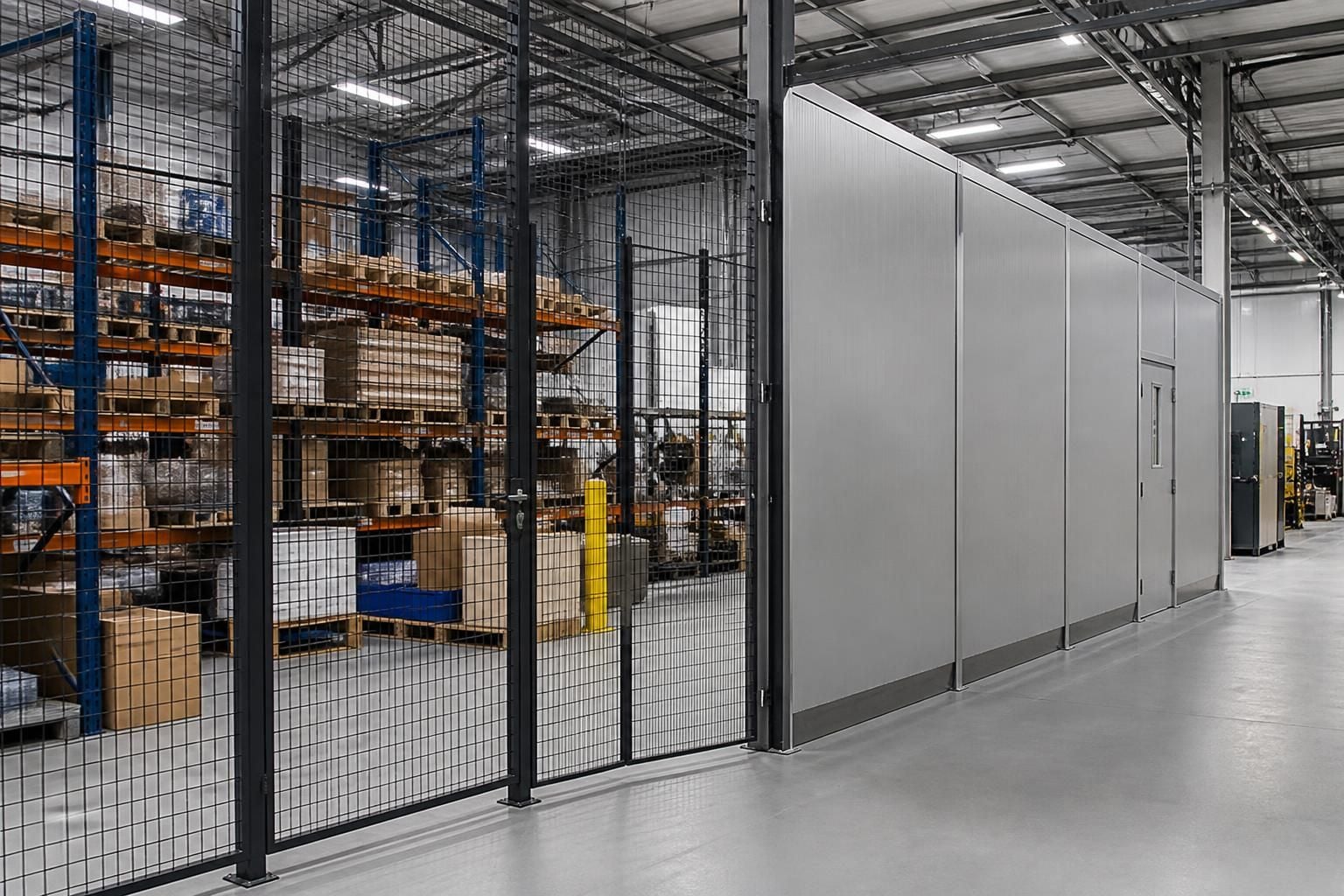
Should you choose mesh or solid industrial partitioning?
Mesh industrial partitioning suits sites needing visibility and access to stored stock, while solid industrial partitioning provides a more enclosed barrier for privacy, segregation or protection. Choose between them by assessing security, workflow, lighting, ventilation and installation requirements.
Mesh is usually the better choice for supervised storage zones, while solid partitioning suits areas needing stronger visual and physical separation. The right industrial partitioning system depends on what the enclosure must control, how people work around it, and what the building services require.
Choose mesh when observation matters. Mesh panels let people see stock, activities and occupied areas without opening the enclosure. This can support supervision and make stock locations easier to identify. Light and air can also pass through the panel structure, subject to the surrounding layout.
Mesh can suit warehouse cages, controlled storage areas and sections requiring a clear view from nearby workstations. It does not create a continuous visual barrier, so it may not suit confidential work, visually sensitive stock or areas requiring greater separation.
Choose solid panels when enclosure matters. Solid industrial partitioning blocks direct sightlines and creates a more defined boundary between areas. It can suit private workspaces, restricted sections and zones where visual separation supports safer working arrangements.
A solid panel does not automatically provide complete security. Doors, locks, access points, panel strength and the surrounding structure all affect the finished arrangement. Specify these elements together rather than judging the panel material alone.
Compare the two options against these practical requirements:
- Supervision: Mesh supports visual checks across the enclosure. Solid panels require planned access points or viewing arrangements.
- Privacy: Solid panels provide stronger visual separation. Mesh remains visible from surrounding areas.
- Lighting: Mesh allows existing light to reach more of the enclosed area. Solid panels may require separate lighting considerations.
- Air movement: Mesh does not form a continuous surface. Solid panels may affect airflow and should be assessed alongside ventilation requirements.
- Stock protection: Both systems can define a controlled area. The panel choice should match the stock, access arrangements and risks identified during planning.
- Workplace separation: Solid partitioning gives a clearer divide between operational areas. Mesh can maintain awareness between adjoining activities.
- Appearance: Solid panels create a more enclosed finish. Mesh keeps the installation visually open across the site.
Consider the work around the partition. Forklift routes, pedestrian paths, doors and handling points must remain usable after installation. A panel choice that appears suitable on plan can create problems if openings, clearances or turning movements receive too little attention.
Review the position of pallet racking, shelving, machinery, desks and stored materials before selecting the panel type. The partition should support the planned arrangement without forcing unsafe access or unnecessary movement around the enclosure.
Do not assume the panel type determines every performance requirement. The complete specification may include framing, doors, locks, kick plates, protection measures and service openings. Fire, ventilation, lighting and escape requirements also need consideration where they apply to the building and its use.
Mesh and solid panels can both form part of a wider industrial partitioning plan. A site may use mesh beside active storage and solid panels around offices or restricted work areas. Combining panel types can avoid applying one finish everywhere when different zones have different requirements.
Cost needs a like-for-like comparison. Panel material is only one quotation factor. Doors, access controls, framing, service alterations, protection and installation conditions can change the overall price. A lower initial figure may not represent the better choice if it creates extra lighting, ventilation or access work later.
Ask for the quotation to identify the panel type, dimensions, openings, access equipment and any work affecting the existing building. This makes mesh and solid industrial partitioning easier to compare on the same basis.
Our process starts with the site and its use. A no-obligation consultation may include a site meeting and survey. We can then prepare written proposals and working drawings showing the planned partitioning arrangement.
Those drawings allow you to review visibility, separation, access, service routes and surrounding storage before installation begins. Where required, we can also provide project management from proposal and tender stages through installation and final commissioning.
For a warehouse or office in the West Midlands, select mesh when oversight and openness support the operation. Select solid panels when privacy, enclosure and clear separation carry greater importance. If both needs exist, a surveyed combination may provide the more practical arrangement.
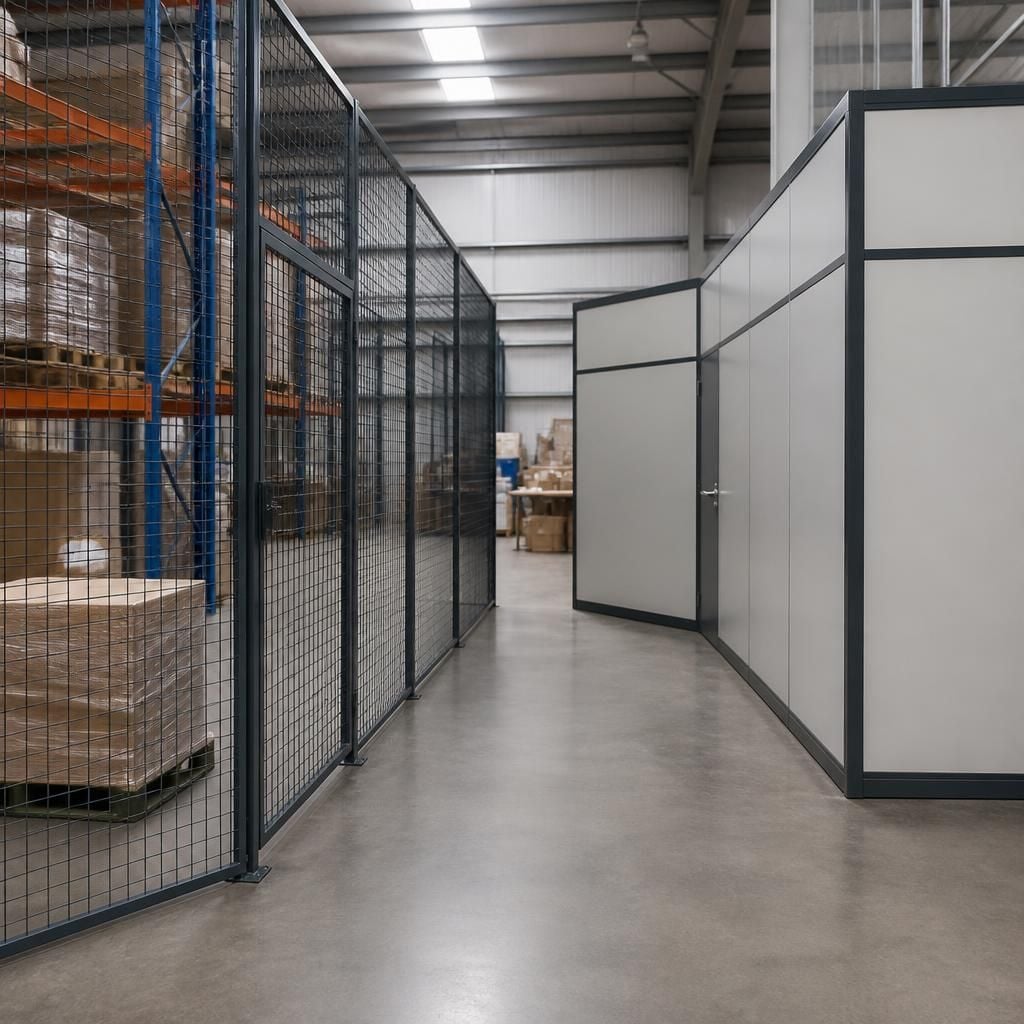
Industrial partitioning should be judged from the working position, not only from the floor plan. Stand where supervisors, operators and visitors normally approach the enclosure. If they need to check activity or identify stock without entering, mesh may support that view. If sightlines create distraction or expose sensitive work, solid panels may provide clearer separation.
Mark these viewpoints on the drawing before the panel type is confirmed. This simple check can reveal where a solid section needs a viewing arrangement, or where mesh would leave too much of the enclosure visible.
Discuss Mesh or Solid Industrial Partitioning
Discuss mesh or solid industrial partitioning with us through a no-obligation consultation, including a site meeting and survey where required. We can then prepare written proposals and working drawings for you to compare the enclosure against access, visibility and separation requirements.



