


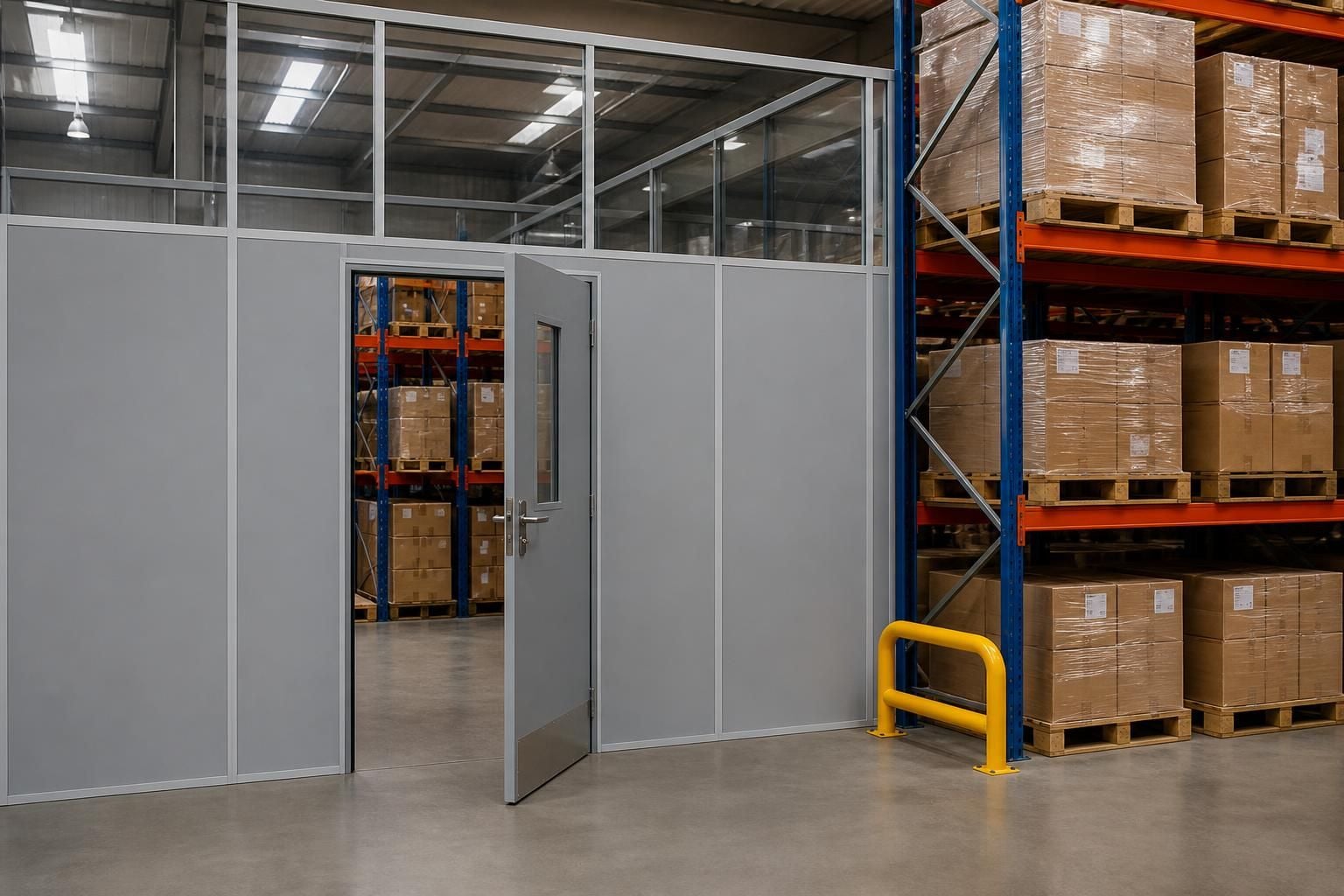
How do industrial partitioning systems affect access to stored stock?
Industrial partitioning systems affect access to stored stock by defining routes, controlling entry points and separating stock from working areas. The right layout preserves movement for picking and replenishment while supporting security and existing workflow.
Industrial partitioning systems affect stock access by changing how people and handling equipment reach each storage zone. A well-planned arrangement preserves practical access while restricting unnecessary movement. Poor positioning can add travel, turning and handling constraints.
The main access considerations are the location, size and operation of each opening. Doors must suit the stock, equipment and movement pattern. A pedestrian door may serve staff access, while pallet trucks or forklifts need suitable clearances and turning space. Door swings must not obstruct aisles, working areas or stored goods.
- Opening position: Place access points where they support picking, replenishment and stock checks without forcing avoidable detours.
- Clear width: Allow enough room for the largest item and handling equipment using the area.
- Door operation: Consider sliding or hinged arrangements according to available space and traffic movement.
- Access frequency: Stock requiring regular handling should not sit behind an opening that is inconvenient to use.
- Visibility: Mesh sections, windows or viewing panels can support visual checks without requiring entry for every inspection.
Partitioning can also separate stored stock from production, packing or office activity. This reduces incidental contact with stock, but the division must not make routine handling awkward. The layout should distinguish pedestrian movement from vehicle movement and leave usable working space beside storage.
Stock dimensions and storage equipment matter as much as the partition itself. Long items, awkward loads and palletised goods may need more approach space than cartons or boxed components. Existing pallet racking, shelving and workstations should therefore be considered together with the partition line.
Access needs can change during the working life of a site. New product lines, altered picking methods or increased stock levels may make an existing opening unsuitable. Before installation, consider likely changes to stock, equipment and workflow rather than assessing access only against today’s arrangement.
Our consultation may include a site meeting and survey to review these conditions. We can then prepare written proposals and working drawings showing the proposed partitioning arrangement, openings and relationship with the surrounding workspace.
Working drawings give you an opportunity to examine access before work begins. Check that they show door positions, clearances, storage faces, pedestrian movement and handling equipment routes. They should also identify any area where a partition could restrict replenishment or stock removal.
For projects requiring several stages, project management may run from proposal and tender through installation and final commissioning. This gives the access arrangements a defined place within the wider project rather than treating partitioning as an isolated addition.
The right arrangement is therefore the one that protects separation without creating a barrier to ordinary stock handling. A site survey and clear drawings provide the basis for judging access against the loads, equipment and workflow at the premises.
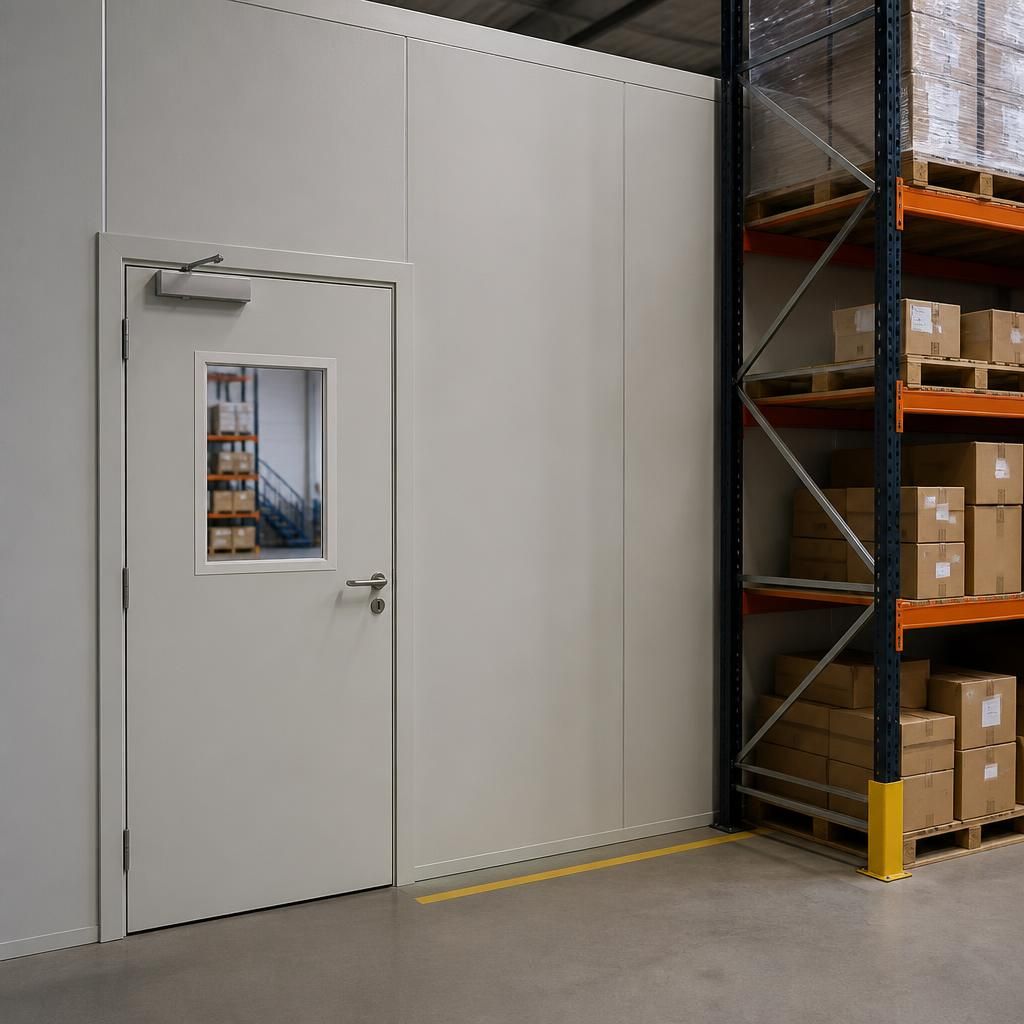
Industrial partitioning systems can make stock access more deliberate by separating routine handling from occasional inspection or maintenance. This helps you distinguish regular users from people who need temporary entry.
Define access levels around the work carried out in each area. Staff picking stock may need frequent entry, while visitors or office personnel may require controlled access. Keep these arrangements practical, so access controls do not encourage staff to leave doors unsecured.
Review the arrangement when stock roles, staffing or operating methods change. A partition should support orderly access without turning essential stock movement into an avoidable interruption.



