Can industrial partitioning be relocated when workplace requirements change?
Industrial partitioning may be relocated, depending on the existing system, its fixings and the revised workplace requirements.
We can assess the layout through a site survey, then prepare written proposals and working drawings for the proposed changes.
Industrial partitioning can often be relocated when it uses demountable panels, frames and mechanical fixings. A fixed masonry arrangement or damaged system may offer fewer reuse options.
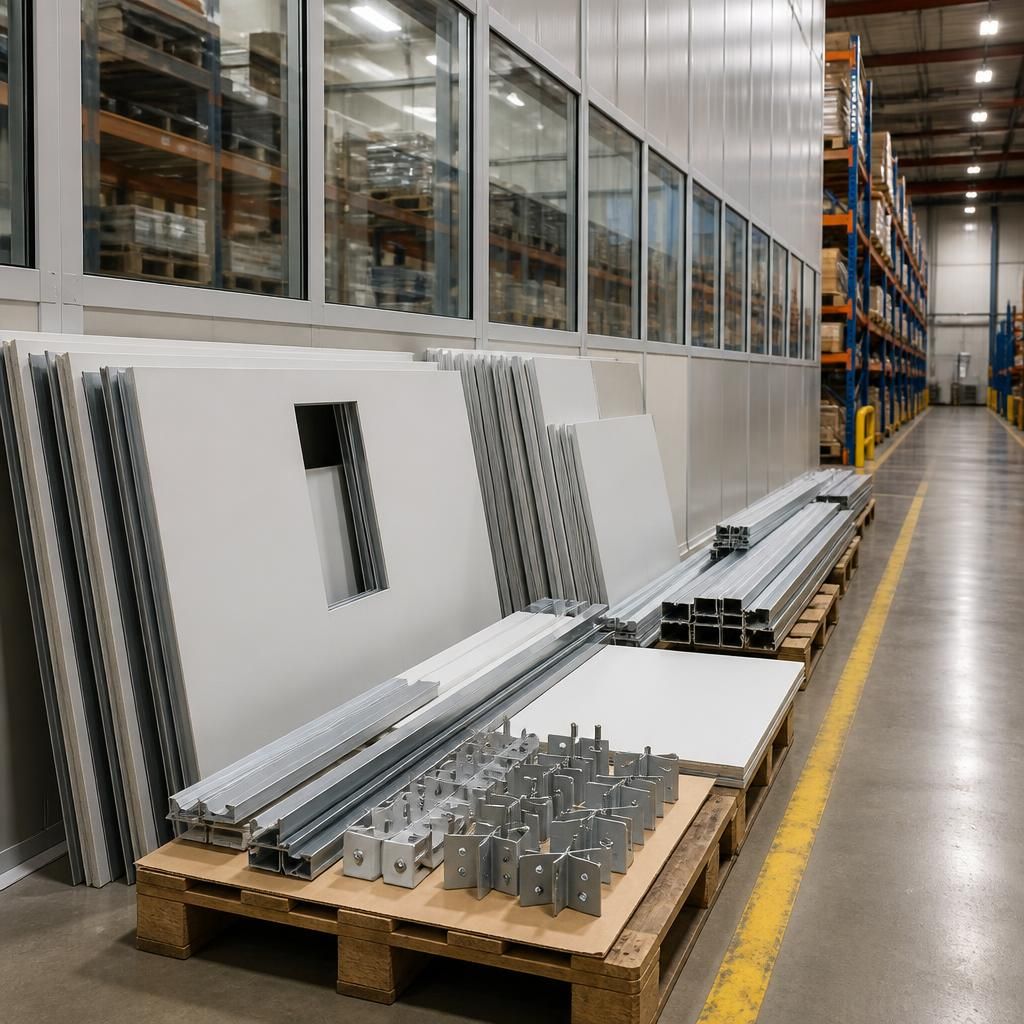
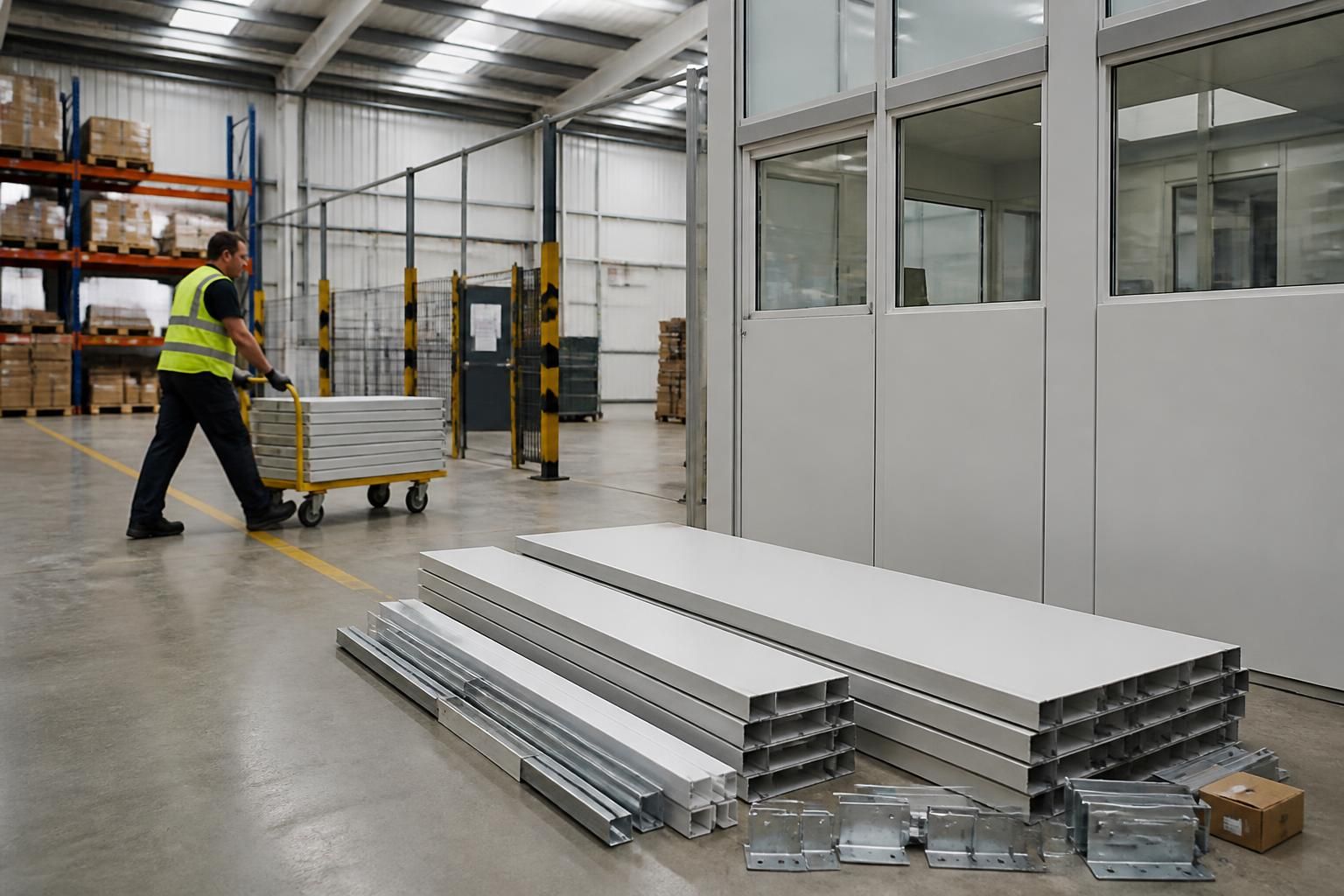
Relocation usually involves dismantling the existing partitioning, checking the components, and reassembling suitable sections in a revised position. This can support changing storage zones, production areas, offices or controlled workspaces without removing every existing component.
What determines whether relocation is practical?
- System construction: Modular panels and framed systems are generally easier to dismantle and reconfigure than permanently bonded or built-in structures.
- Component condition: Panels, posts, doors, screens and fixings need checking before reuse. Damage, distortion or missing parts may limit the revised arrangement.
- New dimensions: A different room size may require additional panels, trims, corners or door sections. Existing components may not cover the full revised footprint.
- Floor and ceiling conditions: The new position must provide suitable points for fixing and alignment. Previous fixing points may also need consideration after dismantling.
- Access requirements: Door positions, walkways, stock movement and equipment access can all change when the partitioning moves.
- Services and fittings: Lighting, power, ventilation, data connections and other services may need repositioning where they interact with the partitioning.
Relocating a partition can change the way people, materials and equipment move through the workplace. Check the proposed arrangement against picking routes, production flow, supervision and emergency access before work begins.
Safety requirements also need reviewing when the partition forms a boundary between different activities. Changes to room use, access points or construction may affect the requirements considered for the original installation.
Can all the existing partitioning be reused?
Not necessarily. Some sections may suit the new arrangement, while other parts may need replacement or extension. Reuse depends on the system, its condition and the dimensions of the revised area.
Where the new arrangement differs significantly, combining existing sections with new industrial partitioning can provide a more suitable result. This avoids assuming that every original component will fit the changed workplace.
When is relocation less suitable?
- The system has been damaged or altered substantially.
- The new position cannot support the required fixings.
- The revised room requires different doors, heights or access arrangements.
- Services cannot be moved without affecting the intended use.
- The proposed change would reduce safe movement or usable working space.
For West Midlands businesses, we can consider these points as part of a planned partitioning change. The aim is to establish which components can move, which require replacement, and how the revised arrangement should support the workplace.
Industrial partitioning relocation should end with a check against the revised workplace plan. The completed arrangement can be reviewed against the agreed drawings, room use and access requirements before the area returns to service.
Where required, we can coordinate the work from installation through final commissioning. This provides a clear point to identify outstanding adjustments, such as repositioned doors, incomplete boundaries or changes needed for the revised layout.