


How does cantilever racking differ from pallet racking?
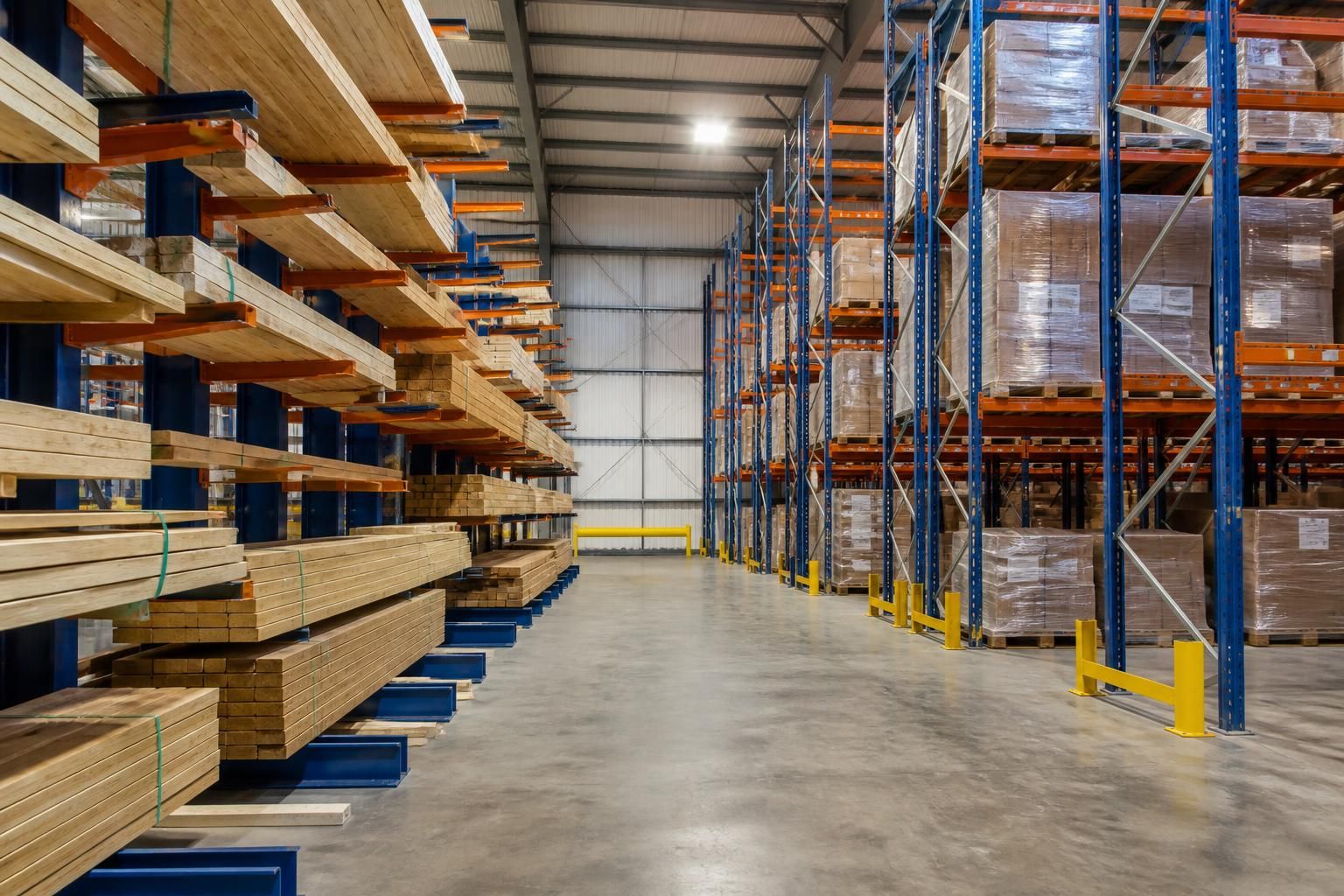
Cantilever racking is designed for long, bulky or irregular items such as timber, pipes and metal sections, using arms that project from upright columns. Pallet racking uses horizontal beams between upright frames to store palletised goods, so the main difference is the type of load and how it is supported and accessed.
The practical difference between cantilever and pallet racking is how the storage structure accommodates the goods, how those goods are loaded, and how the available floor and vertical space can be organised. Cantilever systems are generally assessed for loose, lengthy or unevenly shaped stock, while pallet racking is planned around pallet dimensions, access equipment and repeatable storage positions.
How the structures are used
Cantilever racking has vertical columns with projecting storage levels. Because the front of each level is unobstructed, items can be placed onto or removed from the arms without working around a front beam. This is useful where the stored product is longer than a conventional pallet or cannot be easily enclosed within a rectangular bay.
Pallet racking creates bays with defined beam levels. Pallets are positioned within these bays, normally using a forklift or other mechanical handling equipment. The system therefore provides a regular grid of storage locations, making it easier to allocate stock to particular levels and plan the movement of standardised loads.
Load type and storage discipline
- Cantilever racking: suitable for products such as lengths of timber, pipes, metal sections, boards and other goods whose size, shape or length makes ordinary pallet positions unsuitable.
- Pallet racking: suitable for boxed, wrapped or containerised goods placed on pallets, particularly where many similar load units need to be stored in organised locations.
- Mixed stock: a warehouse may need both systems if it handles palletised goods alongside long or irregular materials. Choosing one system for every product can create inefficient locations or make loading more difficult.
The product itself is not the only consideration. Cantilever arms must be selected and arranged around the length, weight and balance of the materials. Pallet-racking beams and frames must be planned around pallet size, load weight, the number of levels and the equipment used to access them. Loads should not be allowed to project beyond the intended storage area or be placed in a way that makes them unstable.
Access and day-to-day operation
Cantilever racking can make long materials visible and accessible from the aisle, but the aisle must allow enough room for the chosen handling method and the length of the goods being moved. Operators also need a controlled method for lifting and supporting items so that one end does not swing, slide or become unsupported.
Pallet racking is usually organised around forklift aisles and marked storage locations. Its repeatable bay arrangement can support stock rotation, picking routines and inventory control, but the design must allow the handling equipment to approach each pallet safely. Beam heights, aisle widths and clearances should be considered together rather than selected separately.
Space and layout considerations
Cantilever is often more adaptable for long products because the storage length can be arranged along the arms rather than forcing each item into a pallet-sized compartment. The design still needs sufficient aisle space, end clearance and protection against contact with vehicles or moving stock.
Pallet racking makes efficient use of vertical space where the building height, floor loading, access equipment and pallet handling process allow it. Its regular bays can be incorporated into a wider warehouse layout, although the resulting aisle pattern may be less suitable for unusually long materials.
Neither system should be selected from a product description alone. The building layout, floor condition, stock characteristics, handling equipment, circulation routes and future storage requirements all affect the appropriate arrangement.
Safety and inspection points
Both systems require a design that reflects the intended loads and operating conditions. Important considerations include:
- the weight, dimensions and distribution of the stored goods;
- the number and position of storage levels;
- the stability of the structure and its connection to the floor where required;
- clearances for forklifts, lifting equipment and people;
- protection from vehicle impact in exposed areas;
- safe loading and unloading procedures; and
- ongoing checks for damage, distortion, missing components or overloading.
Racking should be used in accordance with its intended design and kept under review when stock, vehicles or warehouse processes change. A system designed for one type of load may not remain suitable if heavier materials, different pallets or alternative handling equipment are introduced.
How to decide between them
Cantilever is generally the better starting point when the main challenge is storing long, awkward or individually handled materials. Pallet racking is generally the better starting point when stock arrives on pallets and the operation depends on defined locations and mechanical access. Where both product groups are significant, separating them into purpose-designed zones can provide a clearer and safer layout than adapting one system beyond its intended use.
A suitable design begins with a review of the stock and the premises. Spartan Direct’s consultation may include a site meeting and survey, followed by a written proposal and working drawings. Where required, project management can continue from proposal and tender stages through installation and final commissioning. This allows the choice between cantilever and pallet racking to be considered alongside the building, workflow and handling arrangements rather than in isolation.
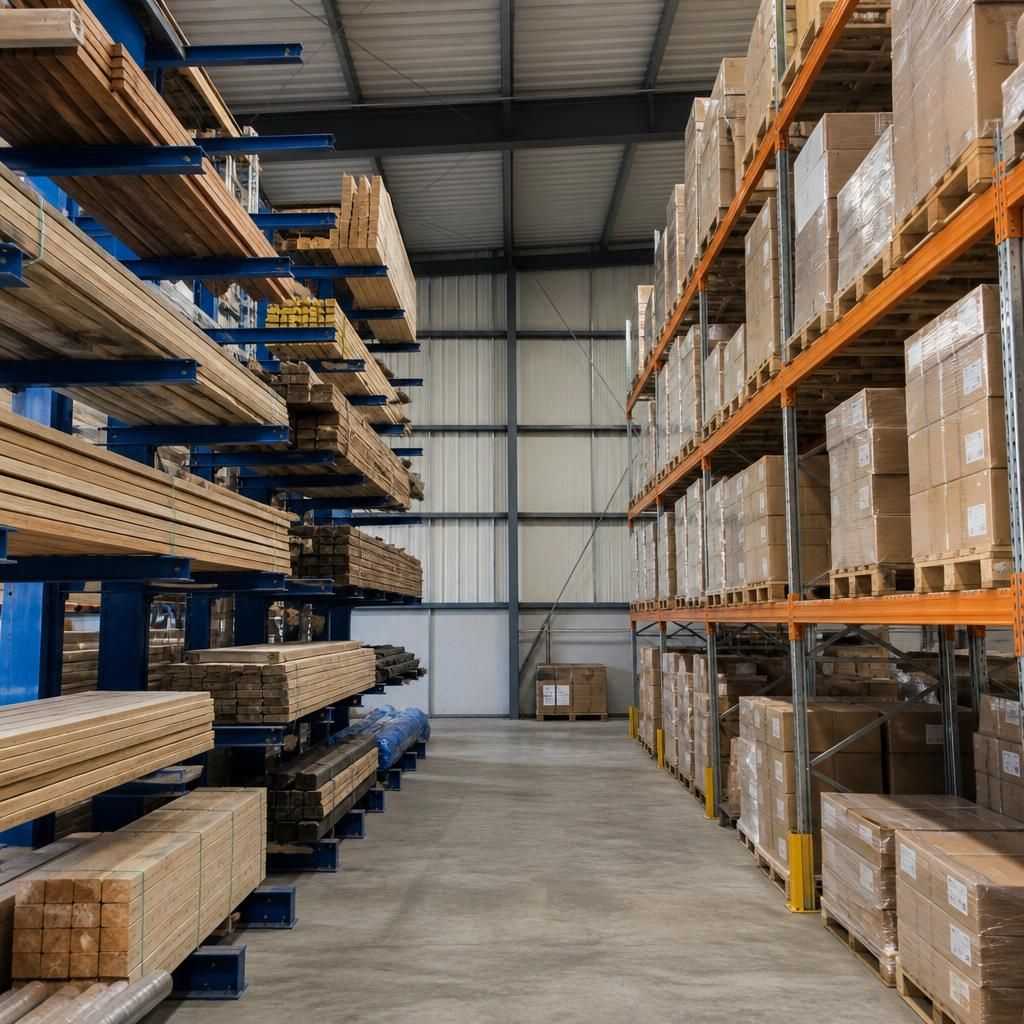
The main operational difference is how stock is grouped for retrieval. Cantilever racking is commonly arranged by material length, profile or bundle, so similar long products can be kept together without dividing them into individual pallet bays. Pallet racking is more often organised by pallet location, product code or stock rotation requirements, with each position assigned to a defined load unit.
This distinction matters when planning labels, picking routes and replenishment. A business handling both product types may use separate storage zones and procedures, rather than treating cantilever arms as an alternative form of pallet bay or placing long materials across pallet-racking beams. The layout should reflect how goods are identified, moved and returned to storage in daily operation.
Discuss Your Cantilever or Pallet Racking Requirements
Discuss your cantilever or pallet racking requirements with Spartan Direct to explore the most suitable storage approach for your operation. Request a no-obligation consultation to begin reviewing your stock, handling arrangements and available space.



