



What support layout suits steel coil storage?
Steel coil storage suits a support layout that matches coil dimensions, weight, orientation and handling routes, while keeping access clear. We can assess these requirements through a site survey before preparing written proposals and working drawings for the selected system.
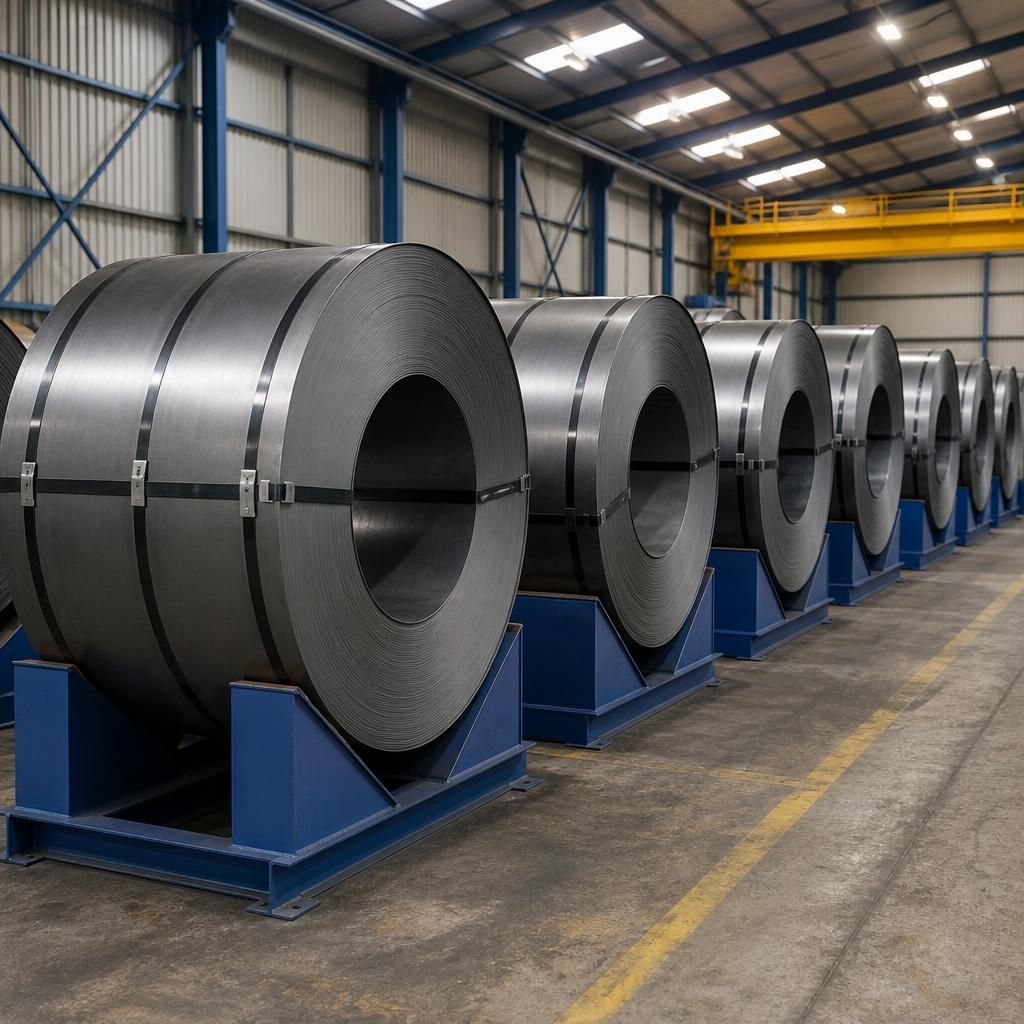
The most suitable support layout for steel coil storage is usually a dedicated cradle or saddle arrangement, positioned to support each coil at stable contact points. The final arrangement depends on coil weight, width, diameter, orientation and handling equipment.
Steel coils create concentrated loads, so the supports must transfer weight safely through the structure and into the floor. A suitable layout also needs to provide clear access for forklifts, cranes or other handling equipment used at the site.
- Individual cradle supports: Separate cradles hold each coil in a defined position. This layout can make identification and removal more straightforward when coils vary by grade, size or production order.
- Shared saddle arrangements: Continuous or paired supports create several storage positions along a row. This can use floor space efficiently where the coils follow a consistent handling pattern.
- Multi-level coil racking: Racking places supported coils at different heights. This may increase use of available volume, but each level needs suitable support spacing, load capacity and equipment access.
- Floor lanes: Floor-based storage can suit heavier coils or handling methods that require direct access. Lane width, working space and separation between stored coils remain important design points.
The coil’s orientation changes the support requirements. A horizontal coil may sit in a cradle or on saddles that spread contact across defined areas. A vertical arrangement needs a stable base and sufficient protection against unintended movement during handling.
The support profile should match the coil diameter rather than leaving the load balanced on unsuitable points. Support spacing also affects contact pressure, handling clearance and the amount of usable storage space between positions.
Access routes form part of the support layout, not an afterthought. The arrangement should allow the selected handling equipment to approach, lift and place coils without obstructing adjacent stock. Operators also need room to inspect labels, check stored material and move safely around the storage area.
A good layout separates three decisions:
- How the coil sits: The support shape and contact points must suit its orientation and dimensions.
- How the structure carries the load: Frames, beams, saddles and floor interfaces must suit the imposed weight.
- How the coil moves: Aisles, working clearances and access positions must reflect the handling method.
Coils with different diameters or weights may need separate support positions. Using one spacing pattern for every coil can waste capacity or create unsuitable contact points. A storage plan should therefore show the expected coil range, not only the largest item.
Where several coil sizes share one area, adjustable positions or distinct storage zones may provide better control. The choice depends on stock turnover, retrieval order and whether the handling equipment can reach every position without moving other coils.
The floor also matters. A support layout transfers concentrated loads through specific points, so the existing slab and surrounding structure should be considered before installation. Site information can identify restrictions affecting support position, aisle arrangement and installation access.
We assess these factors through consultation and site surveys, then prepare written proposals and working drawings for the selected coil storage arrangement. Drawings can establish support positions, storage levels, access routes and the relationship with surrounding operations.
For a project combining coil storage with other workplace or warehouse changes, project management may cover proposal and tender stages through installation and final commissioning. This gives you one coordinated route when several parts of the layout must work together.
There is no single support layout for every steel coil store. Cradles, saddles, multi-level racking or floor lanes may each suit different stock and handling conditions. The right choice is the one that supports the stated loads while preserving practical access and usable space.
Retrieval order should influence the support layout, not just coil size and weight. Positions for frequently selected coils should match the available approach and lifting route, while less-accessed stock can occupy locations that require fewer changes.
We review the expected stock profile and handling sequence when developing the arrangement. This helps show how each coil position will be reached without relying on an unsuitable shared support pattern.



