



How does a coil stacking system prevent stored coils from shifting?
A coil stacking system keeps each coil in a defined position, using supports that limit rolling and movement between stored coils.
It prevents stored coils shifting through controlled contact points, stable load transfer and planned clearance around each coil. The support layout holds coils in position instead of relying on their weight alone.
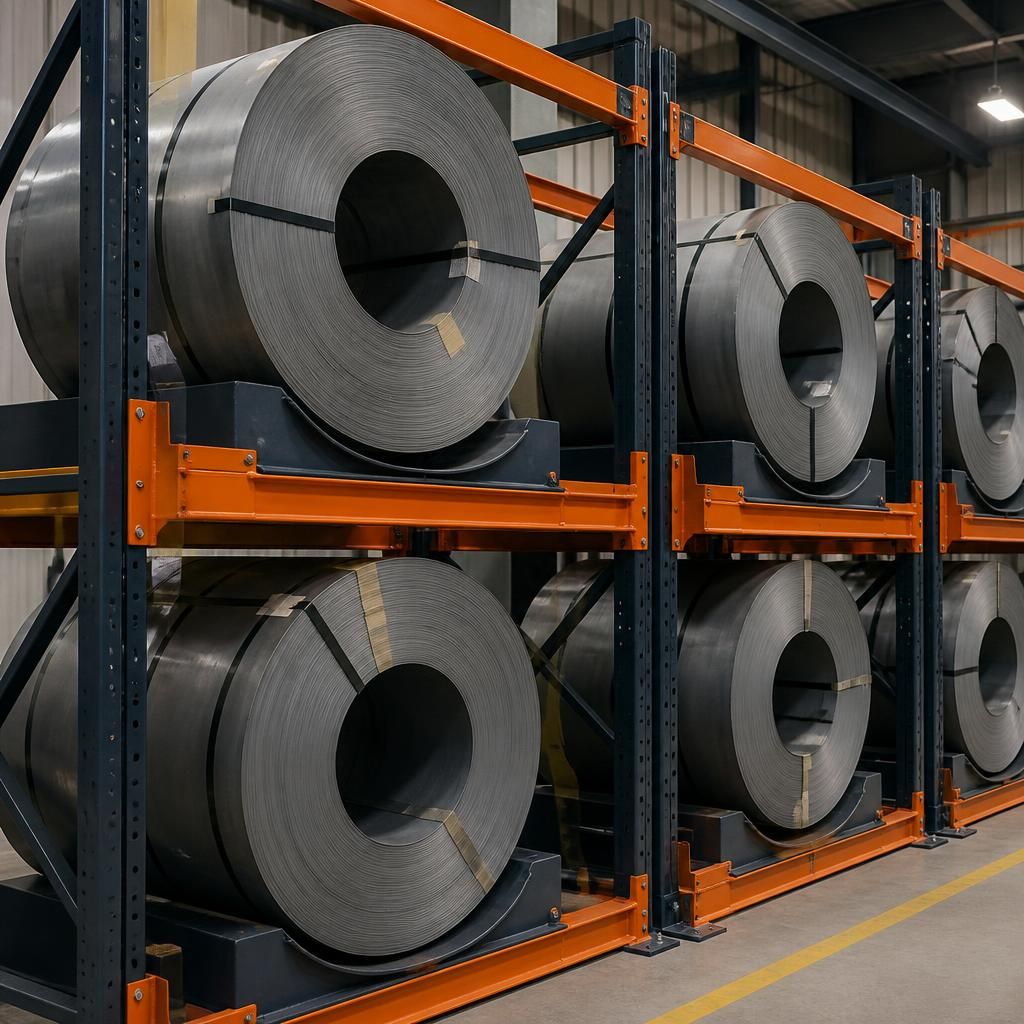
Coils can roll when their curved surfaces meet an unsuitable floor, support or adjacent coil. A coil stacking system uses formed supports, saddles, cradles or separators to create a controlled bearing position. These components reduce unwanted movement during storage and handling.
- Support geometry: The support profile matches the coil’s shape and keeps its centre of gravity within the intended bearing area.
- Load transfer: Supports pass the coil load into the frame or floor through planned contact points.
- Separation: Spacing prevents neighbouring coils from pressing against one another or transferring movement through the stack.
- Stack control: Where coils sit at more than one level, the structure must account for the combined loading and the position of each coil.
- Handling clearance: Planned gaps give operators and handling equipment room to approach the coil without striking stored material.
The design must reflect the actual stock. Coil diameter, width, mass, orientation and stacking arrangement all affect how much support and separation the system needs. A support layout intended for one coil profile may not suit another.
Correct positioning also matters during loading and unloading. Operators need clear reference points for placing coils on their supports. Consistent placement helps prevent coils sitting partly outside the bearing area, where movement risk can increase.
A suitable system should therefore be assessed alongside the floor, handling route and surrounding workflow. The objective is controlled storage without obstructing access or creating unstable contact between coils.
We can discuss the storage requirements, survey the site and prepare written proposals with working drawings. These drawings show the planned support arrangement before installation, helping you compare the layout with your stock and handling method.
For projects requiring several stages, we can also coordinate installation and project management through final commissioning. That gives you a defined process for checking the installed arrangement against the agreed design.
Coil supports only work as intended when their base remains stable. We therefore assess the floor condition, support loading and forces created during placement and removal. This helps prevent movement at support level from transferring into the stored stack. A site survey lets us check the proposed arrangement against the actual floor and operating area before installation.



