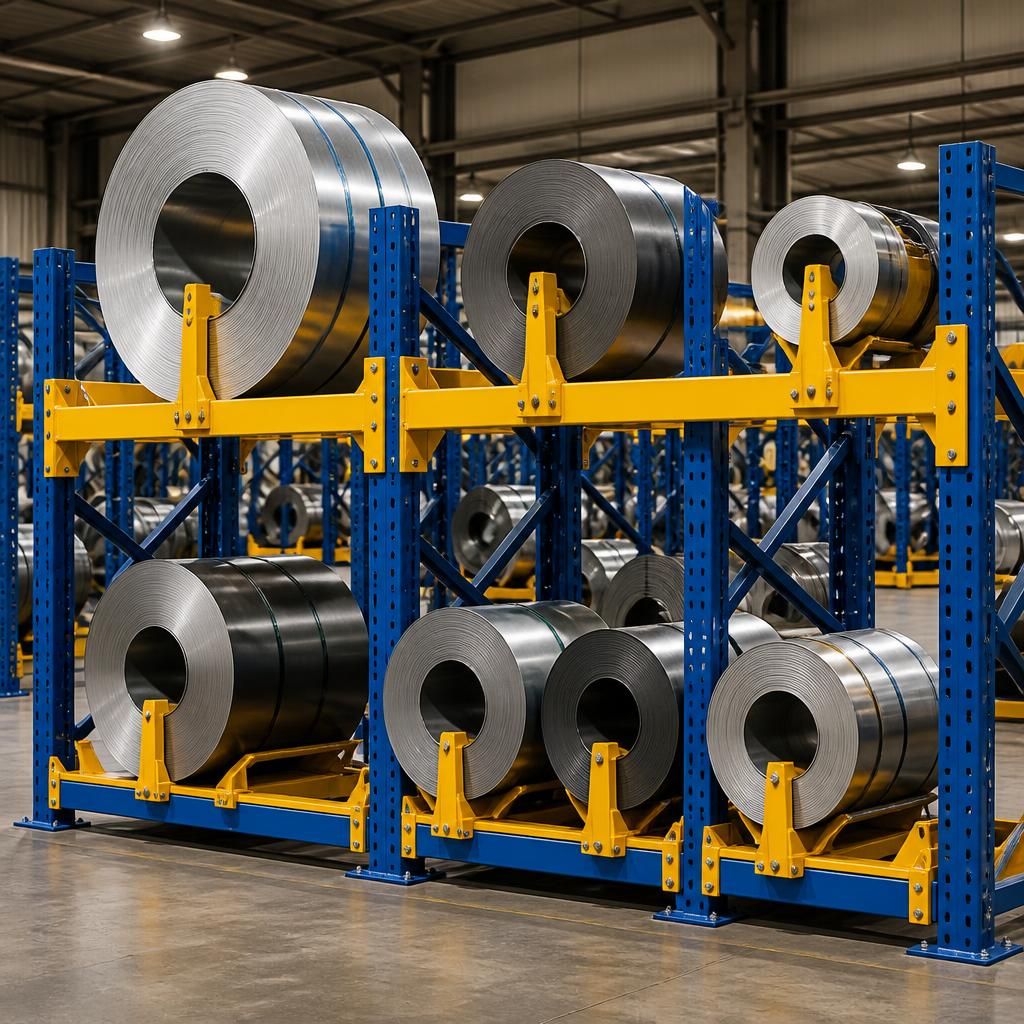
Which coil racking option best accommodates changing stock requirements?
An adjustable coil racking arrangement usually suits changing stock dimensions and quantities, while fixed positions suit stable requirements and repeatable handling.
We assess your site, stock and workflow before preparing a written proposal and working drawings for the appropriate option.
For changing stock requirements, choose coil racking that can accommodate variation without compromising load support, access or handling control. The right choice depends on how coil dimensions, weights, quantities and movement patterns change across the working area.
Start with the type of change. Stock may vary through different coil diameters, widths, materials or weights. Quantities may also change as orders, production schedules or suppliers change. A system suited to one variable may not suit several variables at once.
- Changing coil dimensions: Select an arrangement with support positions that can be altered safely as coil sizes change.
- Changing quantities: Consider how much space must remain available for new stock, temporary holdings and lower-volume items.
- Changing stock rotation: Frequent movement places greater importance on direct access and clear identification.
- Changing handling methods: The equipment used to load and remove coils affects clearances, access routes and support arrangements.
Adjustability is valuable when stock profiles change regularly. It allows the layout to respond to different requirements instead of leaving fixed positions unused. However, every adjustment must remain within the system’s stated load and operating limits.
Fixed-position arrangements can remain appropriate where coil dimensions, quantities and handling routines stay consistent. They provide repeatable locations for established stock groups. Their limitations become more significant when new coil sizes need different support spacing or when demand changes across the range.
Compare the options against these practical factors:
- Load information: Record individual coil weights and the combined loading expected in each storage position.
- Support requirements: Confirm how each coil sits, how movement is controlled and how operators can identify the correct position.
- Access: Check whether handling equipment can approach, lift and remove coils without awkward movements or blocked routes.
- Space use: Review the balance between storage density, working clearances and access to less frequently moved stock.
- Future changes: Allow for known changes in product dimensions, production volumes or the equipment used to handle stock.
Do not compare capacity alone. A dense arrangement may hold more stock but create slower retrieval or difficult access when the stock mix changes. A more open arrangement may support clearer separation and simpler movement.
Separate frequently handled coils from reserve stock where the workflow requires it. Grouping stock by size, weight or movement frequency can reduce unnecessary handling. The layout should also show which positions are available for changing stock.
We can discuss these points during a no-obligation consultation, including a site meeting and survey where appropriate. We then prepare a written proposal and working drawings showing the recommended arrangement for the recorded stock and workflow.
For projects requiring wider changes to the premises, we can coordinate related storage, mezzanine flooring or workplace separation requirements. This helps you consider coil storage alongside available floor area and operational routes, rather than in isolation.
The strongest option is the one that remains usable as stock changes, while keeping loading information, access and working clearances clear. Confirm those points before approving the coil racking arrangement.
Stock changes can create confusion if operators cannot see which support arrangement applies. Compare how each option records adjustments, identifies available positions and communicates changes across the working area.
Ask for clear instructions covering permitted settings, load information and position identification. This gives operators a consistent reference when stock profiles change, while keeping the selected arrangement within its stated operating limits.