Should you choose coil racking or floor stacking?
Choose coil racking when controlled access, separation and vertical storage matter; floor stacking may suit stable stock and straightforward handling.
We assess coil dimensions, loads, handling equipment, available height and access requirements before proposing the right arrangement.
Short answer: Coil racking is usually the stronger choice when individual coil retrieval, defined load positions and future capacity matter. Floor stacking can remain suitable where stock movement is limited and the floor area supports the required arrangement.
The decision depends on more than available floor space. Consider coil diameter, width, weight, wrapping, stock rotation, handling equipment, building height and the consequences of moving neighbouring coils.
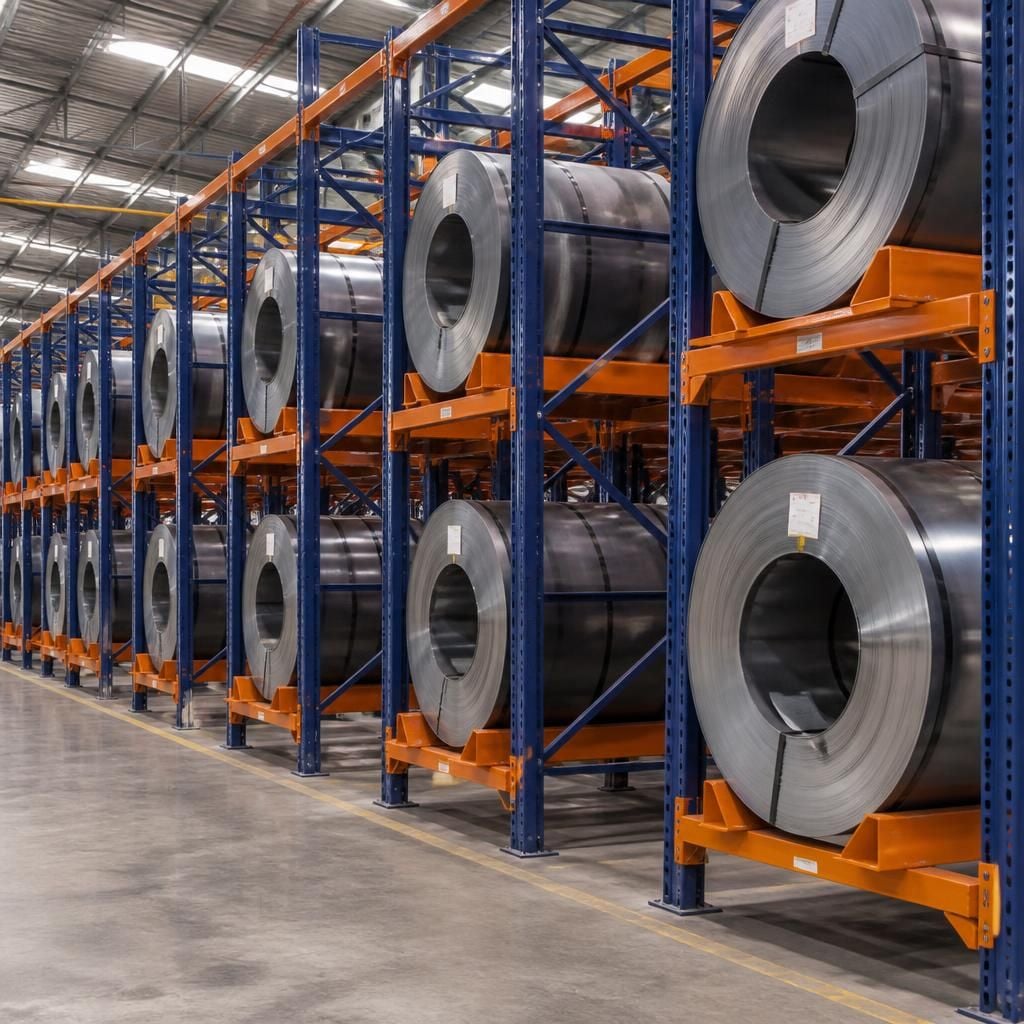
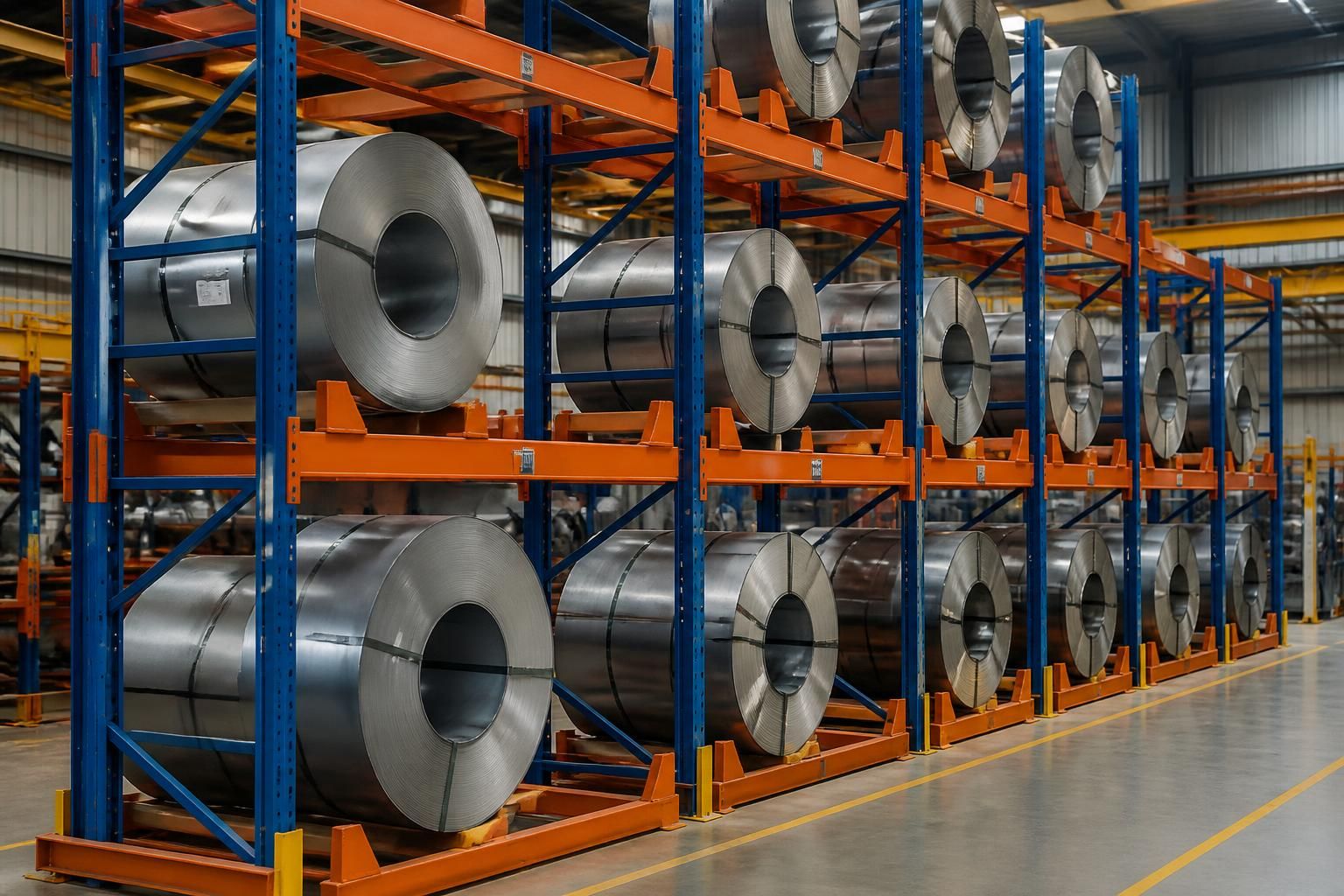
Coil racking gives each coil a planned position. This can make stock identification clearer and reduce the need to rearrange other coils during retrieval. It also uses vertical clearance, subject to the building, rack design and handling equipment.
That structure becomes more valuable when coils differ in size, grade, customer order or dispatch date. Defined locations can support clearer stock records and reduce uncertainty during picking. The arrangement must still match the way operators actually load and remove coils.
Coil racking also creates a more repeatable storage pattern. Operators can work to stated load positions rather than deciding where each coil should sit during busy periods. This helps keep aisles and working areas consistent, provided the system is used as designed.
Floor stacking uses fewer storage components. It may suit a straightforward operation with similar coils, predictable movements and enough floor area. It can also avoid introducing a racking structure where the storage pattern is temporary or frequently changing.
Its limitations become clearer when stock is mixed or access demands increase. A coil placed at the front may obstruct another behind it. Removing one item can then require additional handling, temporary relocation or more planning before work begins.
Floor stacking also spreads storage across the building footprint. That can restrict movement routes, working space or room for future operational changes. The floor must support the combined loads, with suitable spacing and stable positioning throughout the stack.
Compare the handling method, not only the storage method. A crane, forklift or other handling equipment may need different approach space, lifting height and operating clearance. Coil racking must accommodate these requirements without creating contact risks or forcing awkward movements.
For floor stacking, assess how operators reach lower and upper coils, how loads remain stable, and how a coil is removed without disturbing others. The chosen arrangement should reflect the equipment available and the competence required to use it safely.
Safety can favour either option when the design is appropriate. Racking requires suitable load information, support arrangements, protection and clear operating zones. Floor stacking requires controlled stack heights, stable surfaces, defined positions and procedures for retrieval.
Neither option should be selected from coil weight alone. Coil shape, centre of gravity, surface condition and the way loads are lifted can affect the storage arrangement. A site assessment should examine these points before equipment or layout is confirmed.
Consider the full cost of the space occupied. Floor stacking may involve fewer structural components, but it can consume more floor area and create extra handling steps. Racking may require equipment, installation and protection, while releasing floor space for other activities.
The right comparison therefore includes installation, handling time, floor capacity, access routes, future stock changes and any required safety measures. A lower initial equipment cost does not necessarily represent the lower overall impact on the warehouse.
Choose floor stacking when its constraints fit the operation. This may include consistent stock, limited retrieval frequency, uncomplicated handling and sufficient floor area. You should document the storage rules so operators know where coils belong and how they must be moved.
Choose coil racking when the operation needs defined positions and better use of building height. It is particularly worth assessing when mixed stock, repeated retrieval or expansion within the existing premises makes floor area valuable.
Spartan Direct can assess these factors through a no-obligation consultation, which may include a site meeting and survey. We can then prepare a written proposal and working drawings for the arrangement under consideration.
Those documents should allow you to compare the practical consequences of each option. They can address coil positions, handling routes, loads, clearances and how the storage area fits the wider workflow.
Where the project requires it, project management may continue from proposal and tender stage through installation and final commissioning. That gives you a defined process for checking the selected arrangement before it enters regular use.
For a sound decision, start with the movement of coils through the warehouse. If floor stacking creates repeated rearrangement or restricts useful space, coil racking deserves closer consideration. If the stock pattern remains simple, floor stacking may meet the requirement without adding unnecessary structure.
The choice should also reflect how clearly you can control storage rules. Coil racking can assign positions by material, order or status, while floor stacking needs clear limits for placement, height and retrieval.
Record those rules alongside the layout. This gives operators a consistent reference and helps you review whether the chosen method still suits changing stock requirements.