Can coil storage accommodate different coil diameters?
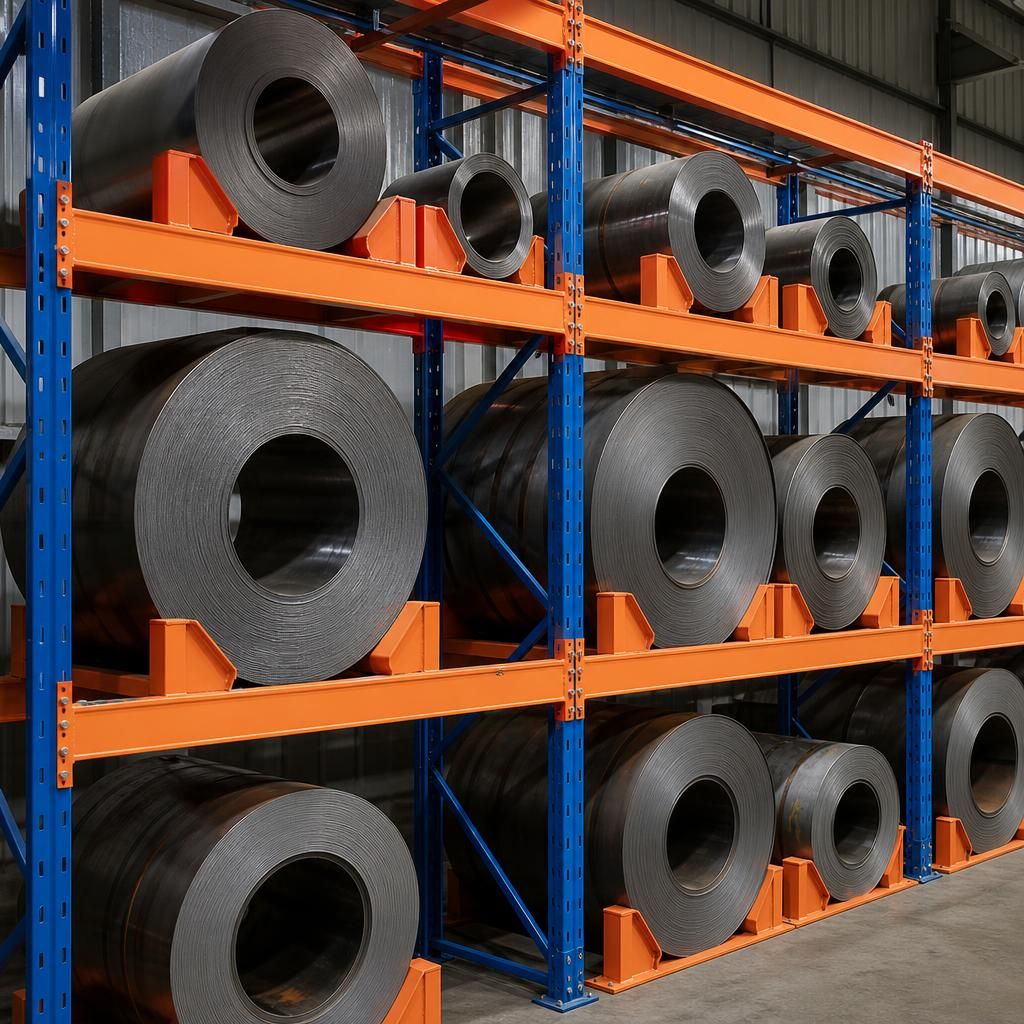
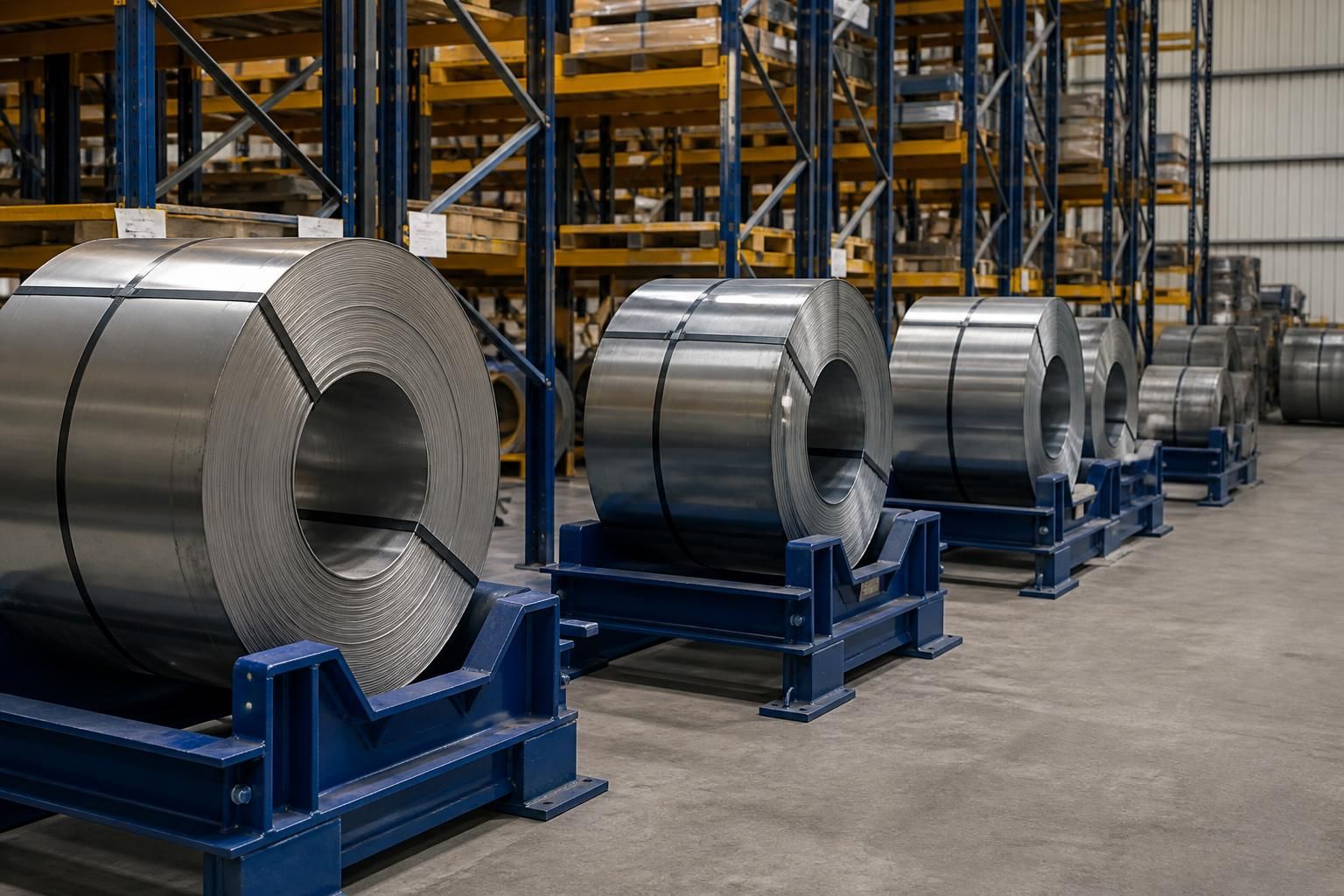
Yes, coil storage can accommodate different diameters when support positions suit the coil dimensions, weights and handling method.
We assess your stock requirements and site constraints before preparing a written proposal and working drawings.
Yes. Coil storage can accommodate different diameters when each coil has suitable support, restraint and clearance for safe handling.
Diameter is only one part of the assessment. We also consider coil weight, width, core size, orientation and the equipment used to place or remove each coil. These factors affect the support arrangement and the available access space.
- Support positions: Larger coils may require different support centres from smaller coils. The layout should prevent unsupported sections from creating instability.
- Coil separation: Separate positions can keep coils apart and reduce contact between different sizes. This also helps operators identify the correct stock.
- Clearance: Each location needs enough room for the handling method. Restricted access can increase contact risks during loading and retrieval.
- Load distribution: The structure must account for the weight carried at each position. Mixed diameters should not be treated as identical loads.
- Stock changes: If coil sizes vary regularly, the layout should reflect the expected stock range. This avoids designing around one diameter that may not remain typical.
Smaller coils can present different stability issues from larger coils. Their support positions may need closer spacing or additional separation, depending on their dimensions and handling method.
Larger coils can demand more capacity and clearance. Their position within the system may also affect access to adjacent stock, particularly where several diameters share one storage area.
We review these requirements alongside the available floor area, operating routes and surrounding equipment. This helps establish whether mixed-diameter storage suits the site without creating unnecessary handling obstacles.
A site survey can identify existing constraints, including floor conditions, access routes and the equipment used for coil movement. We then set out the proposed arrangement in written information and working drawings.
For changing stock profiles, discuss the expected coil dimensions rather than designing around an average size. The resulting coil storage arrangement can then reflect the loads, access requirements and working pattern you actually need.
Mixed-diameter storage also needs clear location control. Marking each position by coil diameter, grade or stock reference helps operators select the correct coil without unnecessary handling.
Keep frequently requested sizes in positions that suit the normal retrieval route. Less frequently accessed coils can occupy locations that require more movement, provided the handling method remains suitable.