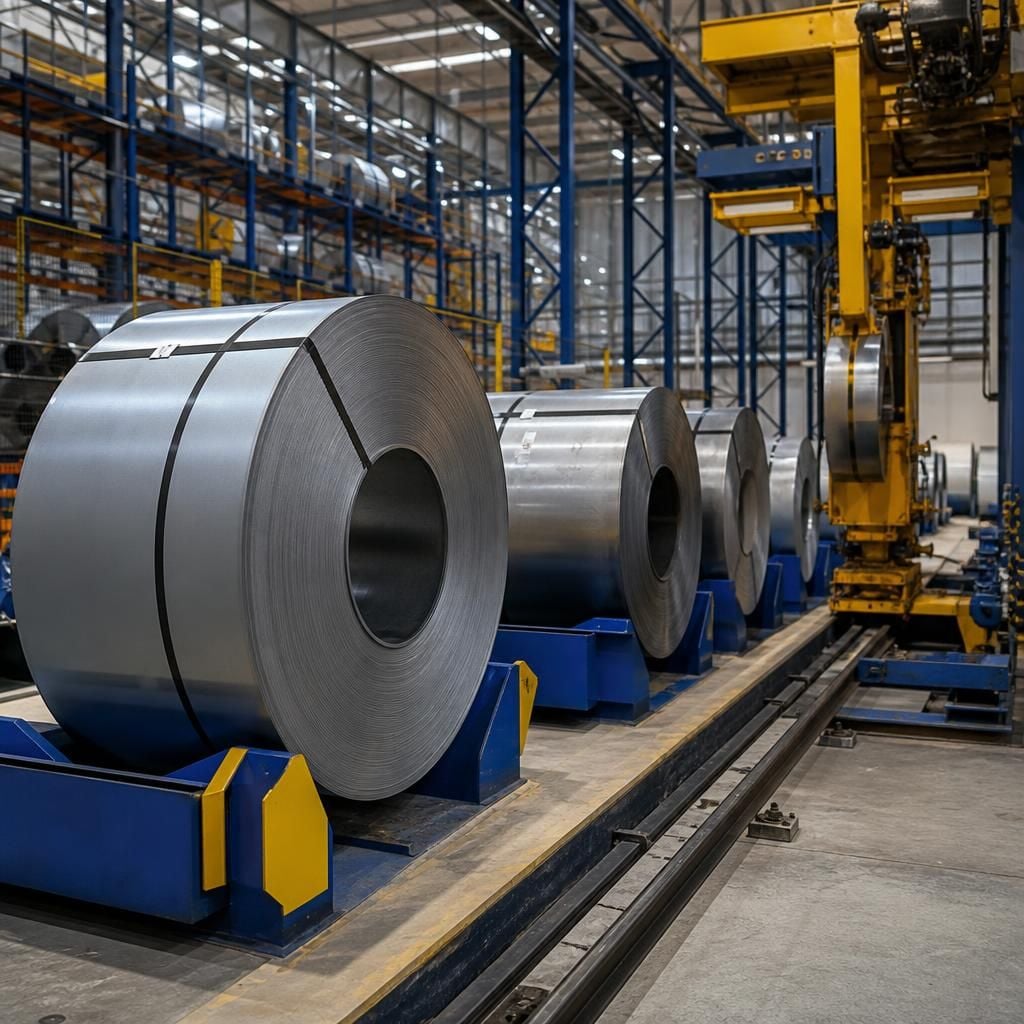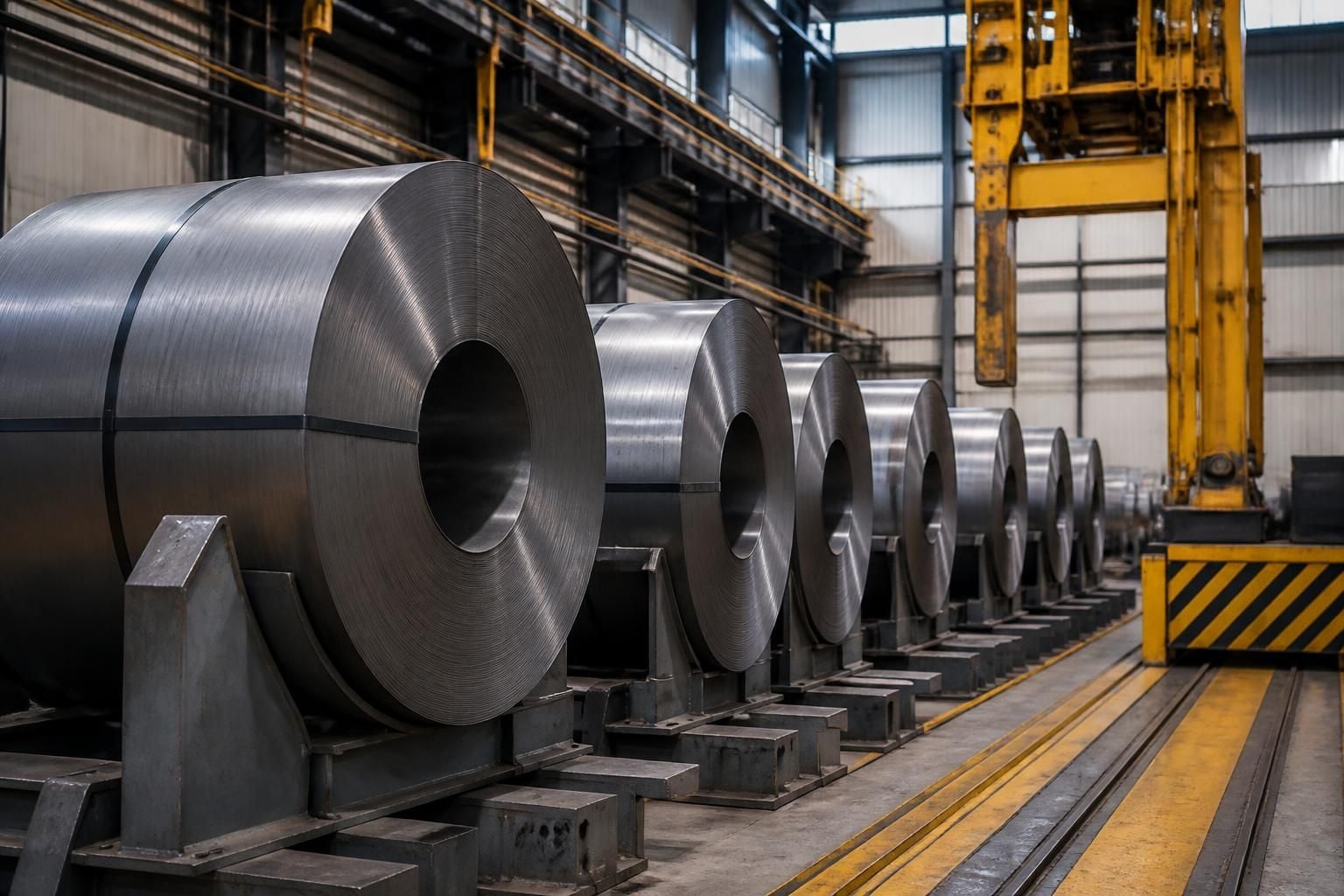
What load information is needed for automated coil storage and retrieval?
For automated coil storage and retrieval, we need each coil’s weight, outer diameter, width, core or bore size, orientation and handling requirements. We also need the maximum load, coil variety and expected retrieval pattern to inform the storage layout, equipment specification and safe operating requirements.
The key information beyond basic coil dimensions is how each load is distributed, supported and moved. We use this information to assess storage positions, handling equipment and operating limits.
For each coil type, provide the following details:
- Load distribution: explain where the coil makes contact with its support and whether the load sits centrally or unevenly.
- Support conditions: identify the required contact points, support width and any restrictions around the core or bore.
- Stability: note whether coils can deform, shift, telescope or unwind during storage and retrieval.
- Surface and edge sensitivity: record any risk of marking, crushing, scratching or other damage during contact and movement.
- Load variation: separate standard, lightest and heaviest operating cases. Include unusual coils rather than relying only on an average load.
- Movement forces: describe the required acceleration, deceleration, stopping and positioning conditions. These affect the load case during automated movement.
- Handling attachments: identify any mandrels, cradles, clamps or other contact equipment involved. Their weight and load transfer must form part of the calculation.
- Stock changes: explain how often coil types, materials or load characteristics change. This helps establish the operating range that the system must accommodate.
Retrieval information also matters. State the expected sequence, storage turnover and number of movements in the operating period. Include any requirement to prioritise particular coils or maintain separate stock groups.
We also need the loads imposed on the building. A site survey can record the floor construction, available load capacity, level changes, columns and obstructions around the proposed equipment. These details help identify restrictions before drawings are prepared.
Provide information about the operating environment too. Temperature, moisture, dust, corrosive materials and any restricted access requirements can affect materials, protection and handling arrangements.
Where several coil sizes or weights share one system, the working limits must reflect the complete range. The heaviest coil alone may not define the most demanding case if support, stability or movement differs between stock types.
We can review this information during a no-obligation consultation and site survey. We then prepare a written proposal and working drawings showing how the stated loads inform the storage arrangement and equipment specification.
Before approval, check that the recorded figures represent actual operating conditions, including handling equipment and stock changes. Clear load information gives you a sound basis for reviewing capacity, access and safe operation.
Prepare a load schedule that records each figure’s source, units and date. Separate measured values from estimates, supplier data and design assumptions.
Confirm uncertain figures against representative coils before approving the drawings. This gives the equipment specification a clear record of the loads it must accommodate.