How much disruption does automated coil storage installation cause?
Disruption depends on the existing layout, access requirements and workflow. We assess these during a site meeting and survey, then provide proposals and working drawings to plan installation through to commissioning.
Automated coil storage installation can be planned around live operations, but disruption depends on the work area, access and handling requirements. The main impact usually comes from preparing space, moving stock and controlling access during installation.
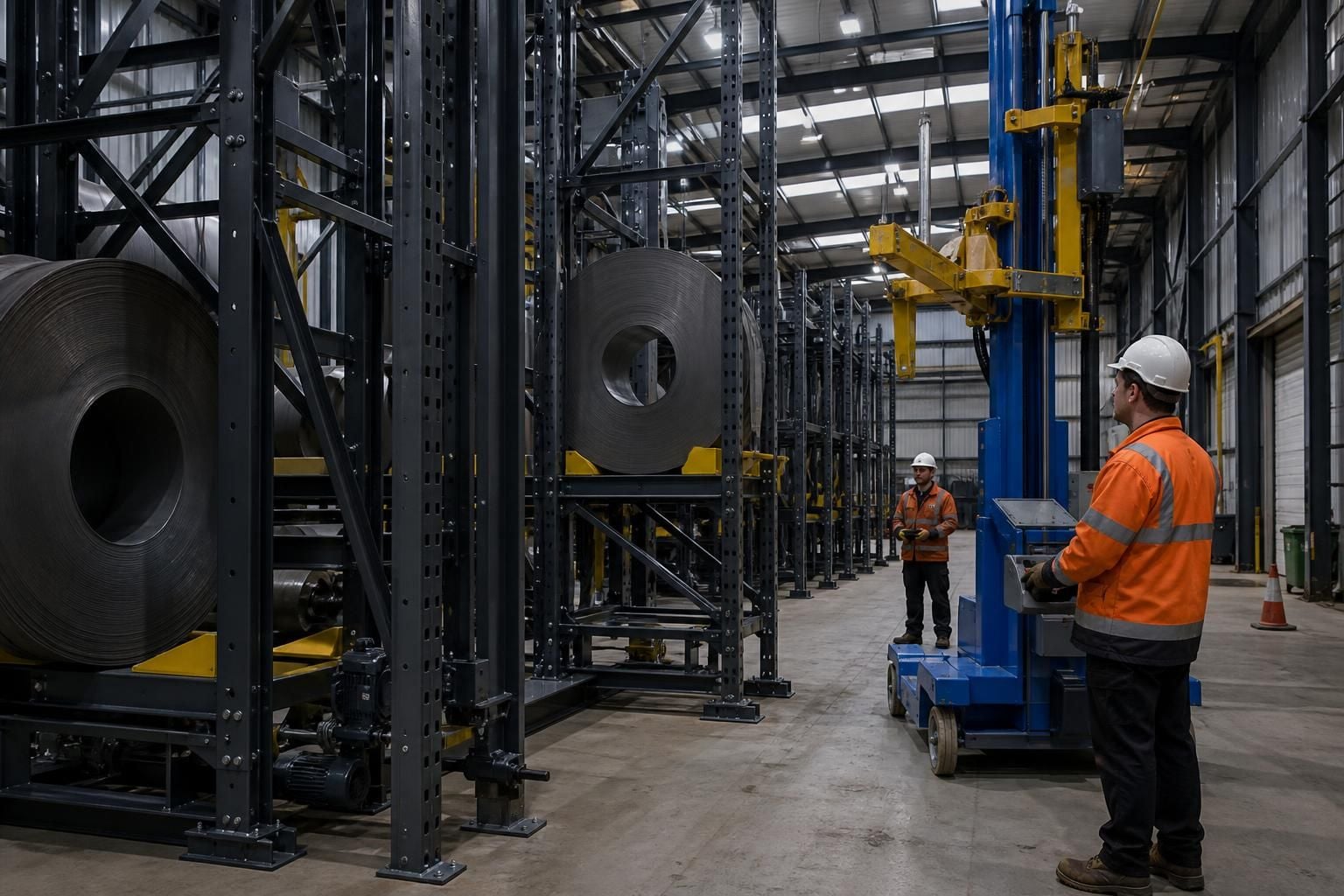
Planning establishes the likely disruption. We review how coils enter, are stored and move through the site. This helps identify affected routes, working areas and operational constraints before installation begins.
Site information also shows whether existing stock needs moving before work starts. It can identify access points for installation equipment and areas that need temporary separation. These details support written proposals and working drawings for the planned installation.
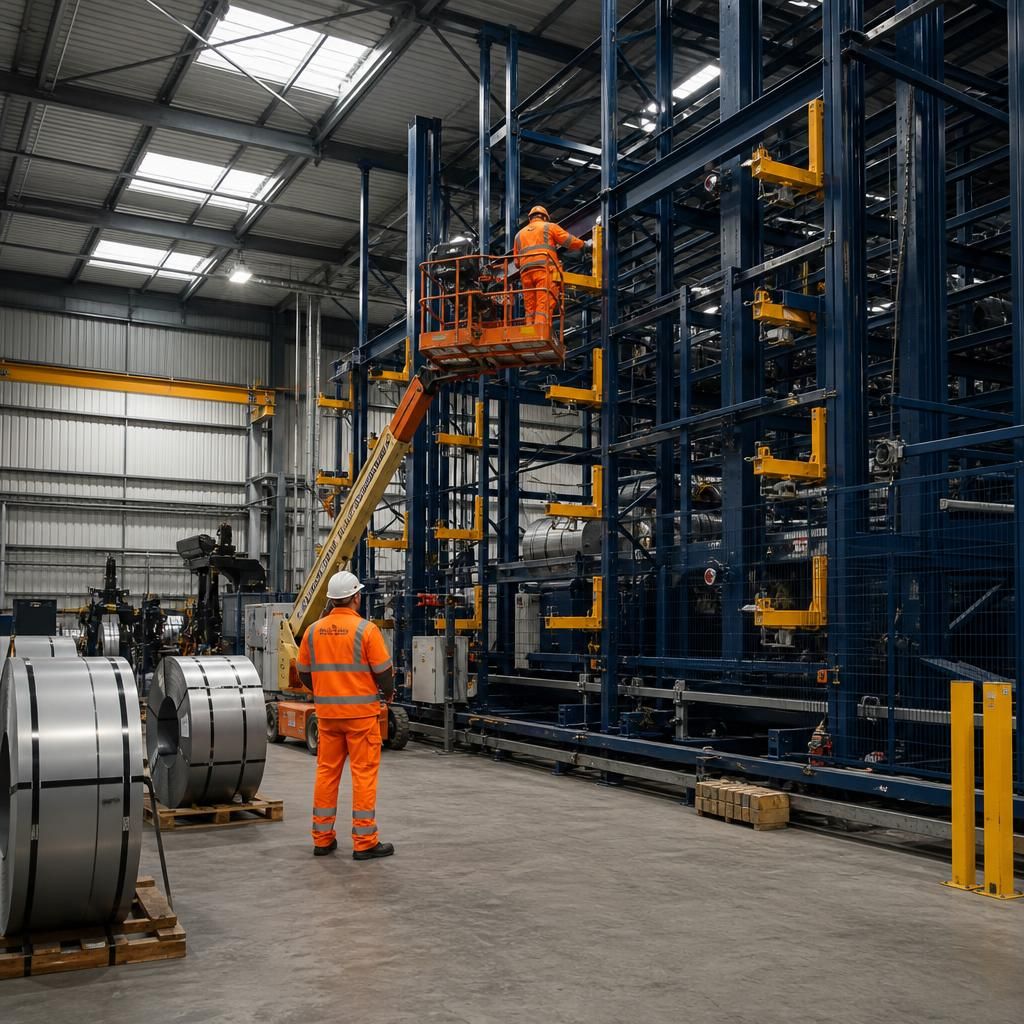
Preparation may affect storage and traffic. You may need to clear the installation footprint or relocate coils temporarily. Vehicle routes, pedestrian access and nearby work areas may also need controls while equipment is brought into position.
The extent depends on how much of the existing operation occupies the proposed area. A clear, accessible space generally gives the installation team fewer site constraints. A busy warehouse may require more coordination between installation activities and daily movements.
Installation creates a defined working zone. Access to that area may be restricted while components are positioned, assembled and checked. The effect on the rest of the warehouse depends on the relationship between the work zone and your normal routes.
- Storage positions may need temporary rearrangement.
- Access routes may need to change around the work area.
- Stock movements may need coordination with installation activities.
- Nearby staff may need clear instructions about restricted areas.
These controls are not a substitute for planning. They help separate installation work from other activity and reduce avoidable conflicts around access and stock handling.
Project management can coordinate the stages. Where required, we can manage the project from proposal and tender stage through installation and final commissioning. This gives you a single process for reviewing the work, arranging installation activities and bringing the system into use.
Commissioning marks the point at which the installed arrangement is checked for its intended operation. It should follow the physical installation and any agreed site requirements. The exact commissioning activities depend on the equipment and project scope.
Programme dates need careful interpretation. We use all reasonable endeavours to meet agreed dates, but the terms identify those dates as estimates. Time is not of the essence. Your programme should therefore allow for site conditions, access arrangements and any changes identified during the work.
For a more accurate view, provide information about coil dimensions, weights, stock levels, access routes and working hours within the site. We can then consider how the installation relates to existing storage and workflow, rather than treating disruption as a standard fixed period.
The aim is to define the affected area, identify the required controls and coordinate installation through commissioning. That approach gives you a clearer basis for deciding how the work can fit around warehouse activity.
Installation disruption does not necessarily mean stopping the whole warehouse. The main consideration is how the work zone connects with the routes and storage areas that remain in use.
A site survey helps separate installation activity from unaffected operations. This provides a clearer basis for deciding which parts of the warehouse need temporary controls, rather than treating the entire site as unavailable.