Which access equipment suits outdoor pallet racking?
Forklifts usually suit outdoor pallet racking, while reach trucks may suit higher-level access where the surface, aisle width, load and operating conditions allow. We can assess these requirements through a site meeting and survey before preparing working drawings and a written proposal.
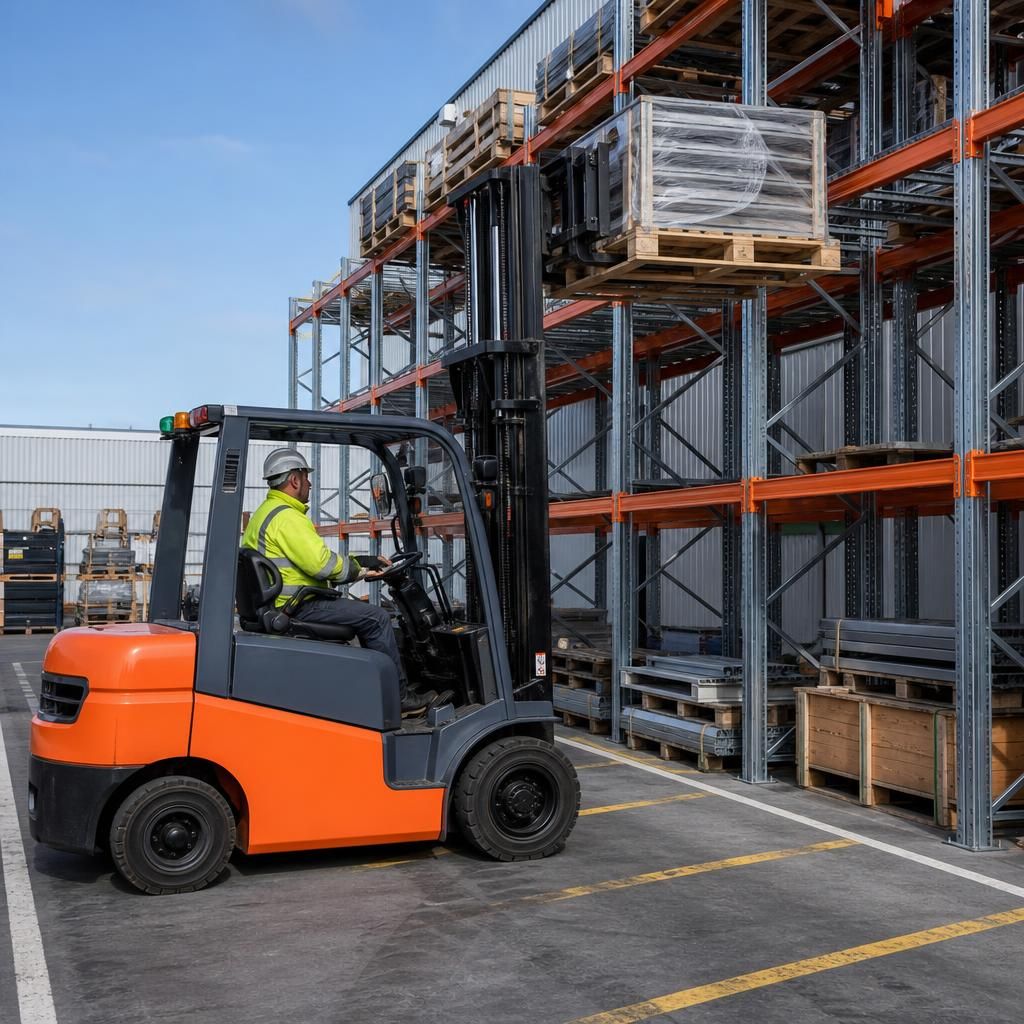
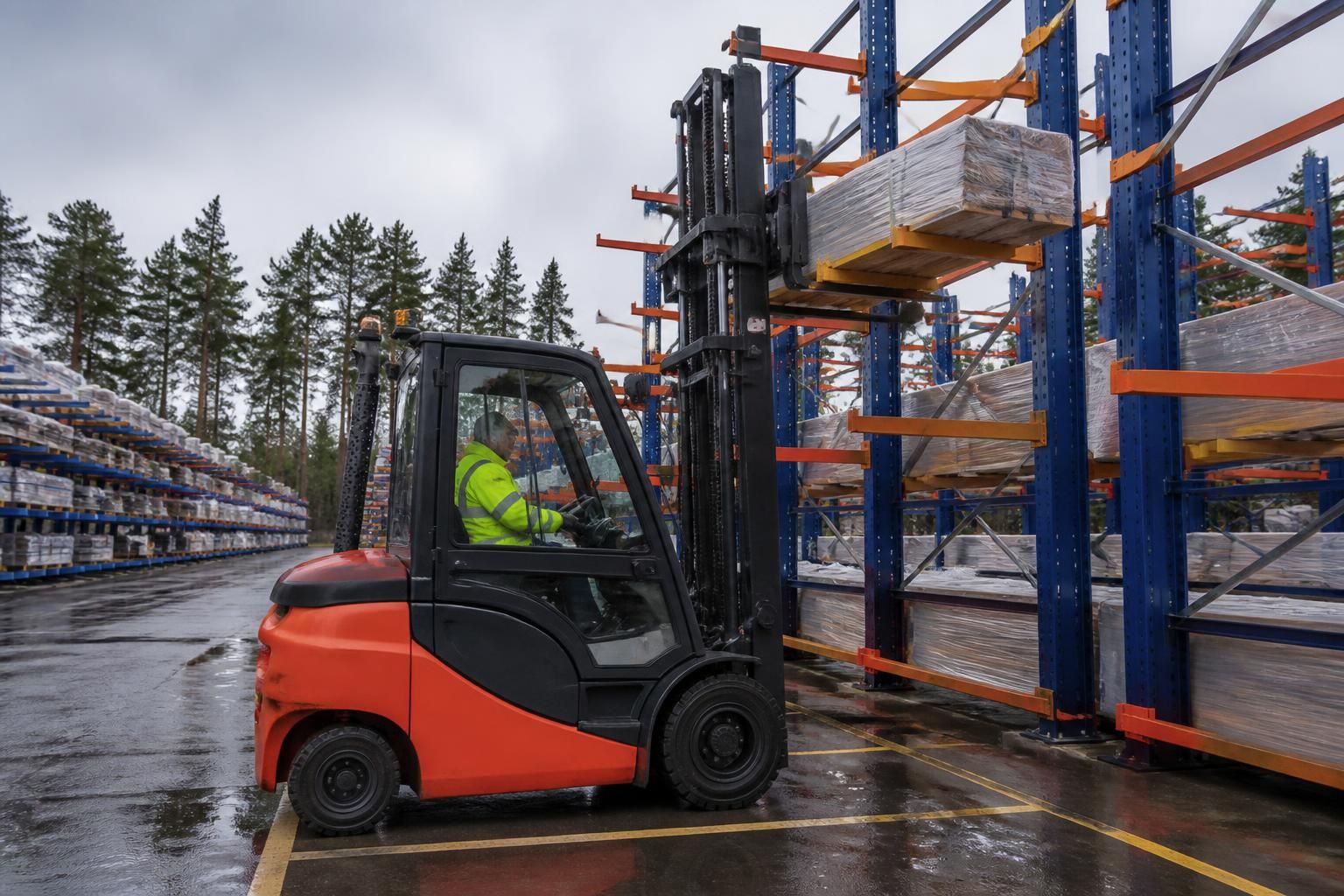
Pallet racking outdoors usually needs a counterbalance forklift with suitable ground clearance, lift height and load capacity. The correct choice depends on the rack height, pallet dimensions, aisle layout, surface condition and daily workflow.
Counterbalance forklifts: These are often the most practical option for outdoor pallet racking. Their forks lift pallets from the front, without support legs extending beneath the load. This gives the truck flexibility when approaching racking from outdoor yards or hardstanding.
Allow sufficient room for turning, reversing and placing loads accurately. The required aisle width depends on the forklift model, pallet size, load centre and rack arrangement. A larger truck may need wider aisles, reducing available storage positions.
Reach trucks: Reach trucks can access higher pallet positions where the ground is firm, level and suitable for the equipment. They generally need tighter control over surface condition and operating space than a counterbalance forklift.
They may suit covered outdoor bays or sheltered areas with smooth floors. Exposed yards, uneven surfaces, standing water and strong wind can make this type of equipment less appropriate. Check the manufacturer’s operating limits before using a reach truck outdoors.
Rough-terrain forklifts: These may suit outdoor areas with less uniform surfaces, provided the racking, ground and working method support their use. Their dimensions and turning requirements still influence the aisle plan.
They are not a substitute for preparing a suitable racking base. Outdoor pallet racking needs stable support, controlled gradients and adequate drainage. Potholes, loose aggregate and excessive slopes can affect load placement and vehicle stability.
Powered pallet trucks: Pallet trucks can support low-level movement across smooth, level hardstanding. They are usually unsuitable for placing pallets into elevated racking because they do not provide the required lift height.
They may work for short transfers between a loading area and ground-level storage. Consider pedestrian interaction carefully, particularly where several activities share the same yard.
Attachments and load details: Fork length, fork spacing and any attachment affect the truck’s rated capacity. Long, unstable or unusually shaped loads can change the equipment requirement.
Confirm the weight and dimensions of each pallet, including its load centre. A forklift’s capacity reduces as the load centre moves forward or the forks rise. The rack design and forklift capacity must therefore be considered together.
Visibility and control: Outdoor conditions can affect the operator’s view. Glare, rain, darkness, stacked materials and vehicle movements may restrict visibility around the rack.
Plan lighting, reversing areas and pedestrian routes alongside the access equipment. Rack-end barriers and workplace segregation can protect people, vehicles and racking where traffic routes pass close to storage.
Charging, fuel and weather: The operating environment also affects the choice between battery-powered and engine-powered equipment. Consider charging or refuelling arrangements, exposure to rain, storage conditions and any exhaust restrictions around buildings.
Keep access routes clear of obstructions and avoid positioning racking where vehicle movements conflict with loading bays. The equipment must have enough room to approach each bay without excessive manoeuvring.
Match the equipment to the layout: Start by recording the highest storage level, pallet dimensions, maximum load, required throughput and available aisle space. Then compare suitable truck dimensions, lift heights, turning circles and operating limits.
A site survey can identify surface changes, gradients, drainage, access points and areas shared with pedestrians. Written proposals and working drawings can then show how pallet racking, aisles and protection measures fit together.
For West Midlands businesses, Spartan Direct Limited can discuss these access requirements as part of a storage planning exercise. The aim is to create usable access between storage capacity, vehicle movement and safe day-to-day operation.
Outdoor pallet racking must work with the way each forklift approaches and places a load. Lift height alone does not confirm suitability. Check fork entry, pallet clearance, beam spacing and the operator’s view at every storage level.
We can review these points during a site survey, then show the relationship between the racking and access equipment in working drawings. This helps you identify unsuitable clearances before the layout reaches installation.