


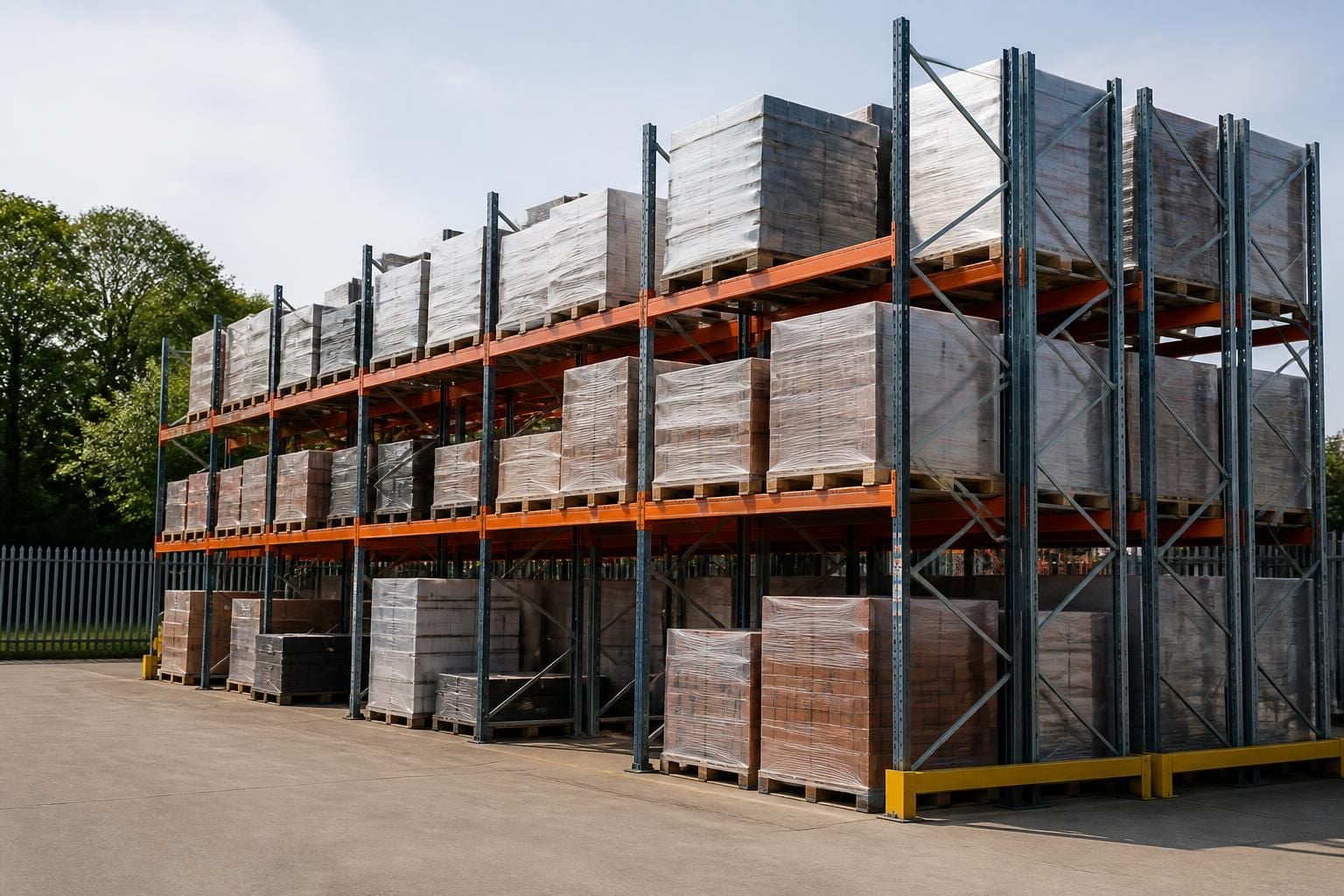
When is outdoor pallet racking a practical alternative to expanding indoor storage?
Outdoor pallet racking can be practical when you have suitable external space and stored goods can be protected from weather, impact and unauthorised access.
It may avoid extending indoor storage, but access, ground conditions, stock requirements, planning and compliance should be assessed before selecting it.
Outdoor pallet racking is practical when external storage supports the way your site receives, stores and dispatches goods. It can preserve valuable indoor space for production, picking, packing or workplace activities without requiring an immediate premises move.
The strongest case usually involves stock that does not need a controlled indoor environment. Palletised building materials, timber, metals, packaged goods and selected components may suit external storage. Goods sensitive to moisture, temperature changes, sunlight or contamination require closer assessment.
Packaging also matters. Wrapped loads may tolerate external conditions better than exposed products, but packaging alone does not remove the need for suitable protection. Consider how long stock remains outside, how often it moves and what condition it must reach the next stage in.
Compare outdoor pallet racking with internal expansion before deciding. An indoor layout review may identify unused height, poor aisle planning or duplicated storage areas. Mezzanine floors can create additional internal storage or workspace, subject to structural, access and fire considerations. Outdoor racking may suit stock volumes that would otherwise occupy operational floor space.
The decision should follow the movement of goods through the site. Map receiving, storage, picking and dispatch routes before fixing the rack position. Check that delivery vehicles, handling equipment and pedestrians can use these routes without creating conflicting movements.
- Frequent access: place regularly picked stock where handling movements remain direct and controlled.
- Infrequent access: external storage may suit reserve stock that does not interrupt daily indoor activity.
- Mixed stock: separate goods by handling method, condition requirements and access frequency.
- Heavy or awkward loads: confirm rack capacity, handling equipment and ground conditions together.
Ground conditions can determine whether an external arrangement is workable. The area needs suitable hardstanding, drainage and enough stability for the rack and handling equipment. Slopes, damaged surfaces, standing water and underground services can affect the proposed layout.
Allow space around the installation for vehicle movements, inspections, maintenance and emergency access. Do not measure only the footprint occupied by the rack. Include working clearances, loading positions, turning areas and any separation needed from buildings or site traffic.
Outdoor storage can also affect how you organise stock control. Labels must remain readable, locations must be recorded accurately and damaged loads need a clear quarantine process. If stock moves between indoor and outdoor areas, define responsibility for each transfer.
Security arrangements should match the stock and the site layout. Consider controlled access, lighting, perimeter measures and visibility from occupied areas. These arrangements should work alongside the racking layout rather than obstructing loading or inspection routes.
Planning and compliance checks belong at the start, not after the layout is fixed. The proposed position, height, access arrangements and relationship with existing structures may require review by the relevant parties. Operating procedures should also cover loading, unloading, vehicle movements and inspections.
Outdoor pallet racking may be unsuitable when external conditions would damage the goods, when the ground cannot support the arrangement or when access would disrupt site operations. It may also offer little benefit if stock needs constant indoor handling.
We can assess these points through a no-obligation consultation, including a site meeting and survey where appropriate. We then prepare written proposals and working drawings, showing how pallet racking, access routes and related storage requirements could fit the site.
Spartan Direct Limited has worked on office, commercial and industrial space since its formation in 1982. For West Midlands businesses, this process provides a structured comparison between outdoor pallet racking, internal reconfiguration and mezzanine floors before installation is considered.
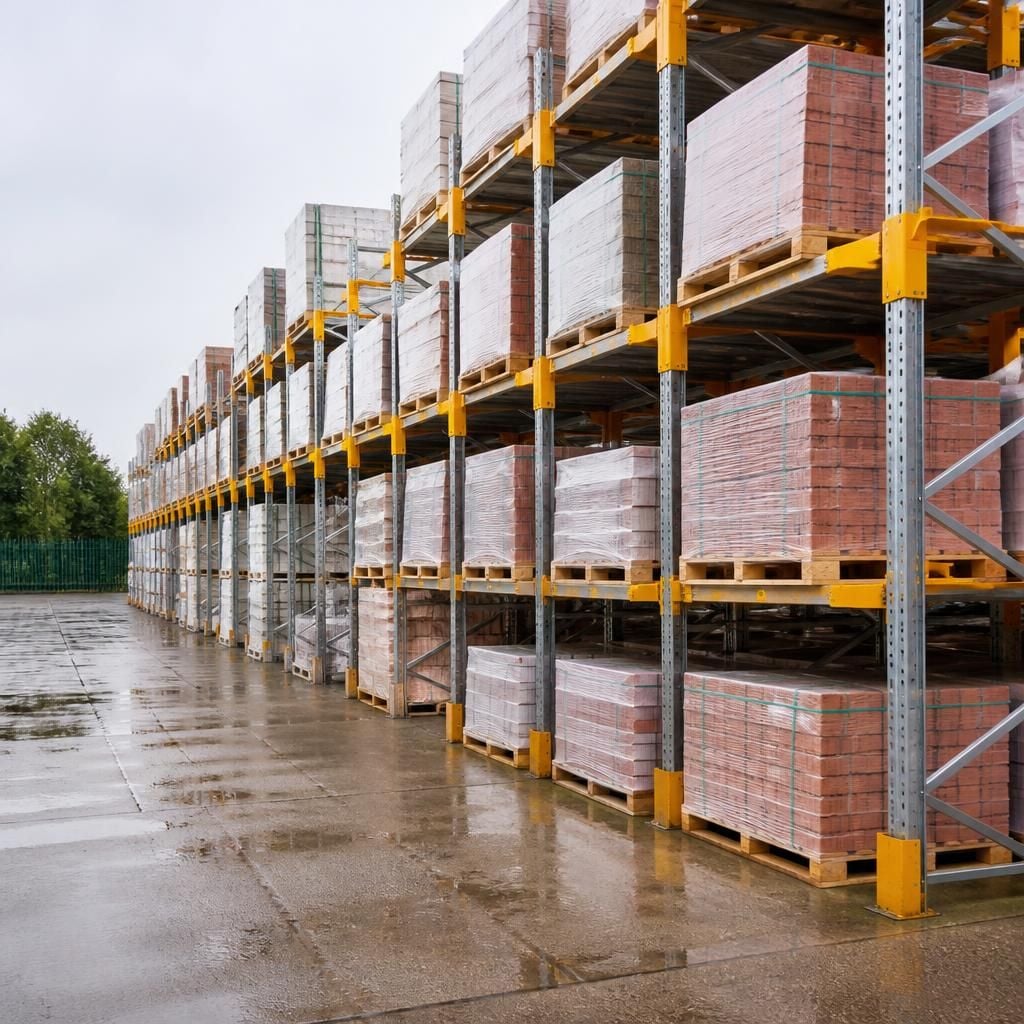
Outdoor pallet racking may warrant consideration when internal expansion is constrained by headroom, floor loading or existing fire arrangements. It does not remove structural checks: the external hardstanding and rack support still require assessment.
This comparison helps you judge the practical alternative rather than choosing outdoor storage solely because land appears available. We can review the site requirements and compare outdoor pallet racking with internal options before drawings are prepared.



