


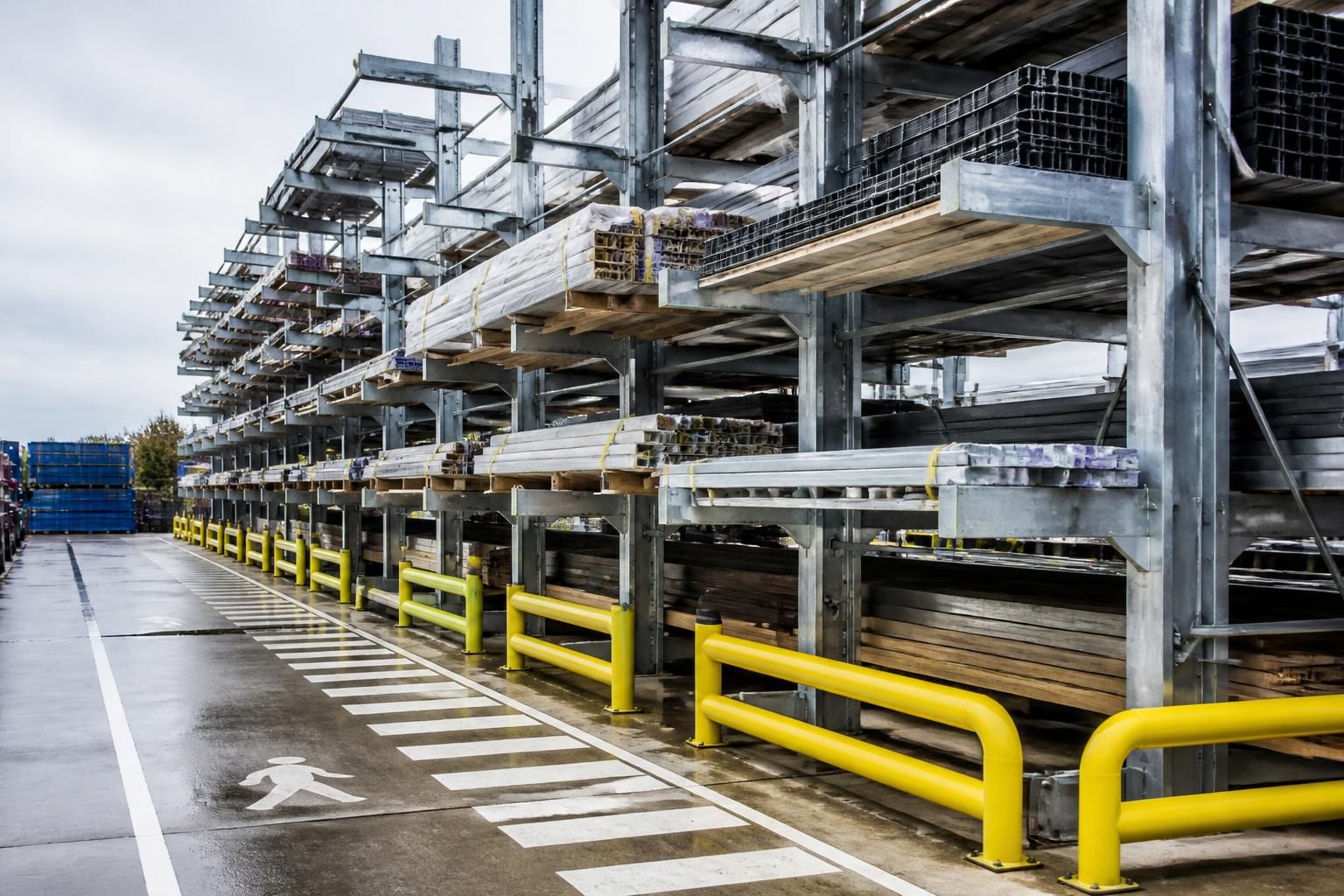
What safety standards apply to outdoor pallet racking?
Outdoor pallet racking should follow BS EN 15635 guidance, HSE warehousing principles, manufacturer load information and a documented site risk assessment. That means safe loading, impact protection, weather considerations, controlled access and recorded inspections, with defects taken out of service until addressed.
Outdoor pallet racking is governed by several requirements, not one standalone approval. The applicable controls depend on the rack design, stored materials, handling equipment, ground conditions and how people use the area.
Structural design standards provide the starting point. Standards for adjustable pallet racking cover structural design, specification, tolerances, clearances and expected deformation. They help define suitable components and installation requirements for the intended loads and operating conditions.
Outdoor conditions can alter those requirements. The design may need to consider wind exposure, snow, drainage, uneven ground, vehicle movements and corrosion. A rack designed for an internal warehouse cannot automatically be transferred outdoors without reviewing these factors.
Work equipment duties also apply. The Provision and Use of Work Equipment Regulations require employers to select suitable equipment, maintain it properly and provide appropriate information and training. This includes considering how forklift trucks, pedestrians and delivery movements interact with the rack.
Where staff climb, reach or work above ground level, the Work at Height Regulations may also become relevant. Access arrangements should prevent people from relying on rack beams, pallets or forklift forks as working platforms.
Installation controls should cover the prepared ground, base fixings, frame alignment, bracing and connection details. The installation record should identify the system supplied and any limitations that affect its use.
- Confirm the rack configuration against the approved drawings.
- Check that the floor or external foundation suits the imposed loads.
- Record changes made during installation and obtain design review where necessary.
- Keep assembly instructions and operational information available to relevant staff.
These records give you a practical reference when the layout changes, new handling equipment arrives or different stock is introduced. A change that appears minor can affect clearances, stability or access.
Site rules are part of the safety standard in practice. Marked routes, defined pedestrian areas, suitable lighting and clear operating instructions help control daily use. The site risk assessment should explain who may enter the storage area and how unusual activities are managed.
Outdoor pallet racking also needs a planned inspection process. Staff should report damage, movement, missing components and unusual corrosion. A competent person should carry out periodic examinations, with the interval based on the risks and operating conditions.
Inspection findings should identify the rack location, the defect, its seriousness and the action taken. Keep damaged or altered sections under control until a suitable person confirms the next step. Do not treat a visual repair as confirmation that the rack remains suitable.
Weather protection supports compliance but does not replace design review. Canopies, cladding and drainage can change wind loading and access conditions. Any addition should therefore be checked against the rack design rather than fitted as an unrelated improvement.
For a new or altered system, we can review the site, discuss stock and handling arrangements, then prepare written proposals and working drawings. Where required, project management can continue through installation and final commissioning.
Our racking inspections and aftercare can also support ongoing records. We work with the information available for the site, while the employer remains responsible for operating the equipment safely and following its documented controls.
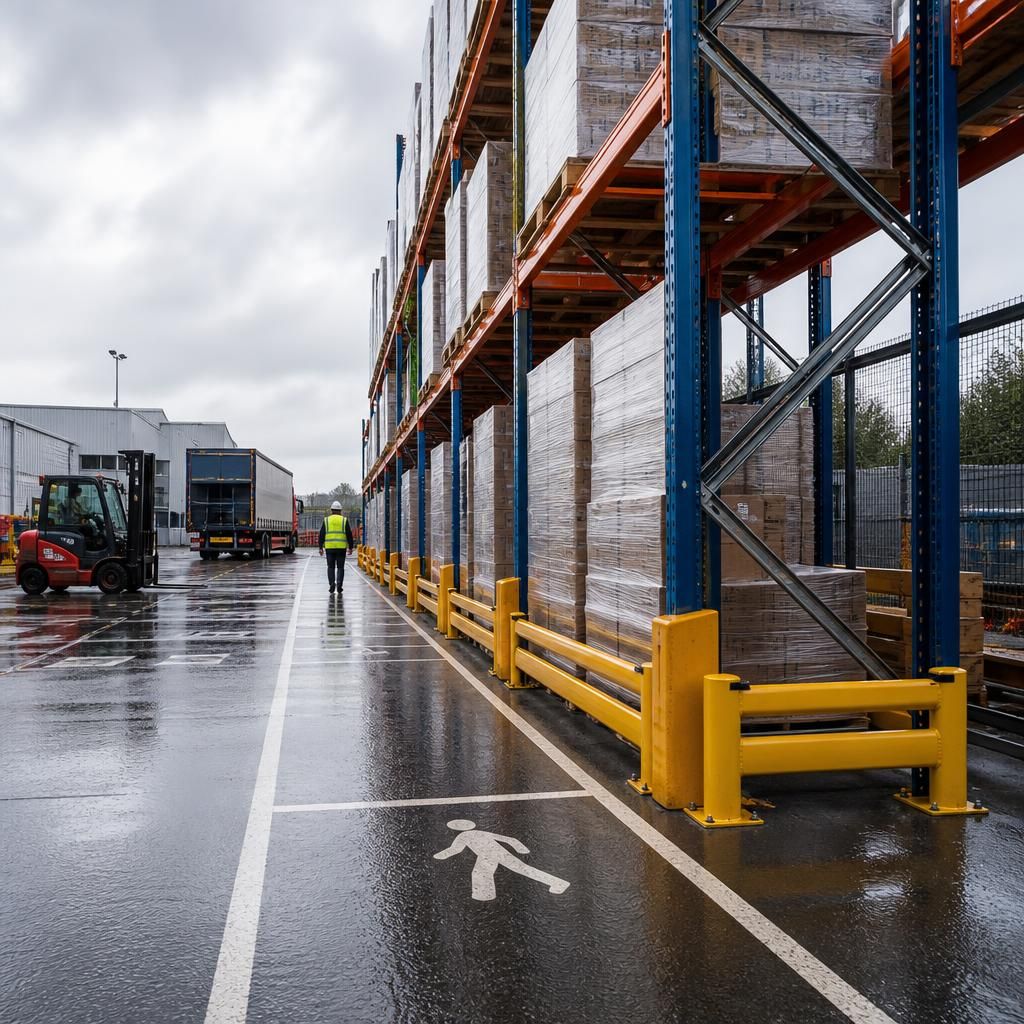
Safety barriers for outdoor pallet racking should protect exposed frames from forklift and delivery-vehicle impacts. Their position must suit the rack layout, traffic movements, pedestrian routes and required operating clearances.
Include barrier protection within the site risk assessment, then check it after layout or equipment changes. Barriers do not remove the need for safe driving controls, visible routes and recorded action when impact damage occurs.
Discuss your outdoor pallet racking safety requirements
Discuss your outdoor pallet racking safety requirements with us, including site conditions, traffic movements and inspection records. We can review the available information and explain the next steps for a written proposal and working drawings.



