


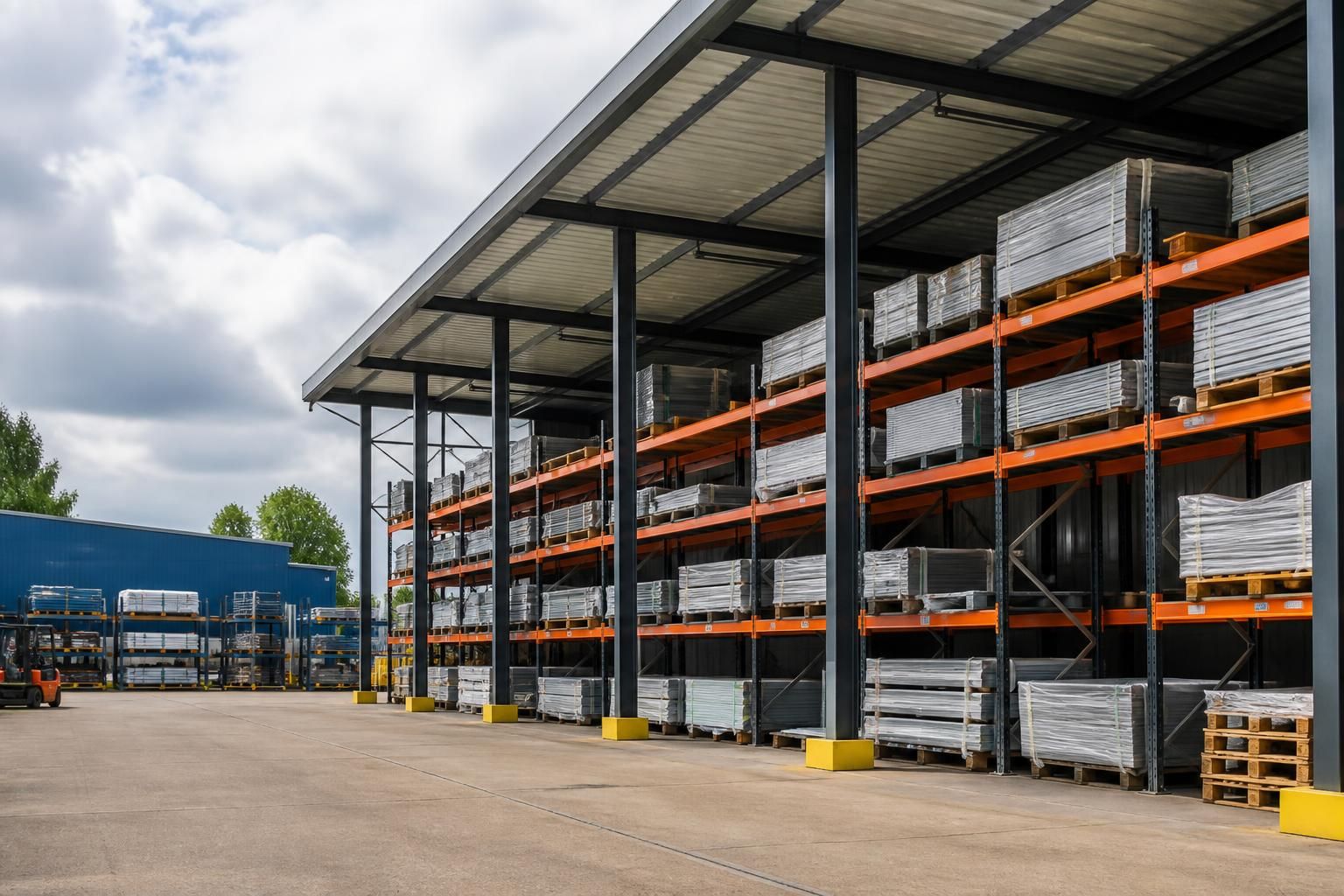
Should outdoor pallet racking use covered bays or open storage?
Outdoor pallet racking generally suits covered bays when stock needs protection from weather, while open storage may suit robust goods and simpler access.
Choose between them by reviewing stock, loads, access routes, site conditions and workflow before specifying the racking arrangement.
Outdoor pallet racking usually benefits from covered bays when moisture, dirt or sunlight could affect stock. Open storage may suit robust goods when exposure, access and site controls have been assessed.
The choice depends on more than the presence of a roof. Review the goods, packaging, pallet condition, loading method, vehicle movements and available working space together. The arrangement must support safe access and the way stock moves through the site.
- Choose covered bays where protection matters. A roof reduces direct exposure to rain, snow and sunlight. It can also help keep pallets, packaging and stored goods cleaner.
- Consider open storage for suitable goods. Durable materials or empty equipment may tolerate outdoor conditions. This option still requires suitable racking, stable pallets and controls for weather exposure.
- Use the site layout as a deciding factor. Covered bays need enough space for the supporting structure, vehicle routes and safe loading areas. Open storage may use a simpler footprint, but it must not obstruct traffic or emergency access.
- Assess stock rotation and handling. Frequently accessed pallets need clear approach routes and suitable access equipment. A covered bay should not create low clearances, awkward turning areas or poor visibility.
A covered bay does not remove every outdoor risk. Wind, temperature changes, condensation and water entering from the sides can still affect stored goods. Roof drainage and the position of the bay should therefore form part of the site review.
Open storage also needs protection against gradual deterioration. Racking components, pallets and stored materials remain exposed to rain and airborne dirt. Corrosion, damaged pallets and changes to load condition can affect continued use.
Keep load information visible and accurate for either arrangement. The racking design must reflect pallet dimensions, unit weights, beam levels and the equipment used for loading. Changes to stock or handling equipment may require the arrangement to be reviewed.
Covered and open bays also differ in how people use the space. Consider pedestrian segregation, vehicle routes, lighting, visibility and barrier protection. The layout should prevent routine handling from taking place in vehicle paths or beneath unsafe loads.
Security may influence the decision as well. A covered bay can protect stock from some weather conditions, but it does not automatically control access. Open storage may require stronger site arrangements where goods are vulnerable to unauthorised handling or removal.
For manufacturing and logistics sites, a covered bay can preserve a more consistent storage environment while keeping goods outside the main building. This may support space planning where indoor areas are needed for production, picking or workplace use.
Open storage may be appropriate where the goods are not affected by outdoor conditions and loading remains straightforward. It becomes less suitable when packaging absorbs moisture, labels become difficult to read or stock condition cannot be checked easily.
We can assess the proposed location through a no-obligation consultation, including a site meeting and survey where appropriate. We then prepare written proposals and working drawings for the selected pallet racking arrangement.
The review can consider covered bays, open storage and the relationship with existing buildings, routes and work areas. Where required, we can coordinate project management from proposal and tender stage through installation and final commissioning.
For West Midlands sites, the practical decision is usually clear after comparing stock sensitivity, load details, access requirements and site constraints. Covered bays suit stock needing greater protection; open storage suits goods that can withstand exposure without compromising safe handling.
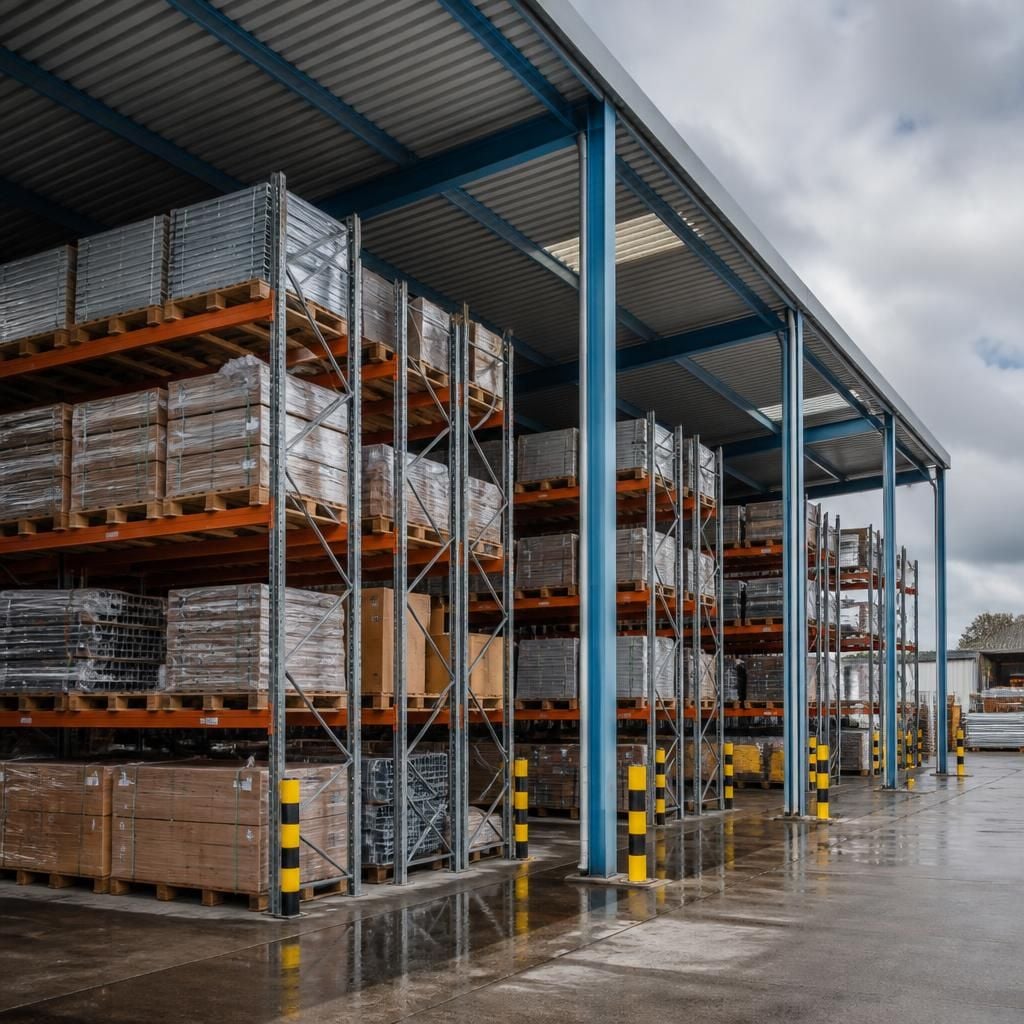
Outdoor pallet racking does not need one arrangement across the whole site. You can divide storage into covered and open zones when different goods have different exposure requirements.
Place weather-sensitive stock in covered bays, while robust goods may use open positions where exposure will not affect condition or handling. Mark the zones clearly and keep their use consistent, so stored goods remain in the protection level selected during planning.



