How should outdoor pallet racking be protected against corrosion?
Outdoor pallet racking should use a corrosion-resistant finish suited to its exposure, with drainage designed to prevent standing water. Regular inspections should identify coating damage, rust and trapped water before protection deteriorates.
Outdoor pallet racking needs protection matched to the site environment, steel finish, drainage details and maintenance arrangements. No single coating suits every outdoor storage area.
Start by assessing the exposure around the proposed location. Open sites face repeated wetting and drying, wind-driven rain, sunlight and airborne pollutants. Sites near roads may also receive salt deposits. Manufacturing processes can introduce chemicals, moisture or wash-down water.
A site assessment should consider water flow, ground conditions, vehicle routes, nearby processes and the type of stock handled. These details help determine how the racking should be finished and positioned.
Select a suitable steel finish
Galvanised steel can provide sacrificial protection, helping the coating protect exposed steel. A suitable paint system can provide an additional barrier where the exposure requires it.
Painted and galvanised finishes each need correct preparation and application. Coatings should cover vulnerable areas, including joints, fixings and prepared edges. Cut or drilled areas need compatible protection rather than untreated exposed steel.
Where different metals meet, specify compatible materials and fixings. Contact between dissimilar metals can accelerate local corrosion when moisture is present. The proposed finish should also suit cleaning chemicals and any industrial substances used nearby.
Control moisture around the structure
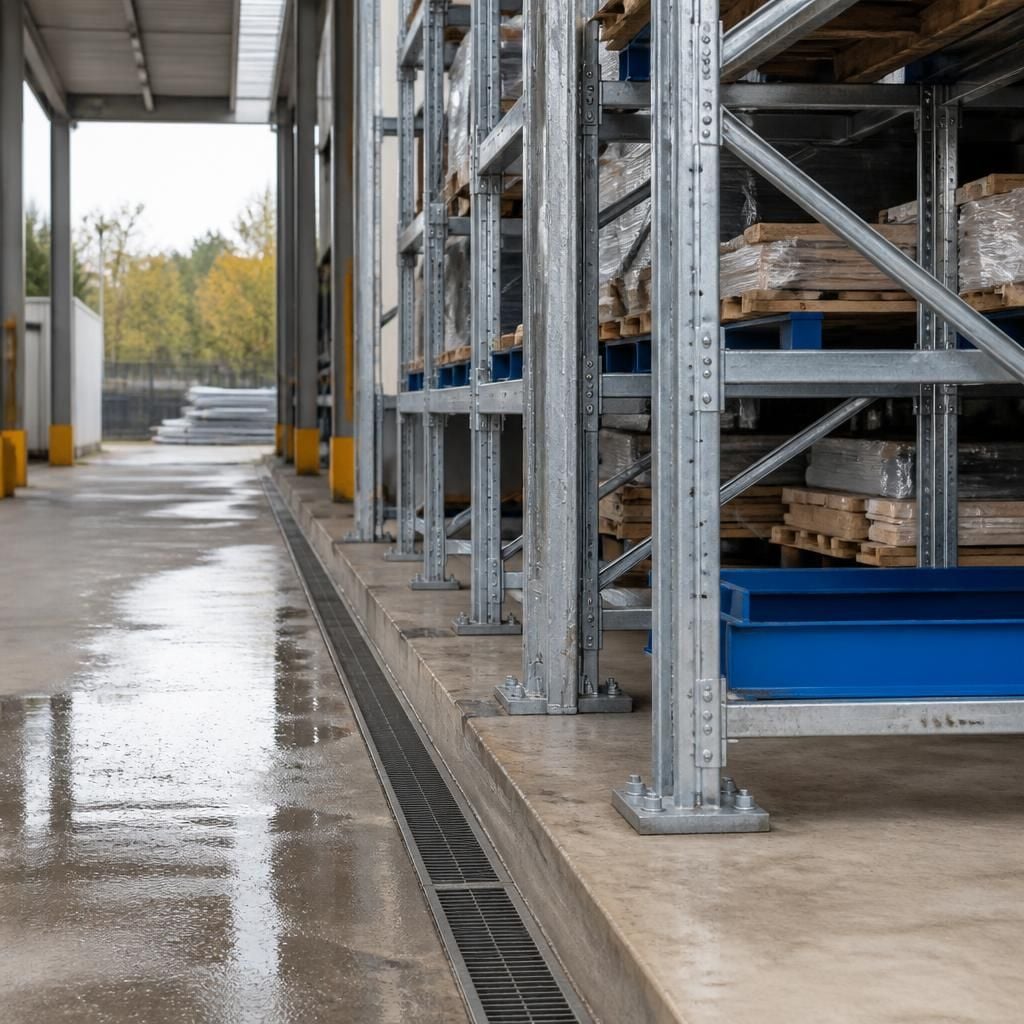
Good protection depends on keeping water from collecting against steel components. Detail bases, connections and adjacent surfaces so water can escape and air can circulate.
Keep leaves, packaging and damaged pallets away from uprights and baseplates. These materials can retain moisture against the coating. Check gutters, downpipes and nearby drainage routes for leaks or discharge towards the rack.
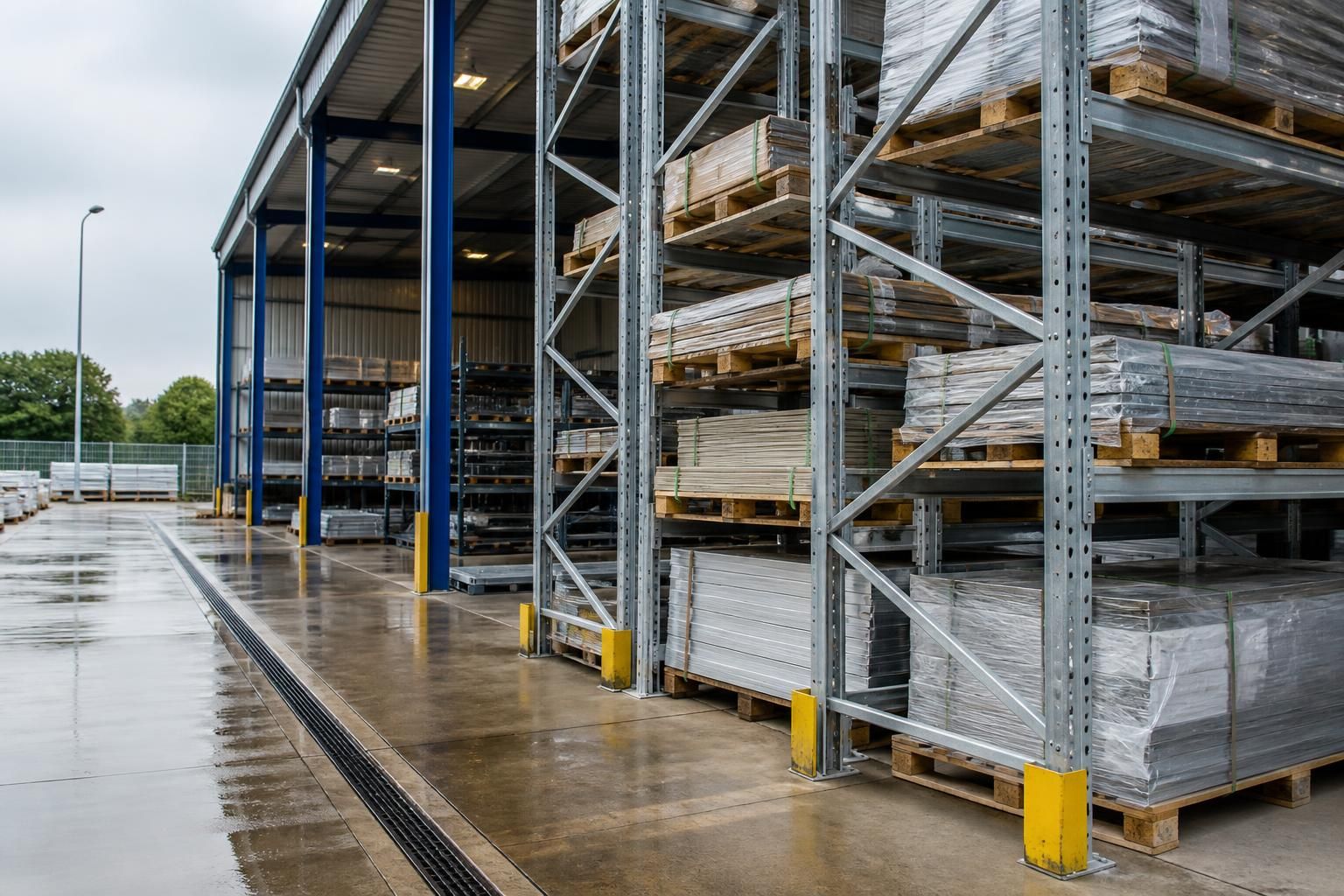
Covered bays can reduce direct rainfall, but they do not remove condensation or wind-driven moisture. Enclosed areas therefore still need airflow and sensible housekeeping.
Prevent operational damage
Forklift contact can break a coating and expose the steel beneath it. Safety barriers and workplace segregation can reduce contact with vulnerable uprights and end frames.
Position stock and handling routes so pallets do not scrape against the structure. Remove damaged pallets that could catch coatings or hold water against beams and uprights.
Inspect areas affected by impacts separately from general corrosion checks. A small coating mark may need action before moisture reaches the underlying steel.
Use a planned maintenance routine
Set inspection intervals according to exposure, usage and the consequences of corrosion. Record the location, condition and action for each defect.
- Look for blistering, flaking, staining, exposed steel and white corrosion products on galvanised surfaces.
- Check baseplates, joints, fixings and areas hidden behind labels or stored materials.
- Remove dirt and deposits using a cleaning method suitable for the coating.
- Investigate repeated wet areas rather than treating surface marks alone.
- Photograph defects and track repairs to identify recurring causes.
Do not apply fresh paint over loose rust, damp steel or a contaminated surface. Remove loose corrosion, prepare the area and use a compatible repair coating.
Follow the coating supplier’s preparation and drying instructions. Mixing systems without checking compatibility can reduce adhesion or leave vulnerable edges.
If corrosion has reduced a component’s section or affected a connection, restrict use until a suitable assessment is completed. Coating repairs cannot restore steel that has already lost structural capacity.
We can discuss these requirements during a no-obligation consultation, including a site meeting and survey where appropriate. Written proposals and working drawings can record the selected layout, access routes and protection details.
For projects requiring several workplace measures, project management may continue from proposal and tender stage through installation and final commissioning. This helps keep corrosion protection, access and safety arrangements considered together.
Leave inspection access around uprights, baseplates and connections. Stock or walls pressed against the rack can conceal dampness and coating damage. Mark these inspection zones in the layout, then keep them clear for cleaning, repairs and condition checks.