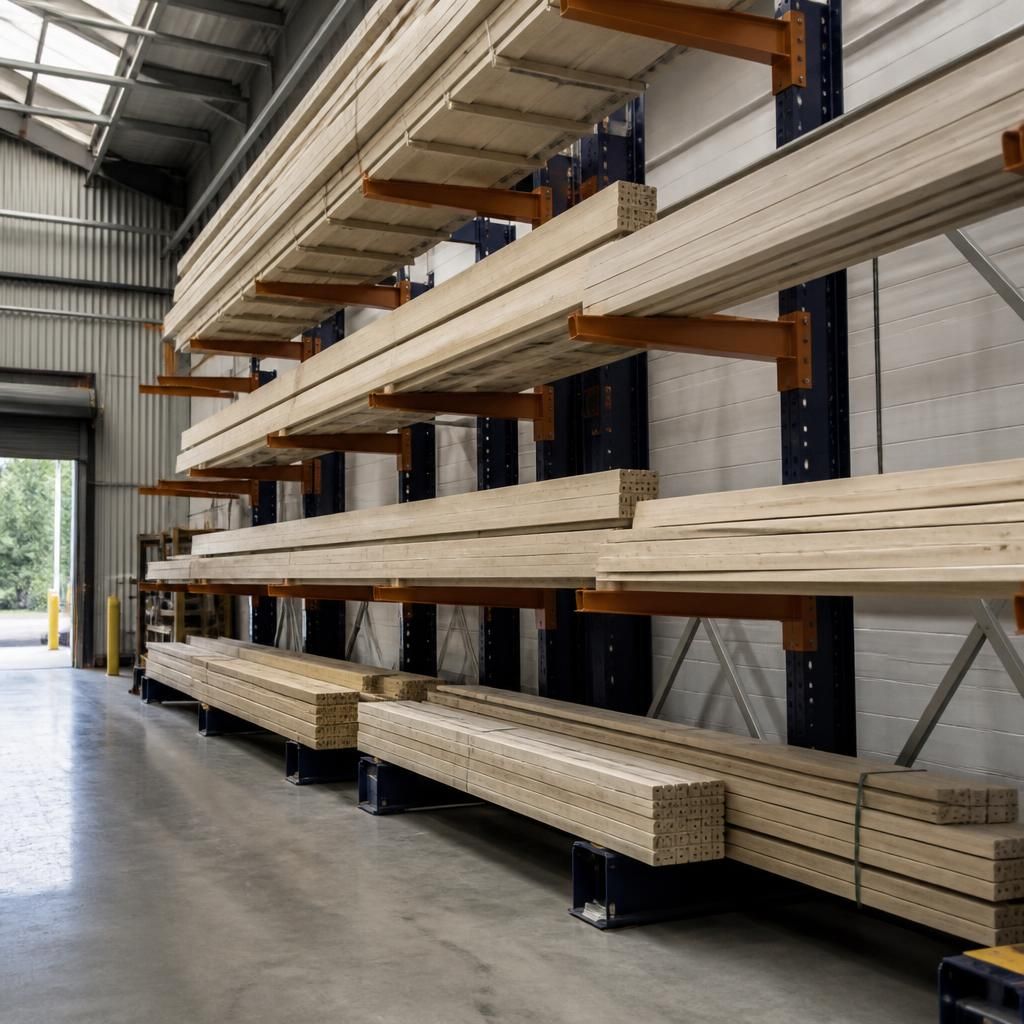
Is cantilever racking preferable to floor storage for long loads?
Cantilever racking is often preferable for long loads because it provides organised storage, clearer access and better use of available floor space.
Floor storage may suit occasional handling, low stock levels or loads that need ground-level access, so the right choice depends on your requirements and workflow.
Cantilever racking is usually preferable when long loads need defined storage locations, controlled handling and room for future layout decisions. Floor storage can remain suitable for low stock levels, occasional handling or loads requiring direct ground-level placement.
Choose cantilever racking when:
- Long items need support along their length rather than resting in unmanaged floor stacks.
- Different load types require separate positions for identification and handling.
- Forklift or other handling equipment needs a planned route to each storage position.
- Stock levels make repeated stacking and unstacking impractical.
- You need the option to review arm levels as storage requirements develop.
Cantilever racking provides upright frames and projecting arms for long loads. The spacing between levels should reflect the load dimensions, handling method and required clearance.
Floor storage may be the better choice where stock is infrequent, items are collected directly from ground level, or the available handling method cannot work safely at raised levels. It can also suit temporary holding areas, provided loads remain stable and do not obstruct routes, doors or working areas.
Compare the working method, not only the footprint. Floor stacks may appear simple, but they can require stock to be moved before reaching items beneath or behind them. That extra handling affects the practical suitability of the arrangement.
Cantilever racking can give each load a defined position. This supports a more consistent storage process, but it requires suitable spacing, load information and handling discipline. The frame, arms and floor fixing arrangement must suit the loads placed on them.
Safety also affects the decision. Long items can project into walkways or become unstable when stacked without suitable support. A planned racking arrangement can help separate storage from movement areas, although safe use still depends on correct loading and site procedures.
The preferred option may differ across one warehouse. Frequently handled stock may suit racking, while occasional or oversized items may remain at floor level. A mixed arrangement can therefore make better use of the available layout than applying one method everywhere.
Before specifying cantilever racking, we can discuss the stock, handling equipment, access routes and available space. A no-obligation consultation may include a site meeting and survey, followed by a written proposal and working drawings.
Where required, we can also manage the project from proposal and tender stages through installation and final commissioning. This helps coordinate the racking arrangement with the wider warehouse layout.
Spartan Direct Limited has worked on commercial and industrial space since 1982. For long-load storage, that practical background supports a decision based on stock movement, site conditions and the way you use the building.
Cantilever racking should be assessed against the building as well as the long loads. Floor slab condition, available height, columns, doors and access routes can affect the practical choice.
Floor storage still transfers load directly to the slab, while racking introduces upright positions and fixing requirements. A site survey helps confirm whether the proposed arrangement suits the building before you compare the two methods.