


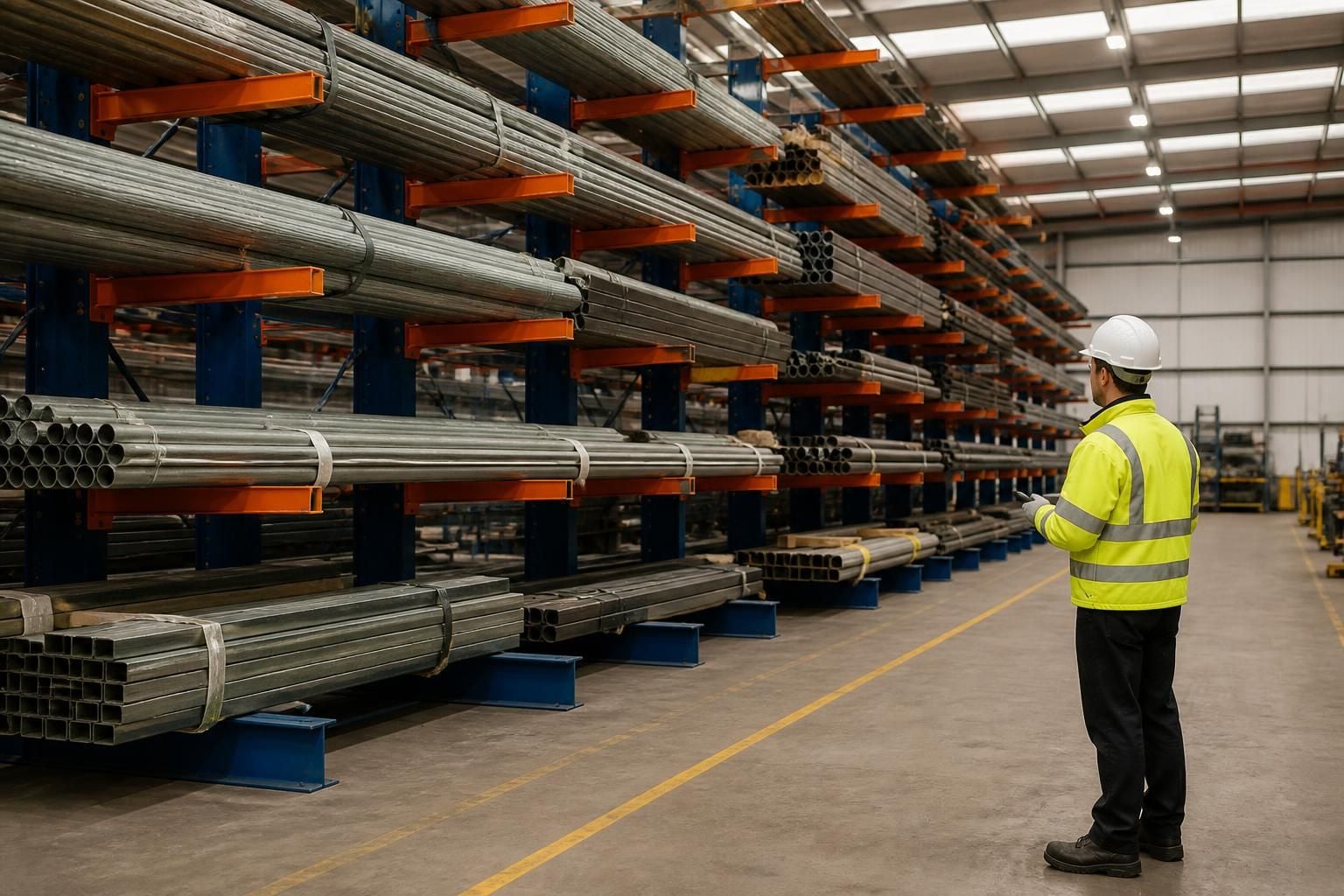
How will cantilever racking installation affect warehouse operations?
Cantilever racking installation can increase organised long-load storage and improve access, while changing aisle layouts, handling routes and safety controls. We assess the site, stock and workflow before preparing written proposals and working drawings, helping you judge the operational effect before installation.
Cantilever racking installation can temporarily restrict warehouse activity, then improve long-load handling once commissioned. The main effects concern work zones, travel routes, stock access, handling methods and safety controls.
During installation
Installation introduces a defined work area within the warehouse. You may need to keep stock, people and handling equipment away from that area.
This can alter normal travel routes and picking patterns while work takes place. Planning should therefore consider loading activity, deliveries, dispatches and pedestrian movement.
Where several storage areas operate together, work sequencing can help maintain access to unaffected stock. We can discuss these operational constraints when preparing the project proposal.
After installation
Cantilever racking changes how you arrange long loads. Items can be stored in designated bays instead of occupying informal floor areas or obstructing working routes.
This creates clearer separation between storage and movement areas. It can also give handling teams a more consistent location for each stock type.
The final effect depends on the load lengths, weights, handling equipment and available clearance. The racking must suit the stock and the way people work around it.
Access and handling
Long loads need sufficient clearance for placement and removal. Arm levels, aisle positions and approach routes all influence how easily operators can reach stock.
Installation may require changes to existing storage positions or handling routes. These changes should be considered before stock returns to the affected area.
Organised cantilever storage can reduce unnecessary stock movement. It does not remove the need for suitable handling practices or careful control of loads.
Safety and separation
A new racking layout should support clear separation between stored materials, pedestrians and moving equipment. Impact protection and workplace segregation may form part of the wider project.
Line marking can identify routes, boundaries and working zones around the installation. Barrier protection can provide additional separation where the site layout requires it.
Load notices should reflect the installed arrangement and relevant loading information. Racking inspections after installation can help identify damage or conditions requiring attention.
Workflow decisions
- Identify which stock must remain accessible during the work.
- Confirm how long loads enter, leave and move through the storage area.
- Review pedestrian routes and handling equipment movement around the racking.
- Decide where temporary stock positions could create obstruction or confusion.
- Consider whether workplace segregation, line marking or barrier protection is needed.
These decisions help compare the planned arrangement with the way your warehouse operates now. They also show where installation may require changes to routines.
We can provide a no-obligation consultation, site meeting and survey, followed by written proposals and working drawings. Where required, project management can continue through installation and final commissioning.
Spartan Direct Limited has worked with storage systems since 1982, including cantilever racking for long-load storage. Our stated experience covers companies of different sizes across the UK.
The installation should be judged by its effect on access, movement, separation and usable storage space. A suitable arrangement supports those needs without assuming that every warehouse follows the same workflow.
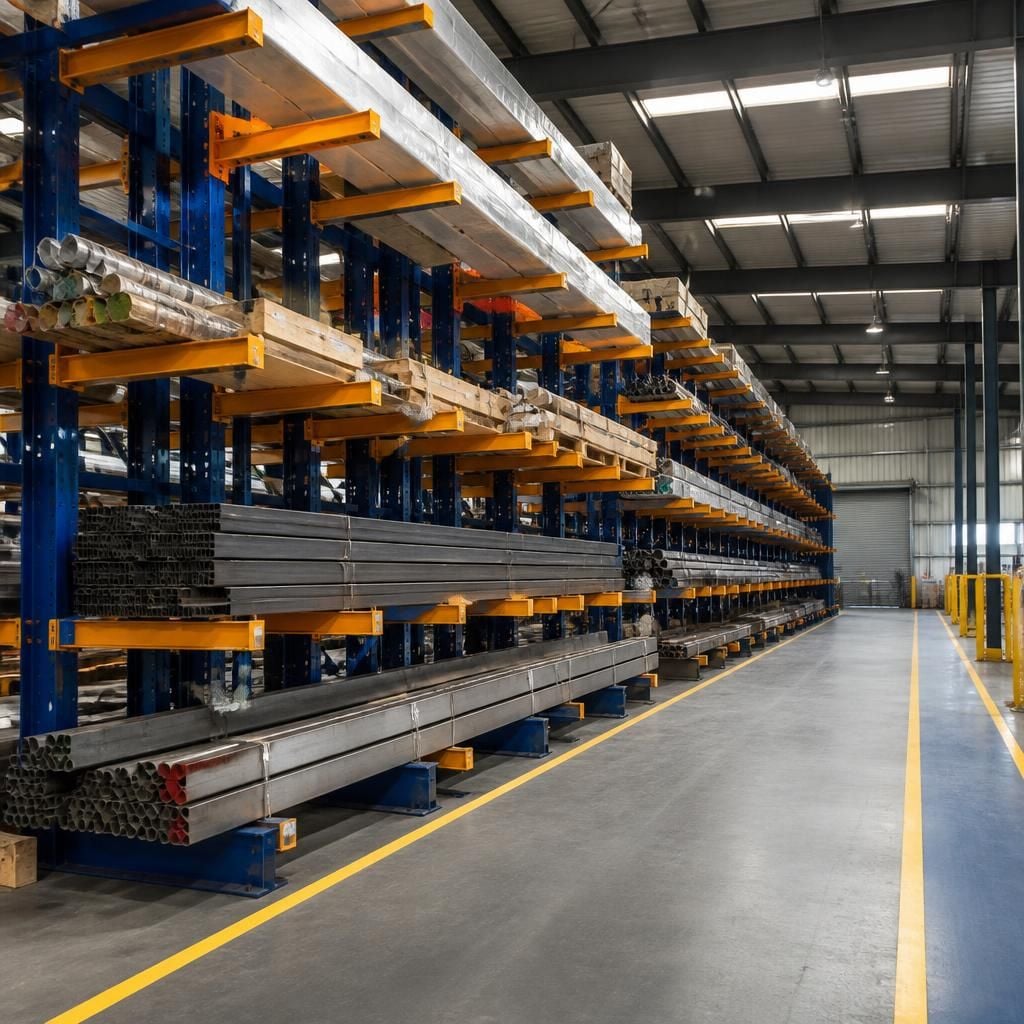
Operational fit depends on where long loads are used, not simply how much racking fits. Frequently handled stock may need closer access to suitable handling routes, while less-accessed materials can occupy less convenient positions.
We review stock movement, load dimensions, equipment and clearances together before installation. This helps working drawings reflect how the warehouse operates, rather than treating storage positions in isolation.



