


How does cantilever racking height affect access to long loads?
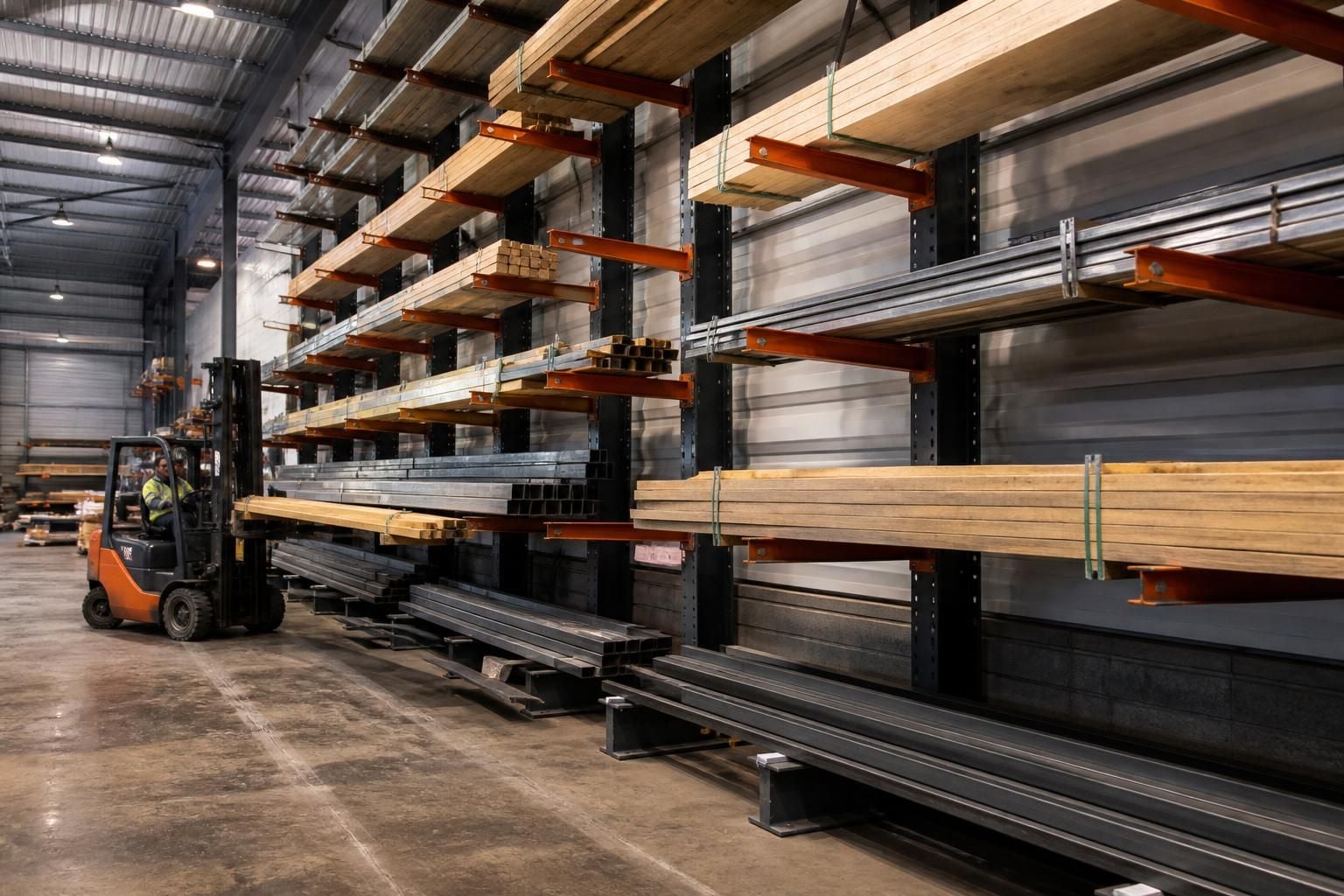
Cantilever racking height affects how easily you can reach, see and place long loads. Higher levels may require suitable handling equipment and careful planning of access routes, so we assess load dimensions, handling methods and site layout before specifying the racking.
Cantilever racking height affects access by changing the reach, visibility and handling method needed for each storage level. The most suitable height leaves every long load accessible within the limits of the site, equipment and working process.
Higher arms can increase vertical storage use, but they may also place loads beyond comfortable manual reach. Access equipment might then be needed, depending on load weight, dimensions and the handling method used at the site. That equipment also requires suitable clearance, floor conditions and movement space.
Access depends on more than the height of the upright. The spacing between levels must allow the load to enter and leave without fouling the arm above. Long stock also needs enough room to project safely along the rack, without obstructing doors, walkways, vehicles or adjacent work areas.
Visibility is another consideration. Loads stored above eye level can be harder to identify before removal. Clear stock descriptions, consistent locations and an uncluttered layout can reduce unnecessary handling. The access method should allow operators to confirm the load before placing or retrieving it.
The lowest level can influence daily efficiency as much as the highest level. If the lower arms sit too close to the floor, loading may become awkward. If they sit too high, available vertical space may be underused. The arrangement should reflect how often each load is accessed and how it is handled.
When selecting height, consider these points:
- Load dimensions: Record length, height, weight and shape for the stock that the racking will hold.
- Handling equipment: Check the equipment’s reach, turning space and operating limits against the proposed levels.
- Building clearance: Allow for the roof, lighting, services, doors and other fixed obstructions above the racking.
- Load frequency: Keep frequently accessed stock at levels that support the established handling process.
- Working routes: Review vehicle paths, pedestrian movement and the space needed to approach each rack.
- Future requirements: Consider possible changes in stock sizes, handling methods and storage volumes before fixing the arrangement.
A height that appears suitable on a drawing may not work well once clearances and movement routes are considered. Site measurements therefore need to support the working layout, not just the available building height.
Our no-obligation consultation may include a site meeting and survey. We can then prepare a written proposal and working drawings showing the proposed arrangement. These documents provide a clearer basis for reviewing access before cantilever racking is supplied.
For a site in the West Midlands, the review can take account of the building layout, stock characteristics and handling process together. This helps you compare usable access at each level, rather than selecting height from a catalogue dimension alone.
Installation positioning also matters. Uprights, arms and row spacing must follow the agreed arrangement, with access routes kept consistent with the handling plan. Where required, we can provide project management from proposal and tender stage through installation and final commissioning.
The final height should therefore balance storage density with practical access. If equipment cannot reach a level safely, or operators cannot approach it clearly, additional height may not provide useful storage. A measured review of loads, clearances and workflow gives you a sounder basis for choosing the arrangement.
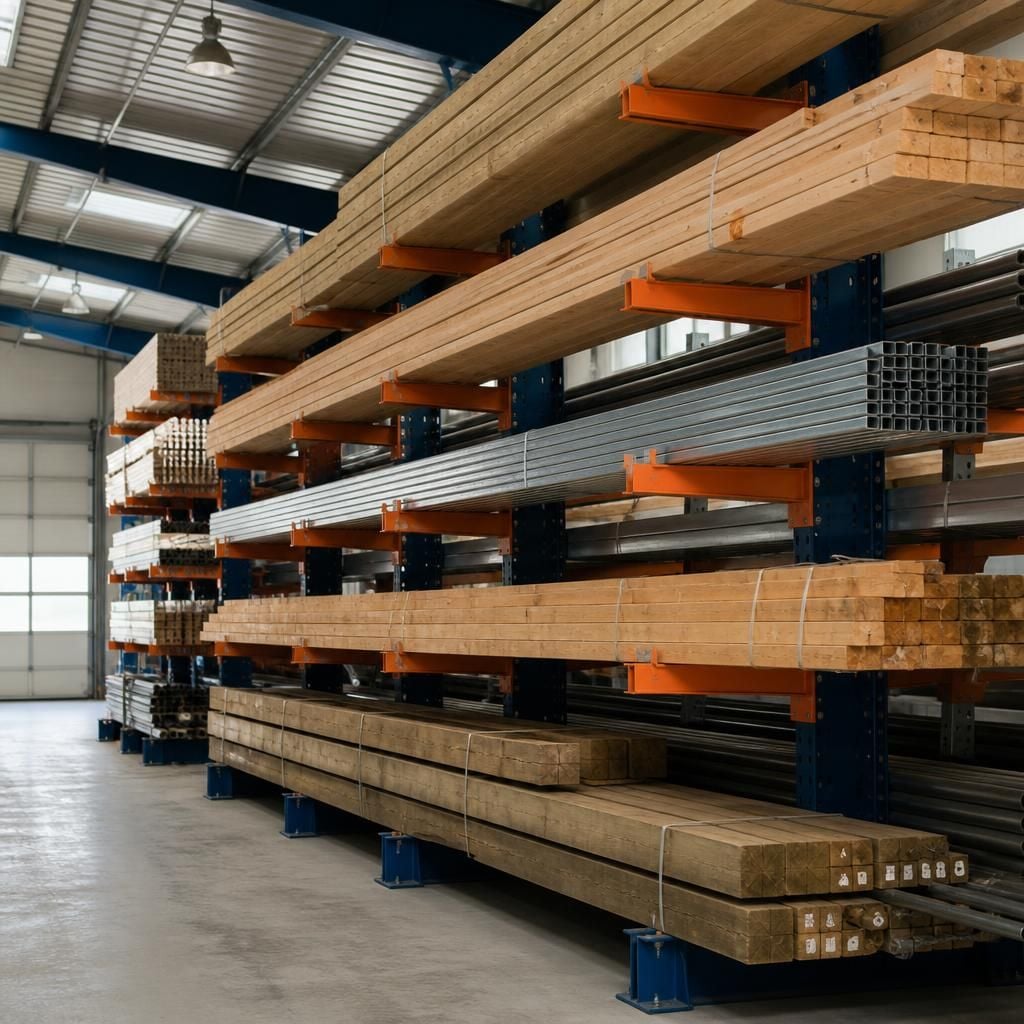
Height also affects the transfer point between cantilever racking and nearby work areas. Long loads need a clear place for controlled handover before processing, packing or dispatch.
Allowing for this transfer space helps prevent higher storage levels from creating congestion at floor level. The arrangement should reflect how stock moves after removal, not just where it rests.



