


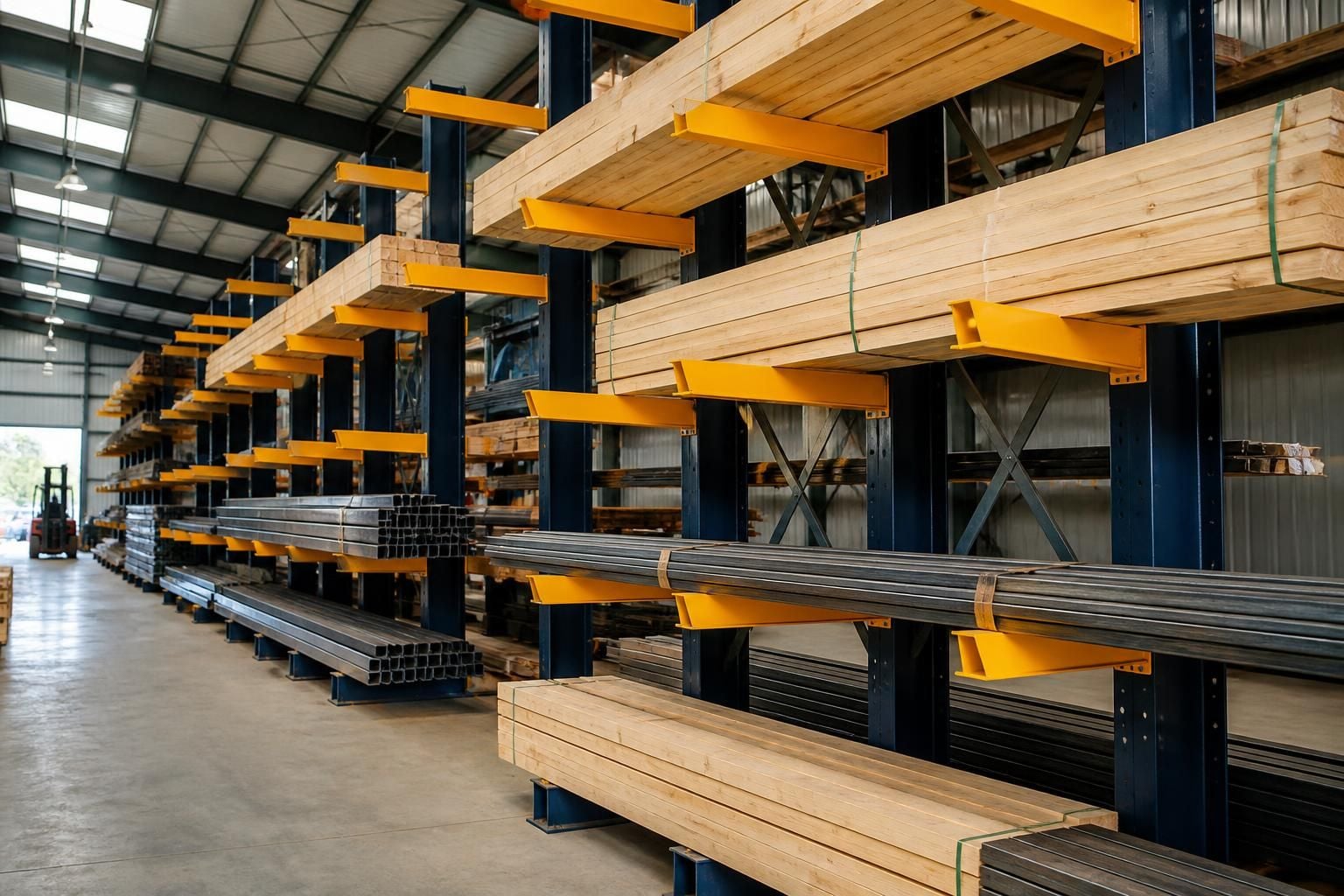
How does cantilever racking capacity affect long-load storage choices?
Capacity determines arm and upright specification, level loading, and whether cantilever racking suits the long loads and handling method. We review dimensions, weights, support spacing and workflow before preparing a proposal, so capacity matches the storage requirement.
Cantilever racking capacity should match the heaviest planned load, its shape, support pattern and handling method. Choosing only by total weight can produce an unsuitable layout.
Capacity normally relates to each arm, upright and storage level. The complete bay must also carry the combined load placed across its levels. A proposal therefore needs more than the weight of one item.
- Record the weight of individual loads and complete bundles.
- Measure load length, width, height and any irregular shapes.
- Note how loads contact the arms and whether weight sits evenly.
- Identify the number of levels and the intended load on each level.
- Confirm how equipment will place and remove the stock.
Long materials can impose uneven forces when their weight is concentrated near the arm ends. A bundle may also behave differently from separate lengths. Support spacing and the position of the load across each arm therefore influence the appropriate capacity.
Arm length also affects the selection. Longer arms may accommodate deeper stock, but the load must remain supported within the intended arrangement. Increasing arm length without reviewing the full configuration can change the working capacity.
Upright capacity matters when several levels share one frame. The lowest level may carry different loads from the upper levels. The design should reflect the planned loading pattern rather than an assumed equal distribution.
Storage height can affect the practical choice as well. Higher levels may require different handling movements and clearer access. The selected arrangement must suit the equipment, aisle layout and way people work around the rack.
Capacity should also account for the stock’s future use. If load weights, dimensions or quantities may change, record those possibilities during the specification stage. Do not add heavier loads later without checking the complete racking configuration.
The building floor forms part of the assessment. Cantilever uprights transfer loads through their bases, so the survey should consider the available floor and surrounding conditions. Where necessary, further structural information may be needed before finalising the proposal.
Our consultation may include a site meeting and survey to establish these details. We then prepare written proposals and working drawings showing the intended arrangement. This gives you a basis for comparing storage capacity with access and handling requirements.
We have designed and installed storage systems for companies of different sizes across the UK. That experience informs the questions we ask, but the correct capacity still depends on the stock and site information provided.
The result should provide sufficient support for the stated loads without selecting capacity in isolation from the rest of the warehouse. A balanced specification protects usable space, access and the way long loads move through the operation.
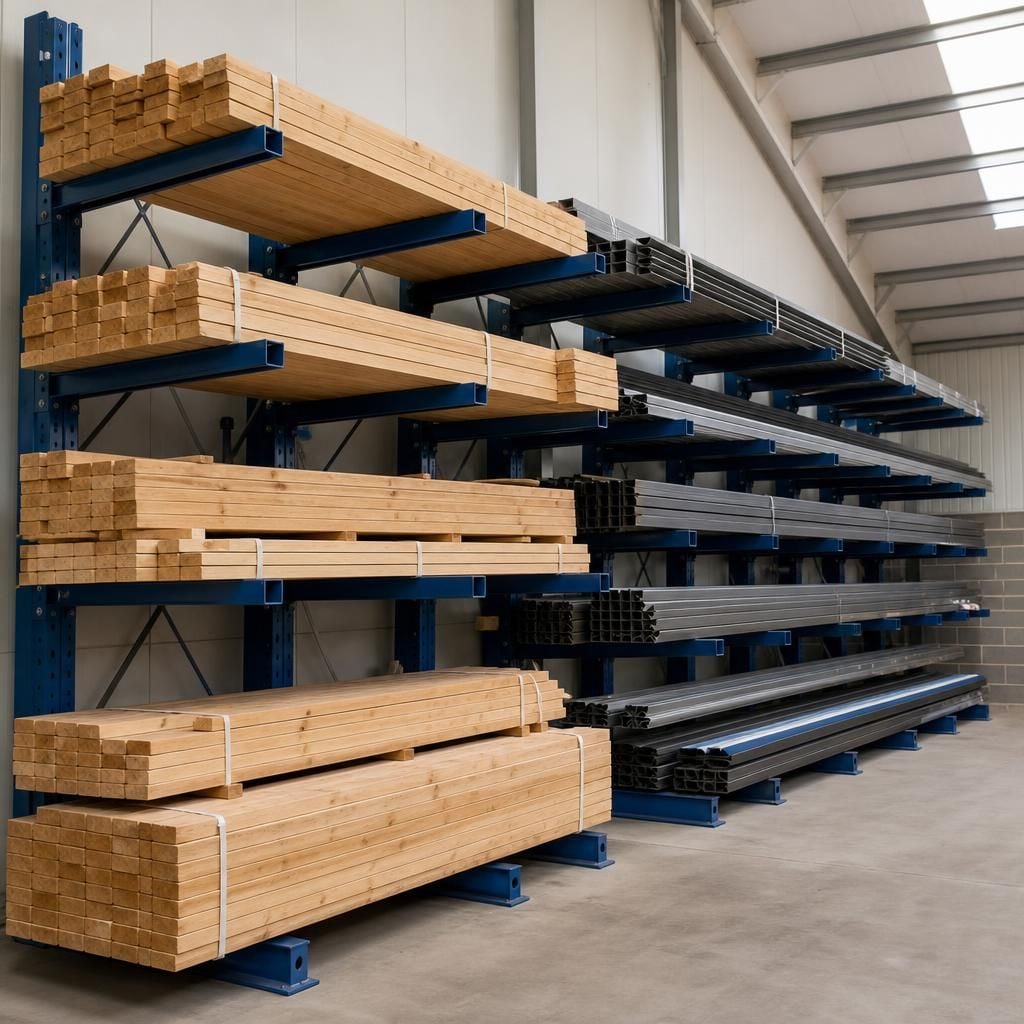
Capacity also affects how much usable storage each bay provides. A higher-rated arm does not automatically create more storage if the chosen spacing reduces access or limits the number of practical levels.
Compare the intended load arrangement with the available bay width, clearances and handling route. The most suitable specification balances load support with usable storage density, so capacity does not dictate a layout that slows stock movement.



