


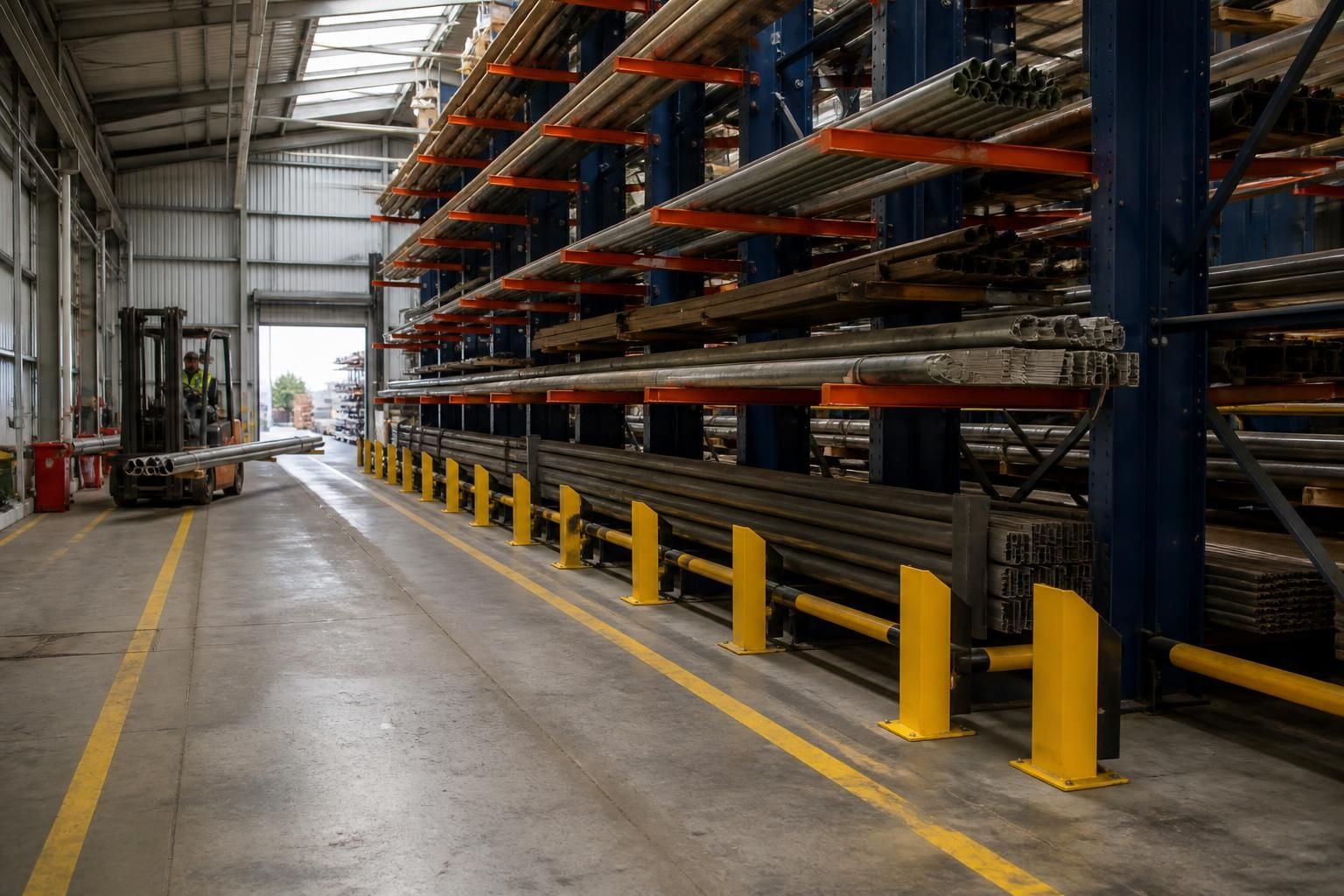
How can long loads be protected from impact around cantilever racking?
Protect long loads around cantilever racking with barrier protection, workplace segregation, clear routes and line marking for vehicle and pedestrian movement.
We can survey the site and prepare proposals for safety infrastructure that supports safer movement around the racking.
Cantilever racking protects long loads from impact when the rack layout, handling process and physical safeguards work together. The aim is to prevent contact with uprights, arms, stored materials and nearby structures.
Long stock creates particular risks during handling. It can extend beyond the fork carriage, swing during turns or move sideways when placed onto the arms. The length can also make it harder for operators to judge the distance from rack ends and access routes.
Before selecting protection, assess how stock enters, leaves and moves around the cantilever racking. Important points include:
- the length, weight and shape of the materials being stored;
- the handling equipment used to lift and carry those materials;
- turning areas beside rack runs and at aisle ends;
- the position of exposed uprights, arms, doors and building structures;
- pedestrian access near loading and picking areas; and
- locations where stock may overhang the rack or project into movement areas.
These factors determine where impact protection should sit and how much clearance the operation needs. Protection should shield vulnerable rack components without creating a new obstruction for long loads or handling equipment.
Protective measures can include guards around exposed rack ends and uprights, impact-resistant posts, and strengthened separation at points where vehicles approach the storage. The exact arrangement depends on the site, equipment and movement pattern. It should be shown clearly on the working drawings before installation.
Load stability also matters. Cantilever arms should support the stock at suitable positions, while materials that can roll or shift may need appropriate retaining arrangements. Loads should remain within the agreed rack capacity and storage configuration. A protective guard cannot correct unsuitable loading or poor placement.
Handling procedures should define how operators approach the rack, place long loads and remove them without dragging materials against the arms. Supervisors should also check that stock does not extend into areas used by vehicles or pedestrians.
Impact protection needs review after any collision, even when damage appears minor. A bent guard, displaced arm or damaged upright can affect the rack’s condition and its ability to support stored materials. The affected area should be taken out of use until it has been assessed and any required remedial work is identified.
Racking inspections provide a further check on damage, alterations and unsafe conditions. We can discuss the inspection requirements alongside the storage layout, so protection remains appropriate as stock, equipment or working practices change.
A site meeting and survey can examine these risks in context. We can then prepare written proposals and working drawings for the required cantilever racking and associated protection. Where a project needs coordination, project management may continue through installation and final commissioning.
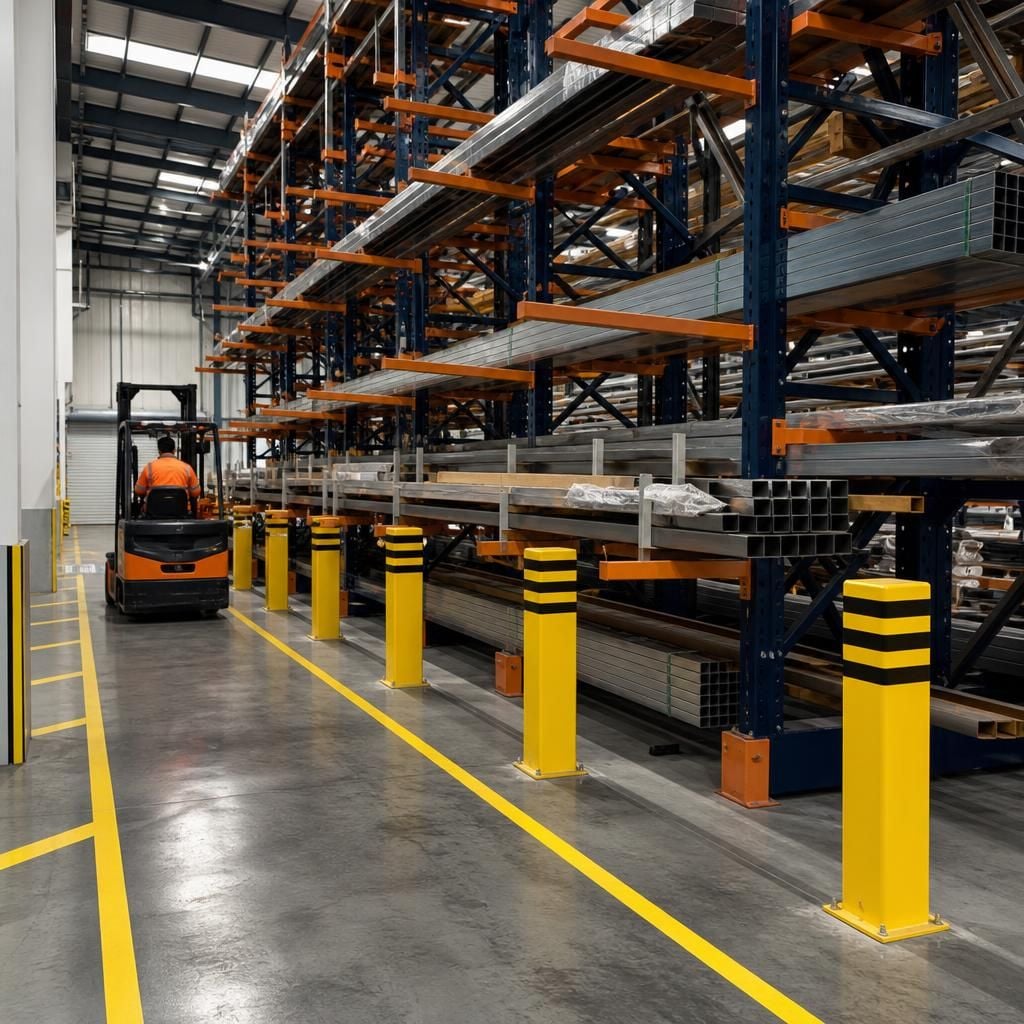
Protection should be coordinated with the way long loads are presented to the rack. Loading points, transfer areas and rack ends may need different safeguards because approach angles and available clearance change.
Working drawings can show these differences clearly, helping installers position protection without restricting fork access or the movement of long stock.



