Where should warehouse barrier protection be installed?
Safety barriers should be installed wherever vehicles, pedestrians, racking, stock or equipment face collision risks.
Typical locations include loading areas, aisle ends, junctions, doorways, walkways and exposed structural supports, confirmed through a site survey.
Install warehouse barrier protection at points where a moving vehicle could reach people, storage equipment, machinery or building fabric. The correct position depends on traffic routes, turning space, impact direction, operating speeds, visibility and the consequences of contact.
Protect pallet racking and stored goods
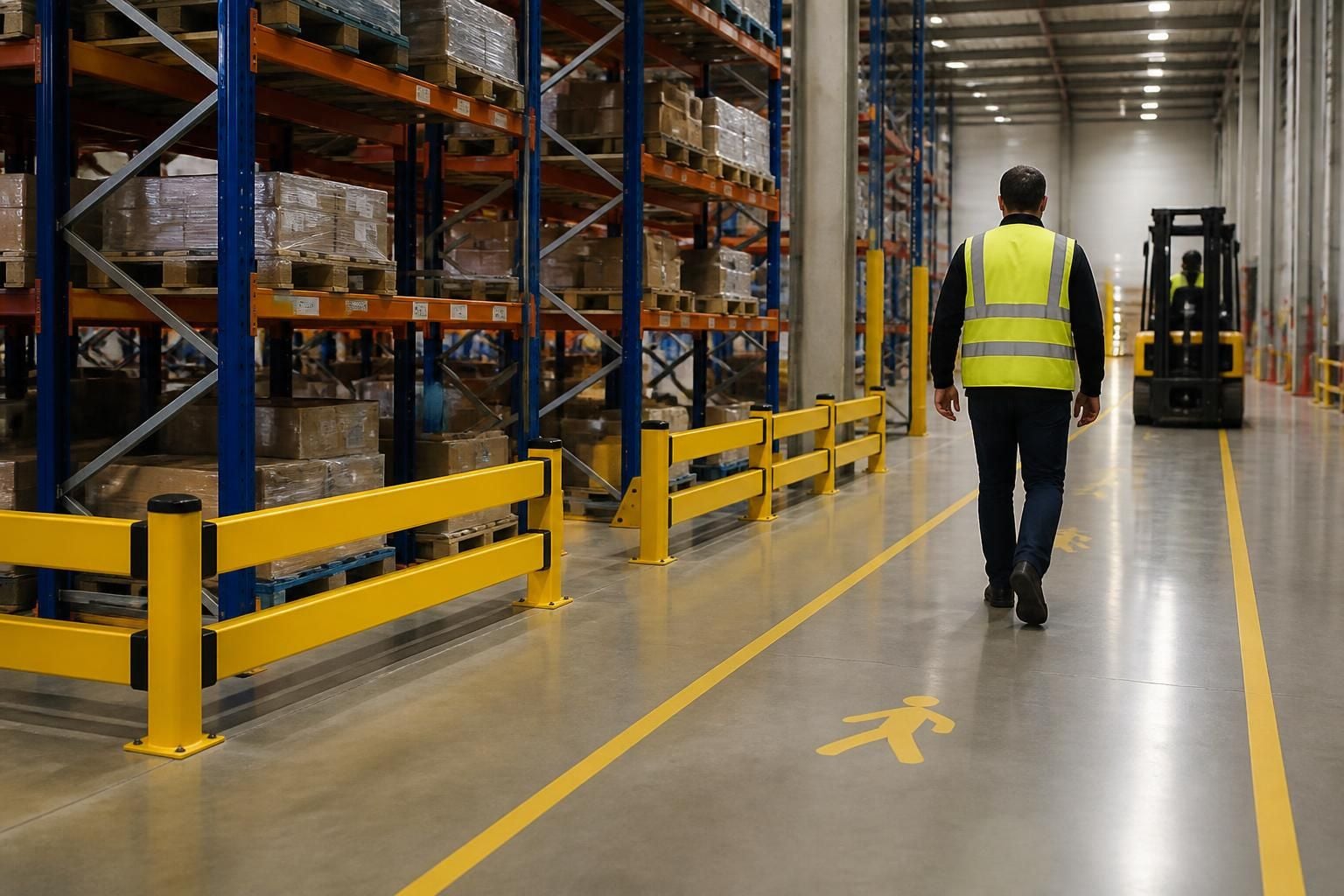
Install protection around pallet racking uprights, rack corners and other exposed frame sections beside vehicle routes. End-of-run protection is useful where trucks approach the rack face or turn near stored loads.
Consider protection at lower-level rack positions where forks, pallets or vehicle bodies could strike the structure. The barrier should sit far enough from the rack to absorb likely contact without reducing required operating clearance.
Review the arrangement when storage layouts change. A barrier positioned for one aisle width may obstruct access after rack extensions, new equipment or revised picking routes.
Separate people from vehicle movements
Use pedestrian guardrails where staff walk beside powered trucks, reach picking locations or cross operational routes. Place the rail to create a clear, continuous boundary rather than leaving gaps at its ends.
At crossing points, guide pedestrians towards a defined crossing rather than allowing informal shortcuts. Keep the crossing visible to drivers and avoid placing stock, waste containers or equipment where they conceal approaching people.
Protect access to offices, welfare areas, workstations and control points when those entrances open onto warehouse traffic. The barrier should guide people towards the entrance without narrowing the route below its required width.
Guard machinery, plant and controls
Install impact protection around conveyors, wrapping equipment, charging points, compressors and other fixed plant exposed to vehicle movement. Protect control panels, emergency controls and service access where a collision could damage operation or hinder safe access.
Protection should not prevent maintenance staff from reaching equipment safely. Leave enough room for inspection, servicing and removal of components, while keeping vehicles away from vulnerable parts.
Where machinery has a defined operating envelope, place the barrier outside that envelope. Check that moving parts cannot contact the guard during normal operation or maintenance activity.
Protect structural features and building services
Review columns, low-level services, pipework, electrical equipment and other fixed features beside vehicle routes. These items can require guarding when their position leaves little recovery space for a driver.
Use the site layout to identify features hidden by stock, shelving or temporary work areas. A clear drawing can show conflicts that are difficult to spot during routine warehouse activity.
Do not use barriers to cover an underlying layout problem. Relocating stock, changing a route or improving visibility may be necessary alongside physical protection.
Consider door approaches and restricted-clearance areas
Protect the sides of door approaches where vehicles pass close to frames, walls or pedestrian access. Allow doors to open fully and preserve the manoeuvring space needed for the intended vehicle.
Where clearance is limited, use a barrier arrangement that protects the vulnerable edge without creating a second collision point. Mark the route clearly so drivers can recognise the usable passage.
Account for traffic movement, not just static position
Map vehicle paths from entry to loading, storage, picking and dispatch activities. Include reversing, turning, parking and fork movement when deciding where protection belongs.
Check swept paths around corners and near fixed objects. A guard that protects one face may leave the adjoining face exposed during a turn.
Consider the likely impact height and direction. Low-level rails, upright guards and heavier vehicle barriers serve different exposure points, so selection should follow the hazard assessment.
Keep routes usable after installation
Barrier protection must leave suitable space for people, vehicles, fire escape routes, doors and routine handling tasks. It should not create trip hazards, pinch points or blind corners.
Check floor condition, slab depth, drainage, thresholds and existing services before fixing protection. The fixing method should suit the structure and the loads expected from contact.
Review visibility from driver and pedestrian positions. High or poorly placed guarding can hide people, signs, controls or approaching vehicles.
Confirm positions through a site survey
We can review the warehouse layout, traffic routes, storage arrangements and exposed assets during a no-obligation consultation. A site survey helps identify protection points in their working context.
We then prepare written proposals and working drawings where required. These can show barrier runs, access gaps, equipment clearances and interfaces with pallet racking or other workplace systems.
For projects involving several work areas, project management may continue from proposal and tender stage through installation and final commissioning. This keeps the agreed protection arrangement connected with wider layout changes.
Spartan Direct supplies and installs safety infrastructure for commercial and industrial workplaces across the West Midlands. The right installation is the one that protects the identified risk while preserving access, visibility and workflow.
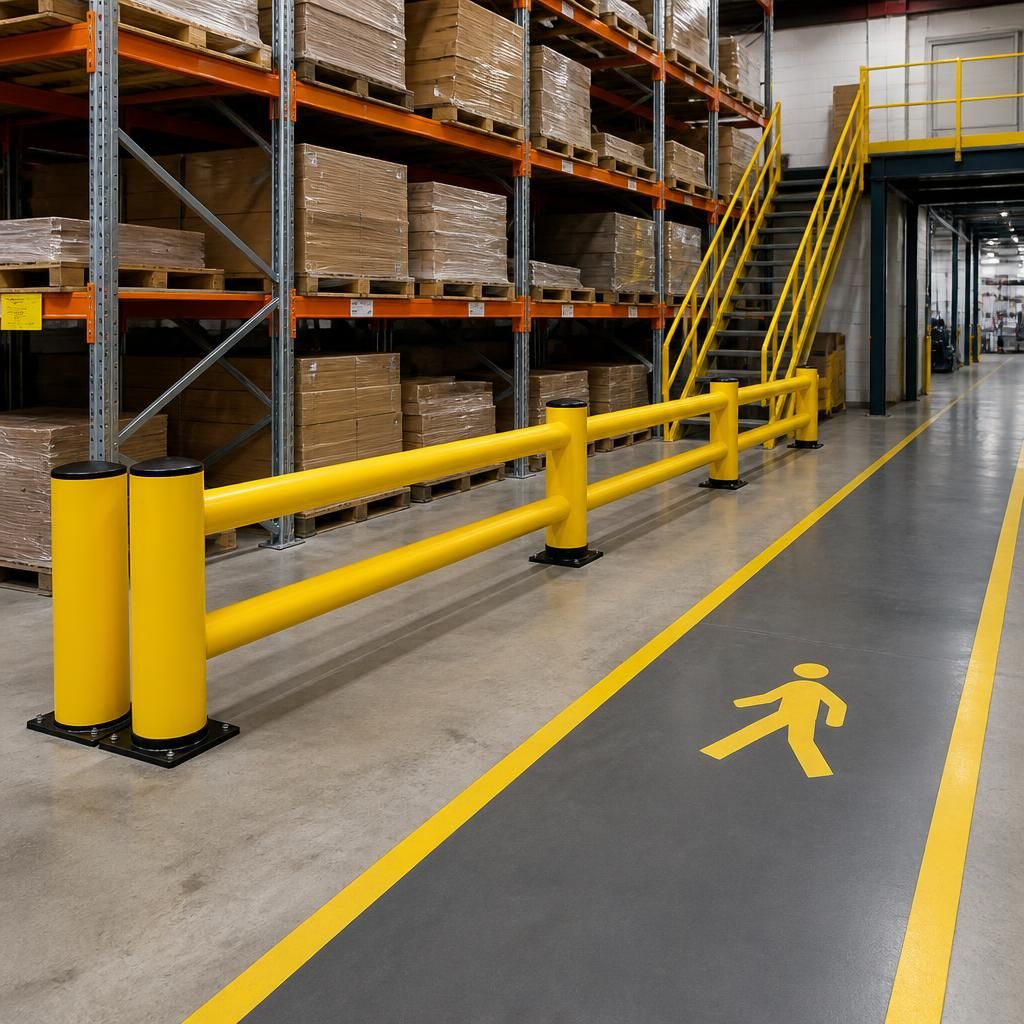
Warehouse barrier protection also belongs beside raised work areas, stair approaches and mezzanine access points exposed to vehicle traffic. Position the guard outside the access route, so people can enter and leave without stepping into vehicle space.
Check each junction with a wall, rack or existing guardrail. The boundary should remain continuous, with no opening that encourages shortcuts. This protects access points while keeping pedestrian movement separate from warehouse vehicles.