Which pedestrian safety barriers suit routes requiring frequent access?
Pedestrian safety barriers suit routes requiring frequent access when they separate pedestrians from vehicle movements while keeping access points clear. We assess the site, traffic pattern and access requirements before preparing proposals, working drawings and an installation plan.
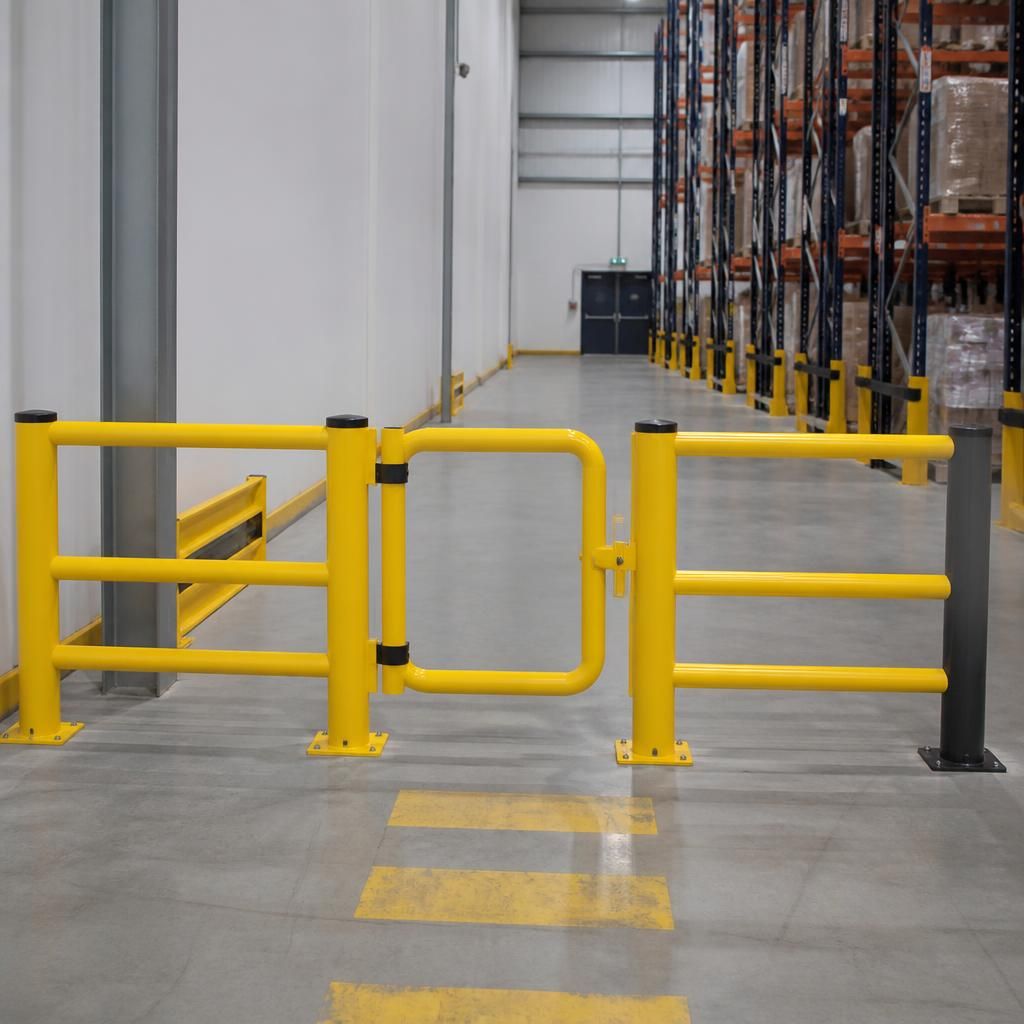
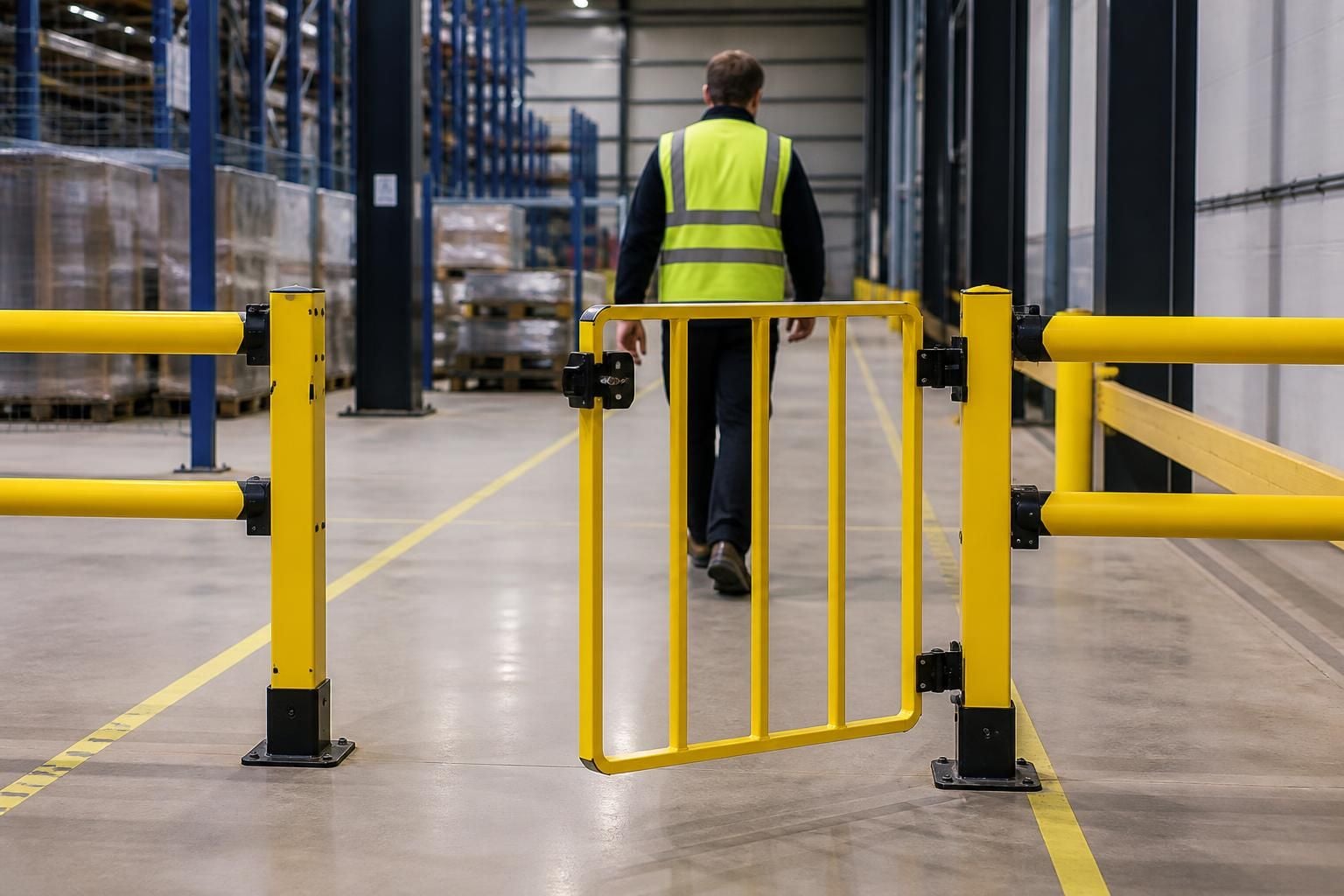
Fixed pedestrian safety barriers with a dedicated gate usually suit routes requiring frequent access. They keep the main separation in place while allowing people through a defined opening.
This arrangement avoids moving barrier sections whenever staff need to pass. It also gives the route a clear entry point, rather than leaving several possible crossing places.
Choose the barrier arrangement around how the route operates:
- Regular pedestrian movement: Use a fixed barrier line with a pedestrian gate at the normal crossing point.
- Frequent access with hands or equipment: Review the gate position, opening direction and clear width carefully.
- Occasional removal of the barrier: Consider a removable section only where access is infrequent and controlled.
- Several access points: Keep crossings limited and clearly positioned around the actual workflow.
A fixed barrier line provides a consistent boundary beside vehicle routes, work areas or storage zones. The gate then manages pedestrian movement without weakening that boundary along its full length.
Gate operation matters as much as the barrier itself. A gate that is awkward to use may encourage people to walk around it. Check whether users carry stock, paperwork, tools or other items through the opening.
Also consider whether the gate should return to a closed position after use. That decision depends on the level of separation required and how the route is supervised.
Set the opening from the real movement pattern. Measure the people, equipment and materials using the route. A narrow opening may obstruct work, while an unnecessarily large opening can reduce separation.
Review the following points before selecting the arrangement:
- How often people cross the barrier line.
- Whether access is pedestrian-only or shared with handling equipment.
- The direction of travel on both sides of the barrier.
- Whether the gate swing could obstruct another route, door or work area.
- Where people naturally approach the opening.
- Whether stock, bins or equipment could be left against the barrier.
- How the opening will remain visible during normal warehouse activity.
Do not use a removable section for routine access unless its handling has been properly considered. Removing and replacing sections can create extra manual handling and leave the route unprotected between movements.
For occasional wide access, a removable arrangement may have a place. It should have a defined storage position and a clear method for restoring the separation afterwards.
Frequent-access routes also need practical end details. Barrier ends should not create an obvious point for people to step into vehicle space. Returns, corners and adjoining protection should follow the route rather than stopping short of it.
Where pedestrian safety barriers sit beside pallet racking, machinery or workstations, check the relationship between the barrier and normal tasks. Staff should not need to open the gate into an operating area to collect stock or complete routine work.
For office or commercial areas, the same principle applies. Place the opening where people already need to pass, while keeping vehicle movements separate from normal office access.
We can review the access pattern, surrounding layout and operating requirements before preparing working drawings. This helps define the barrier line, gate position and access arrangement before installation.
The final proposal should show how the barrier connects with adjacent protection and how users move through the opening. It should also identify any points requiring site coordination during the work.
Spartan Direct provides safety infrastructure for commercial and industrial spaces across the West Midlands. We can coordinate the proposal, installation and project management where the project requires it.
For routes used repeatedly, prioritise a fixed barrier line, a clearly located pedestrian gate and an opening sized around actual movement. That combination supports regular access without turning the whole barrier into a movable obstruction.
Pedestrian safety barriers should meet a suitable floor condition at every access point. Uneven surfaces, stored items or raised thresholds can make frequent passage difficult, particularly when people carry stock or equipment.
During a site survey, we review the floor around the opening and its relationship with nearby routes. The proposal can then show the barrier line, gate position and surrounding clearance before installation.