


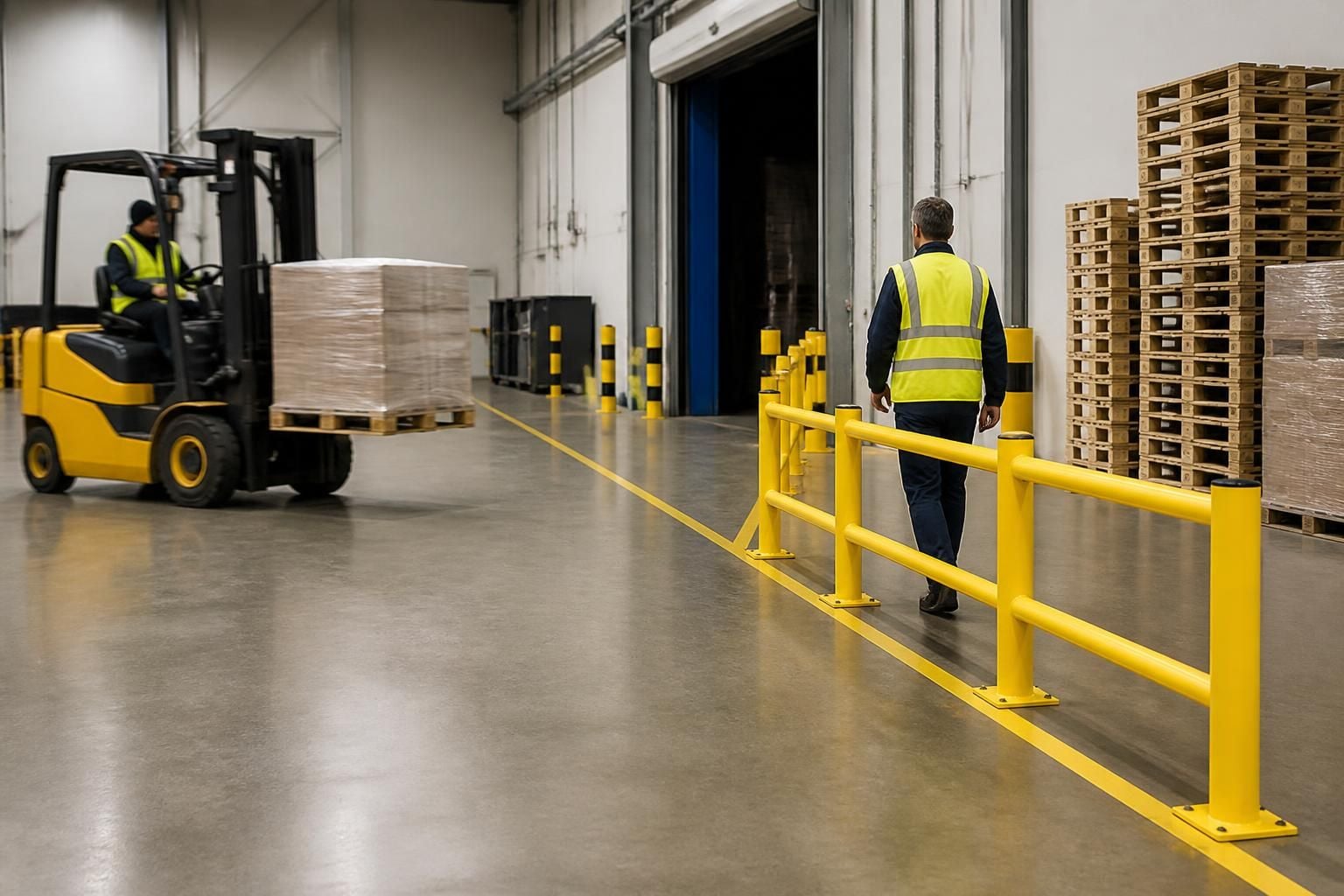
Which pedestrian safety barriers suit loading bays with mixed traffic?
Pedestrian safety barriers with clear separation between people and vehicles suit mixed-traffic loading bays, while maintaining necessary loading access.
We assess vehicle movements, pedestrian routes, doors and site requirements before recommending the appropriate barrier arrangement.
For loading bays with mixed traffic, fixed pedestrian safety barriers with controlled access points usually provide the clearest starting point. The arrangement should separate walking routes from forklifts, delivery vehicles and loading activity, while preserving the access needed for stock movement.
The right choice depends on traffic patterns, loading doors, turning areas, pedestrian destinations and the space available around each operation. A barrier that suits a quiet storage aisle may obstruct a busy loading bay. We therefore assess the site before recommending the barrier arrangement.
- Fixed pedestrian barriers: These suit established routes that should remain protected during normal loading activity. They create a defined boundary beside vehicle lanes, dock approaches and working areas.
- Barrier systems with access gates: These suit routes requiring controlled crossing points. The gate position should support the workflow without creating an informal shortcut through vehicle movements.
- Removable or repositionable sections: These can suit loading bays where occasional access is necessary. They require clear rules for removal, storage and replacement, so protection does not depend on guesswork.
- Point protection such as bollards: These can protect corners, doors, columns and equipment. They do not replace a continuous pedestrian route barrier where people and vehicles travel alongside each other.
Fixed barriers generally suit permanent traffic patterns. Access sections suit planned movement through the boundary. Point protection suits specific vulnerable items. Many loading bays need a combination rather than one barrier type.
When comparing pedestrian safety barriers, consider these practical points:
- Pedestrian route: People need a recognisable path that does not rely on walking through loading manoeuvres.
- Vehicle movement: Forklifts and delivery vehicles need sufficient room to turn, reverse and approach loading positions without striking the barrier.
- Loading access: Doors, dock plates, pallet routes and handling areas must remain usable. A barrier should protect access points without blocking necessary movement.
- Impact exposure: Locations beside turning vehicles, rack ends or loading edges may need stronger protection than low-traffic pedestrian boundaries.
- Visibility: The barrier layout should not create hidden corners near vehicle crossings, doors or waiting areas.
- Future changes: If stock flows, doors or workstations may change, the proposed arrangement should allow those requirements to be considered before installation.
A continuous barrier may provide stronger route definition, but it can make pallet transfers less practical. A gate may preserve access, but an unsuitable position can increase crossing points. A removable section may support occasional changes, but it needs disciplined site control.
We use site meetings and surveys to examine these competing requirements. The review can consider vehicle routes, pedestrian destinations, door clearances, loading tasks and areas needing point protection. We then prepare written proposals and working drawings for the selected arrangement.
Where a loading bay forms part of a wider warehouse project, we can coordinate the barrier work with pallet racking, shelving or mezzanine floors. This helps the proposed pedestrian routes reflect storage access and the movement of stock. Office fit-outs and partitioning may also affect how people enter or leave operational areas.
Installation should follow the agreed layout, with access points and protected areas identified before work begins. Where required, project management can continue from proposal and tender stages through installation and final commissioning.
The most suitable pedestrian safety barriers are therefore those that match the loading bay’s actual traffic pattern. For fixed routes, choose continuous protection. For necessary crossings, use controlled access sections. For vulnerable corners and equipment, add point protection.
A site survey gives you a sounder comparison than selecting barriers from appearance alone. It allows the proposed design to account for space, loads, workflow and access before materials and installation are arranged.
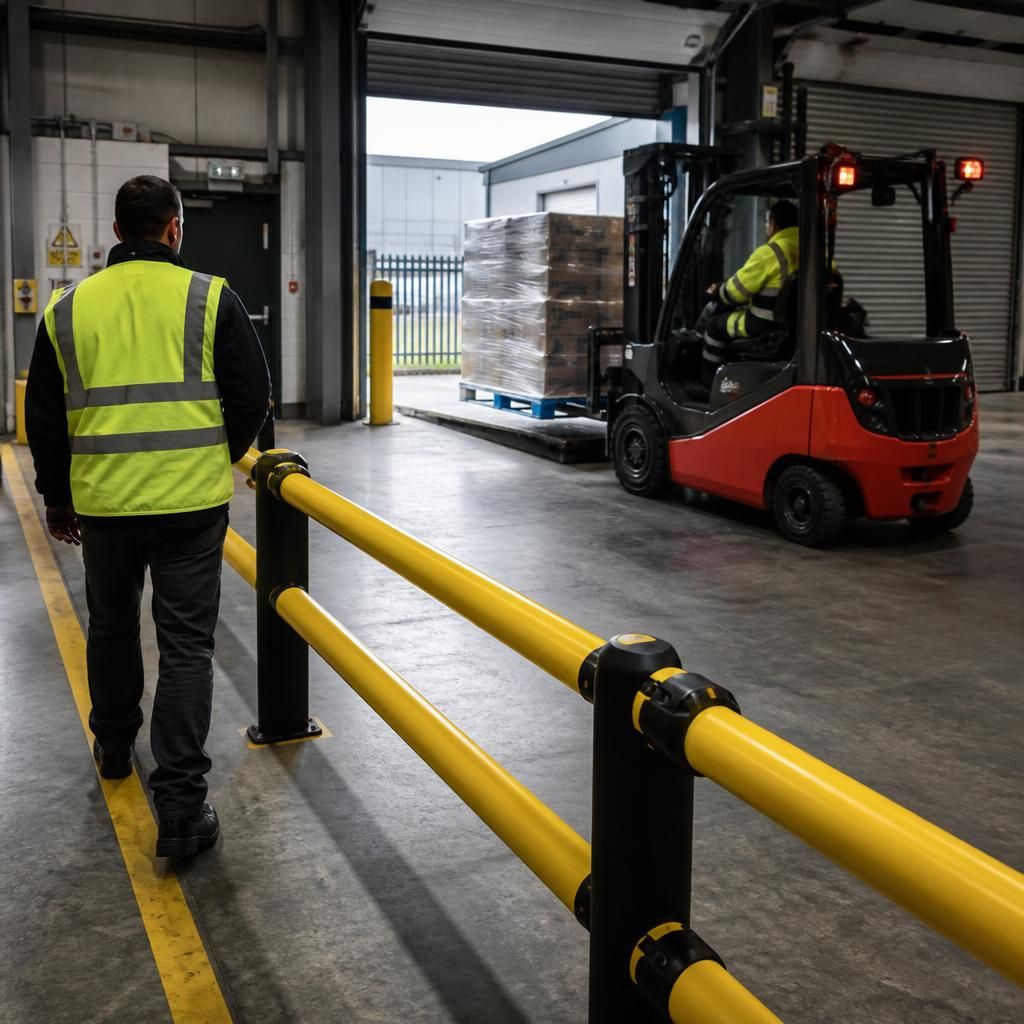
Pedestrian safety barriers suit mixed-traffic loading bays when the protected route sits outside vehicle swept paths. This comparison helps identify where a straight barrier line needs returns or changes in direction.
Review the approach to each loading position, not only the main walkway. Site measurements can show whether vehicles, pallets and pedestrians interact at the same point, helping the drawings reflect the bay’s working pattern.



