Which pedestrian safety barriers suit changing warehouse layouts?
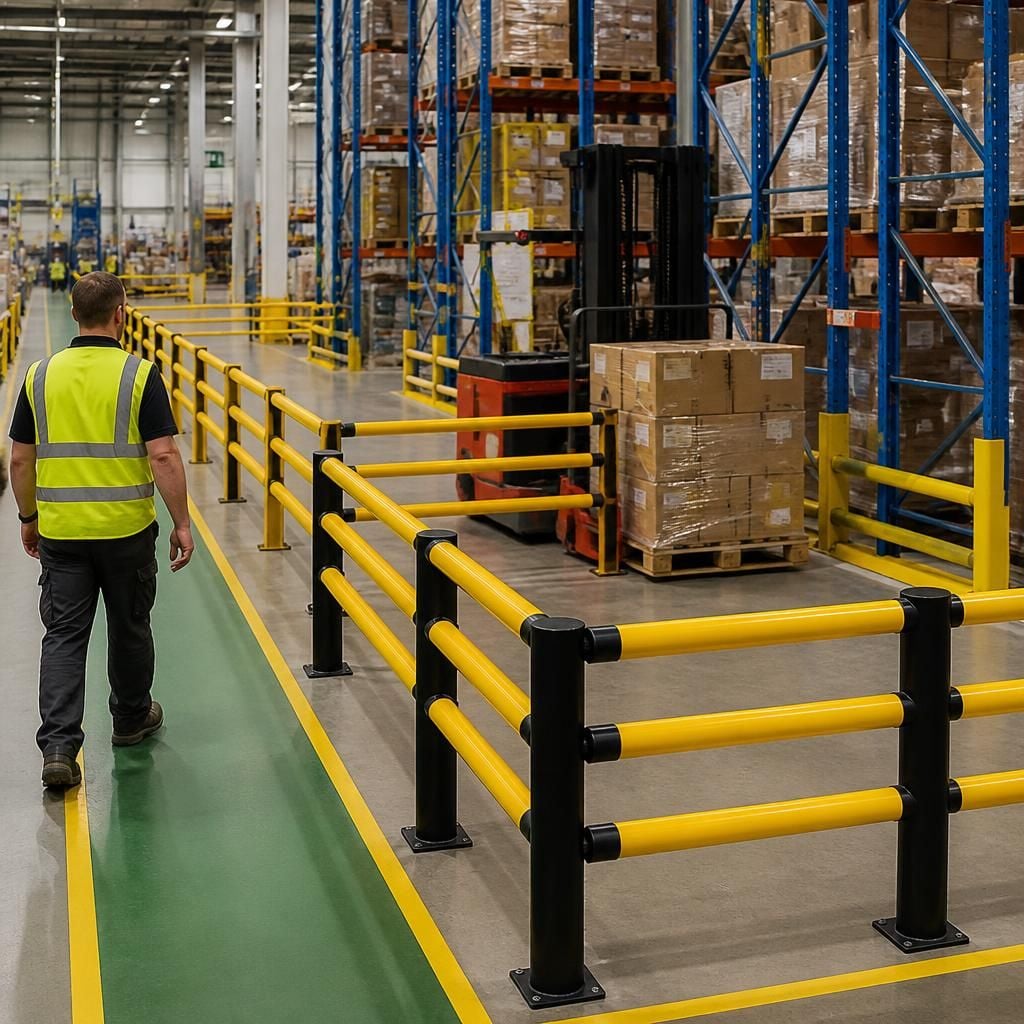
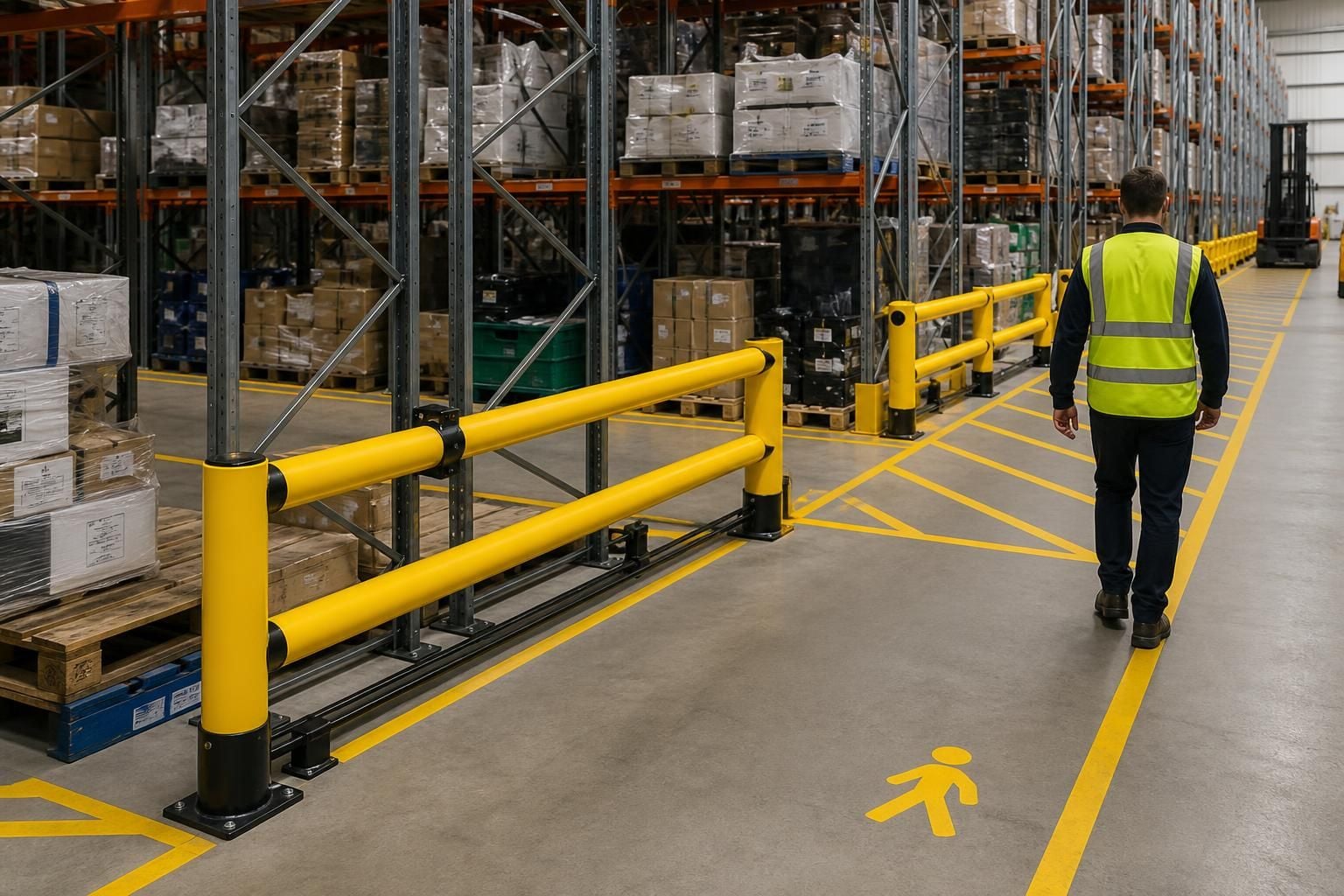
Adjustable or modular pedestrian safety barriers suit changing warehouse layouts because sections can accommodate revised walkways, access points and vehicle routes. We can assess the site and prepare drawings around your changing layout and safety requirements.
Modular pedestrian safety barriers usually suit warehouse layouts that may change. Their sections can be planned around revised walkways, access points and vehicle movements.
The right arrangement depends on how often the layout changes, what needs protection and how people use each route. A site survey should record these conditions before the barrier arrangement is selected.
Reconfigurable sections for planned changes
Sectional barriers suit sites where storage areas, workstations or traffic routes may move. Individual sections can support a revised arrangement without treating the whole installation as permanent.
This approach can help separate pedestrians from vehicles while the warehouse develops. It also allows the proposed layout to reflect changes in stock handling, production activity or access requirements.
Barriers around changing work areas
Some warehouse areas change more often than others. Picking zones, packing areas, production workstations and temporary storage locations may all affect pedestrian routes.
Barriers should follow the working boundary, rather than create an obstacle within it. The design should leave suitable access for people, equipment and stock movements.
Where a work area may expand, the proposal can consider future sections and connection points. This reduces the risk of planning only for the current arrangement.
Protection for fixed hazards
Some hazards remain in the same position, even when the wider layout changes. These may include building edges, machinery, vehicle routes or vulnerable workplace areas.
Fixed protection can suit these locations when the hazard requires a consistent boundary. The surrounding pedestrian route must still be reviewed if storage or traffic patterns change.
Using fixed protection everywhere can restrict future alterations. A mixed arrangement may therefore suit a warehouse with both permanent hazards and changing work zones.
Access points need separate consideration
A changing layout may require access points to move or serve different activities. People need to reach work areas without crossing unnecessary vehicle movements.
Access should be considered alongside barrier position, route width and the direction of movement. The arrangement must protect the separation while allowing normal work to continue.
This is particularly important near doors, loading areas and shared routes. A drawing can show how people, vehicles and stock pass through the space.
What to assess before choosing barriers
- Which pedestrian routes are permanent and which may change?
- Which vehicle movements must remain separate?
- Where do people need regular access?
- Which equipment, stock or building features need protection?
- Could the working area expand or move later?
- Would a fixed boundary restrict future workflow?
The answers help establish whether the site needs mainly modular sections, fixed protection or a combination of both.
How we plan the arrangement
We can discuss the working requirements through a no-obligation consultation. This may include a site meeting and survey, followed by a written proposal and working drawings.
The drawings provide a practical reference for checking routes, boundaries and access before installation. Where required, project management can continue from proposal and tender stage through installation and final commissioning.
Spartan Direct has worked on storage and workplace arrangements since 1982, including segregation and barrier protection. That background supports careful coordination between the barrier layout and the wider working space.
Review the barrier arrangement whenever racking, machinery, stock handling or vehicle movements change. A previous layout may no longer provide suitable separation after those alterations.
Pedestrian safety barriers should account for the changeover period, not only the finished warehouse layout. Moving racking, machinery or workstations can temporarily alter pedestrian and vehicle routes.
Before alterations begin, check whether the existing barrier line leaves an unprotected gap or blocks the replacement route. Mark the areas affected, control access during the work and confirm the revised arrangement before normal movement resumes.