


Which pedestrian safety barriers provide the clearest visibility around vehicle routes?
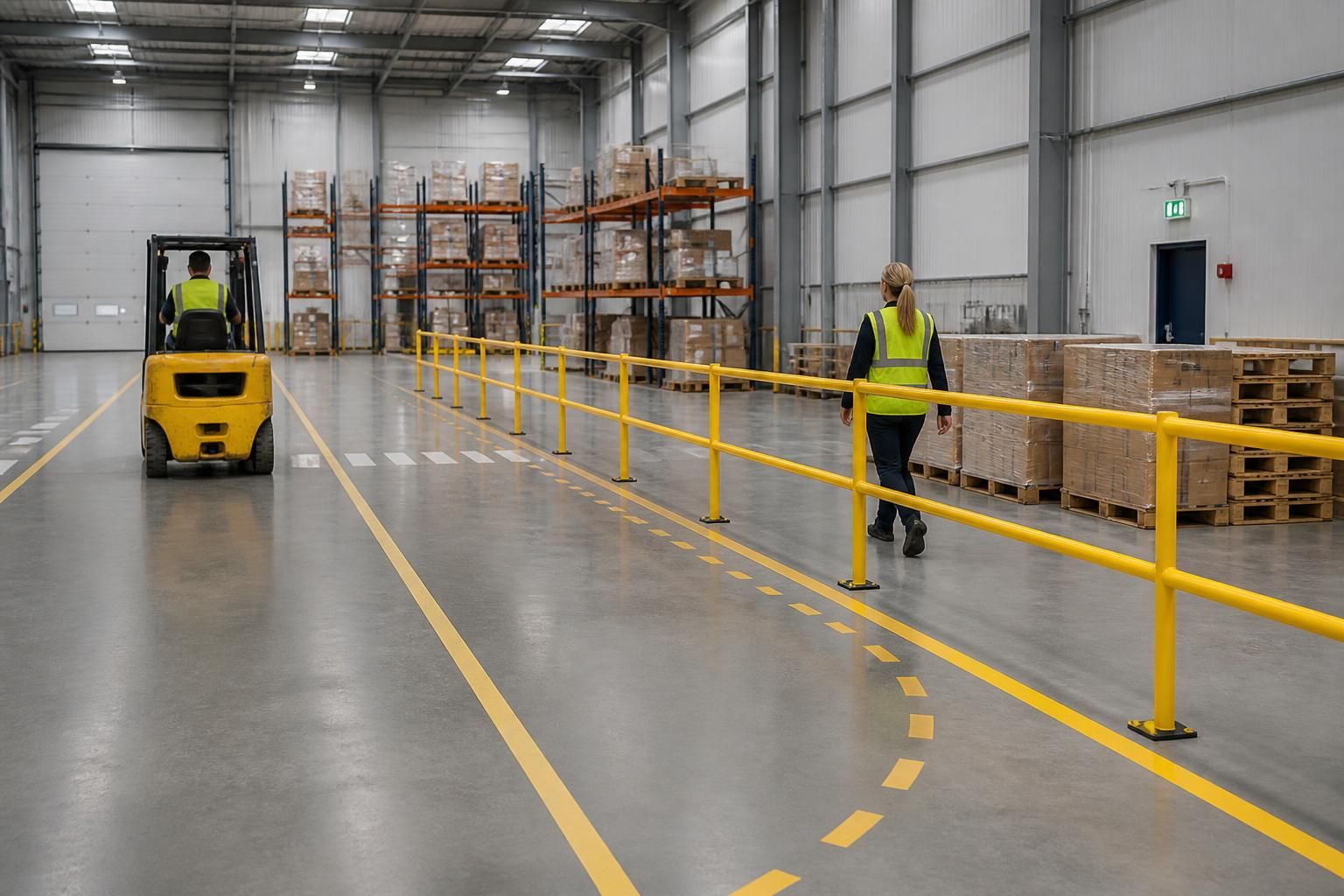
Pedestrian safety barriers with open sightlines and slim profiles provide the clearest visibility around vehicle routes. We assess traffic movement, pedestrian access and obstructions before specifying barrier protection that separates people without blocking important views.
Pedestrian safety barriers with low-obstruction rail construction usually provide the clearest views around vehicle routes. They separate pedestrians from moving equipment while leaving route conditions visible.
Solid barrier panels create a stronger visual division, but they can conceal people, vehicles, doors and approaching obstructions. They may suit specific protection needs, yet they require careful placement at crossings and junctions.
Open rail barriers for continuous visibility
Open rail barriers use spaced rails and posts rather than broad infill panels. This arrangement helps drivers and pedestrians see through the protected boundary.
- Vehicle operators can retain views of pedestrian approaches.
- Pedestrians can see vehicles before reaching crossing points.
- Supervisors can observe activity along the route more easily.
- Open construction avoids creating unnecessary visual separation beside work areas.
The clearest result depends on the complete arrangement, not just the barrier profile. Closely positioned posts, awkward corners or stored materials can still restrict important views.
When mesh panels need comparison
Mesh panels preserve more visibility than solid sheets, while providing a defined boundary. They can be considered where you need a more enclosed edge around equipment or work areas.
However, mesh adds a visible grid across the route. Compare its framing, panel height and position against driver sightlines before selecting it for a busy junction.
Use solid panels only where their purpose justifies reduced views
Solid panels may support segregation where visual separation matters more than open observation. They should not be selected solely because they appear more substantial.
At corners, door approaches and vehicle crossings, a solid section can conceal movement. Open rails or a carefully positioned transition may provide a better balance.
Details that affect the final view
Barrier height, post spacing, corner angles and the position of nearby stock all influence what people can see. The same barrier can perform differently in two layouts.
- Keep posts and corners away from critical approach views where the layout permits.
- Check sightlines from vehicle seats and pedestrian standing positions.
- Consider reversing areas, turning points and crossing locations separately.
- Review doors, access gates and stored goods before fixing the barrier line.
- Allow for workflow changes that could place stock beside the protected route.
These checks help you compare visibility with the required level of separation and physical protection. The clearest barrier is not always the right barrier if it leaves a vulnerable edge.
How we select a suitable arrangement
We discuss the route, vehicle movements, pedestrian access and surrounding operations before preparing a recommendation. A no-obligation consultation may include a site meeting and survey.
We then produce a written proposal and working drawings showing the planned barrier positions. This gives you something specific to review against traffic movement, access points and existing obstructions.
Where a project requires it, we can coordinate project management from proposal and tender stage through installation and final commissioning. Our work includes safety infrastructure alongside wider storage and workplace requirements.
For companies comparing pedestrian safety barriers, open rail construction is the usual starting point for clear vehicle-route views. The survey and drawings determine where mesh, solid sections or different arrangements remain appropriate.
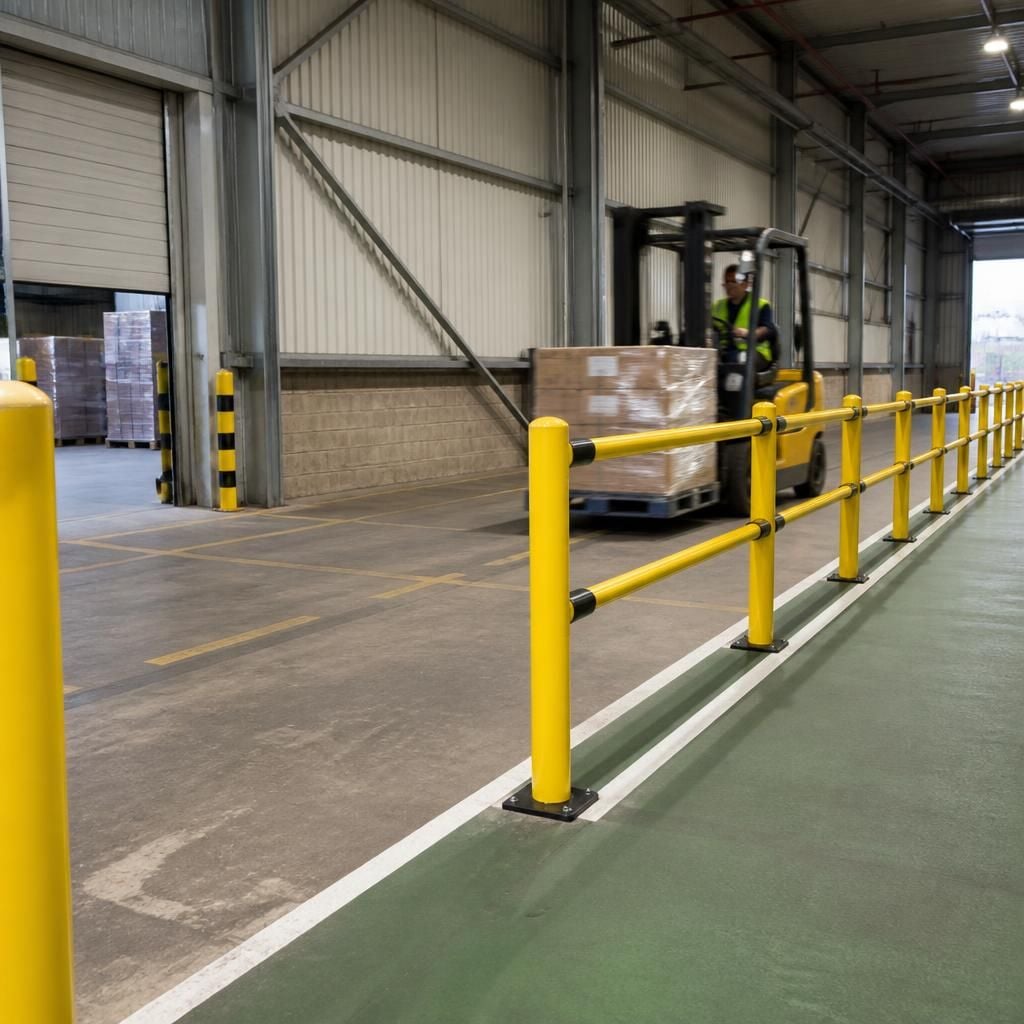
Pedestrian safety barriers should preserve visibility at decision points. A driver needs to recognise the pedestrian route, crossing position and barrier end without searching around the protection line.
Working drawings help you compare the barrier arrangement with vehicle approach paths and pedestrian movement. This can reveal where an otherwise open barrier still creates a visual pinch point, allowing the layout to be adjusted before installation.



