Which pedestrian safety barriers protect doors without restricting access?
Pedestrian safety barriers protect doors by separating them from vehicle movements while leaving the doorway and pedestrian route clear. We assess door positions, traffic paths and access requirements before proposing suitable safety barriers.
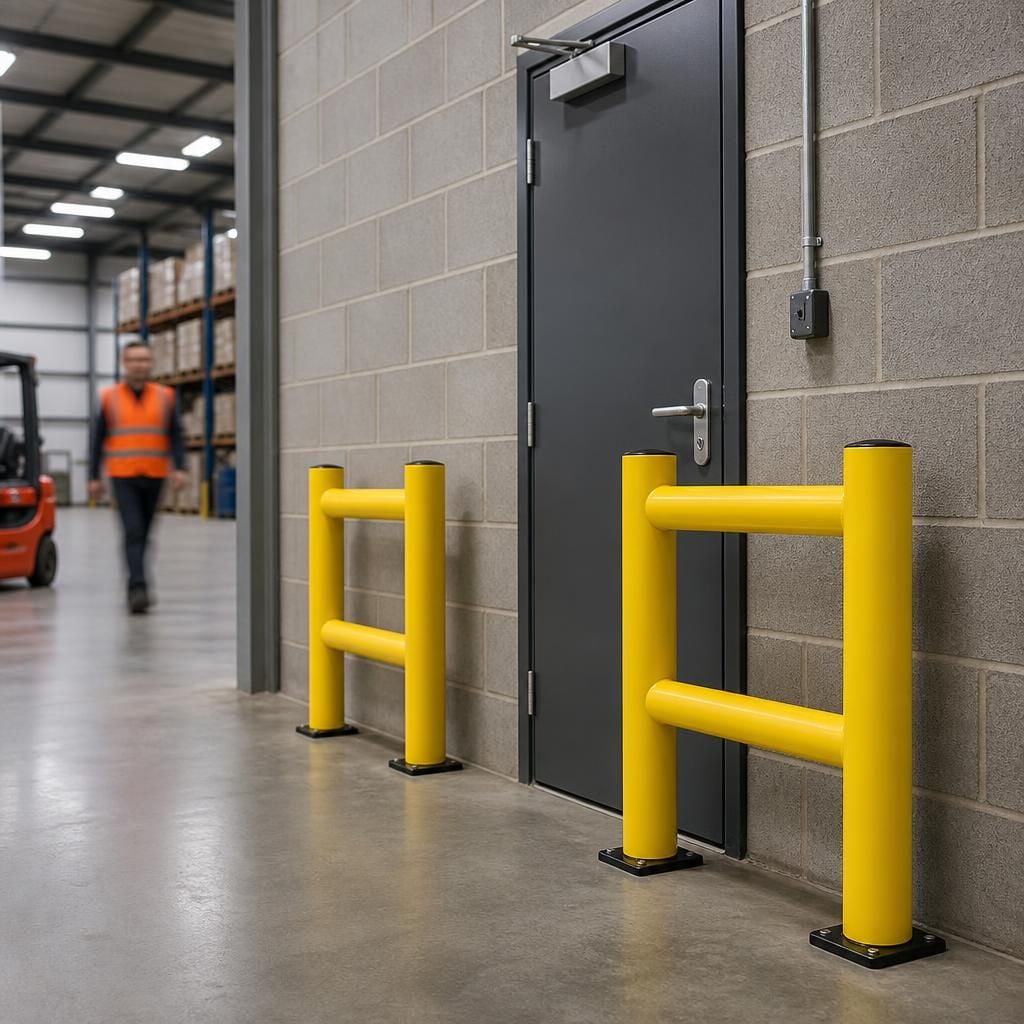
The most suitable pedestrian safety barrier protects the door from vehicle impact while preserving the required opening, handle access and pedestrian approach. The arrangement must suit the door’s position, opening direction, surrounding traffic and the way people use the entrance.
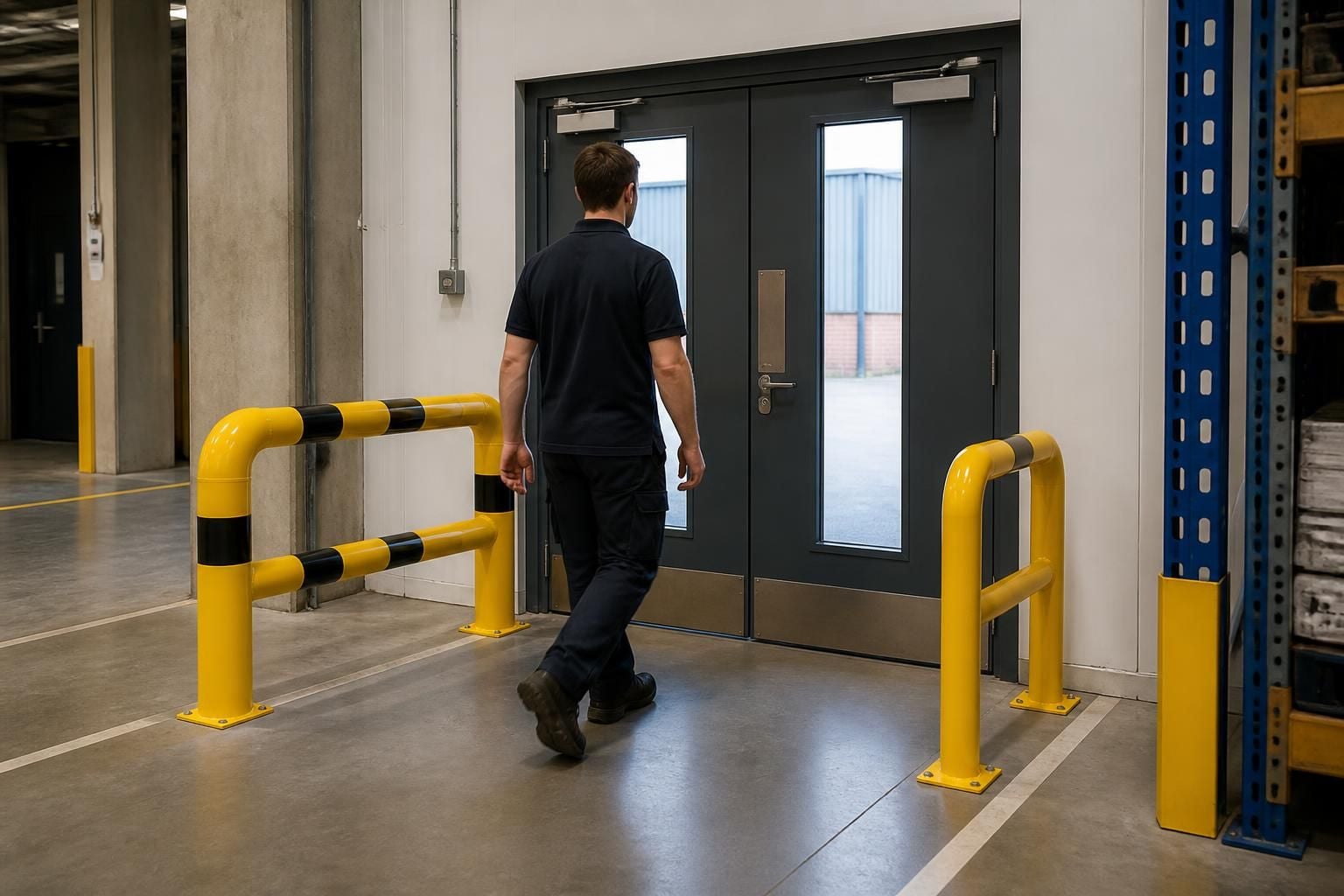
For a frequently used personnel door, a barrier line can stand beside the approach rather than across it. Return sections can guide pedestrians towards the doorway while keeping vehicles away from the frame. The barrier should not obstruct the handle, door closer, panic hardware or the door’s full operating movement.
Where vehicles approach from more than one direction, protection may need to cover the door’s exposed sides. A barrier that protects only the nearest corner can leave the frame, hinges or adjacent wall vulnerable to turning vehicles. We consider the complete approach rather than guarding one impact point in isolation.
- Side protection: keeps vehicle movements away from the door frame and nearby wall.
- Return sections: define the pedestrian approach without creating a barrier across the entrance.
- Corner protection: covers exposed door edges where vehicle routes turn close to the opening.
- Access gates: provide a controlled opening where people or equipment must pass through the barrier line.
- Separate pedestrian routes: maintain a clear path while directing vehicles away from the entrance.
Access gates require particular care. A gate placed in the wrong position can create a pinch point, reduce visibility or force people into vehicle traffic. We review the direction of pedestrian movement and the space needed to open, close and use the gate safely.
Door protection must also account for the door itself. A barrier should not prevent the door from opening fully, restrict escape hardware or encourage people to stand within a vehicle route. The final arrangement should leave access points usable without requiring awkward manoeuvres.
In warehouse settings, we assess forklifts, pallet trucks, picking routes and vehicle turning movements around the entrance. In office or commercial premises, we also consider visitors, staff circulation and access between work areas. This helps place the barrier where it protects the door without creating a new obstruction.
Floor condition and fixing positions matter as well. Anchors must suit the surface and the forces that the barrier may experience. Existing joints, drains, services and changes in floor level can affect the installation position.
We can review the door and surrounding route during a no-obligation site meeting and survey. We then prepare written proposals and working drawings showing the intended protection and access arrangement.
Where the project requires several workplace changes, project management may continue from proposal and tender stage through installation and final commissioning. This keeps the door protection arrangement connected with other layout or safety work.
Before installation, confirm the required clear opening with the person responsible for the building, fire arrangements and workplace access. Door protection should support those requirements rather than narrowing or redirecting an essential route.
The right pedestrian safety barriers do more than stand in front of a door. They create separation at the points where vehicles could strike, while preserving the movement that the entrance serves.
Pedestrian safety barriers should protect the door without making people turn into vehicle movements. We check how the entrance is used, including staff access, visitors and equipment passing through.
This helps determine where protection ends and access begins. The finished arrangement should leave the doorway practical to use, with no unnecessary detour or awkward point at which pedestrians and vehicles meet.