


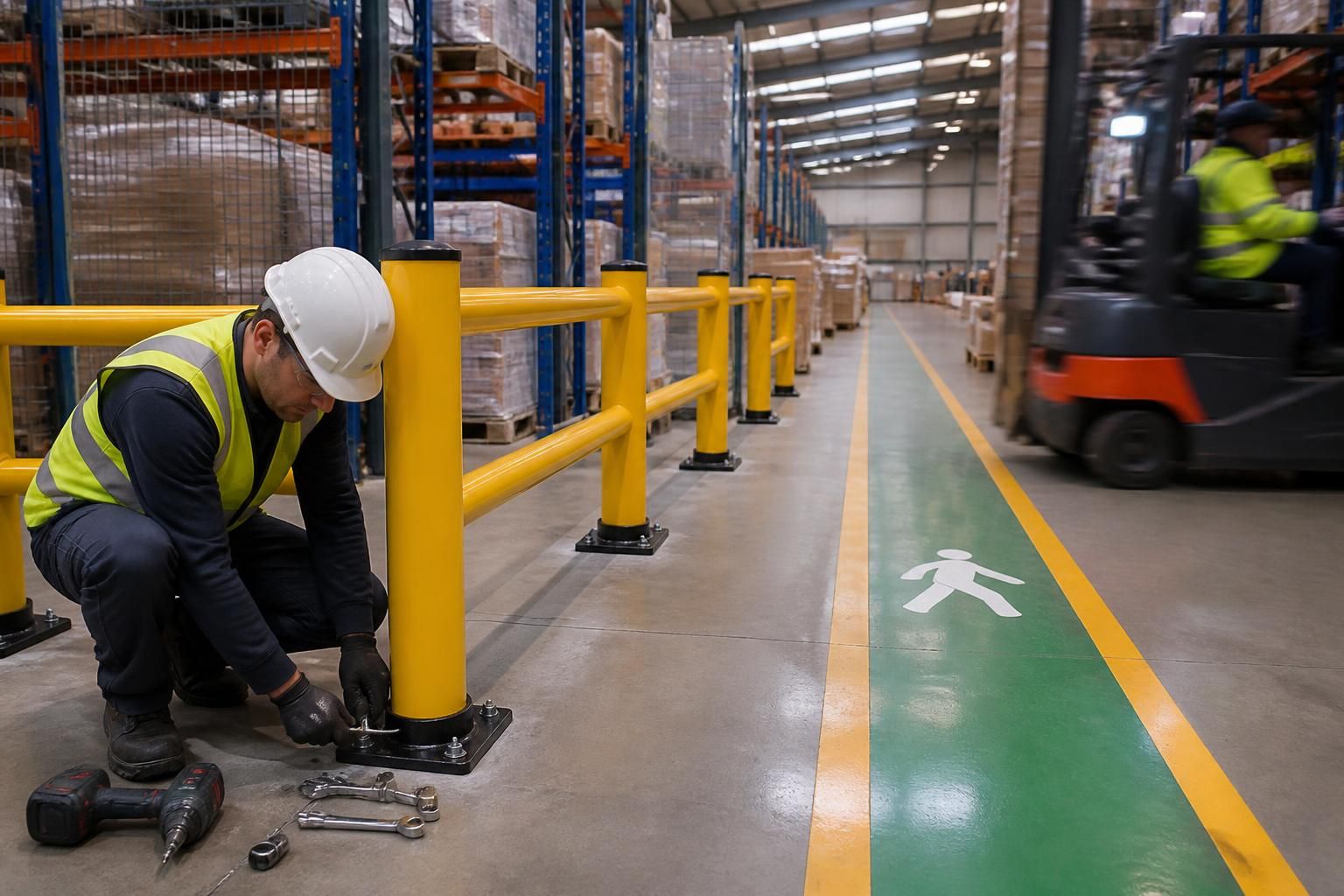
How much disruption does installing pedestrian safety barriers cause?
Pedestrian safety barriers can disrupt vehicle and pedestrian routes while fixing points are marked, drilled and installed. We assess access requirements through a no-obligation site meeting and survey, then provide proposals and working drawings to help you plan around stock movement and workflow.
Installation disruption is usually concentrated around the work area, but its extent depends on the barrier layout, fixing points, vehicle movements and pedestrian access. A short installation may affect one route, while a larger warehouse project can involve several temporary restrictions.
Pedestrian safety barriers can require temporary separation around each installation area. This protects people from nearby work and prevents vehicles entering the space before the barriers are secure. The affected route may need redirecting while installers work.
Disruption is more likely where barriers protect busy aisles, loading areas, doors or crossings. Consider how stock reaches these points, where vehicles turn and whether staff need continuous access between work areas.
Plan the work around four practical controls:
- Work zones: Mark the areas requiring temporary restriction, including space around access points and vehicle routes.
- Alternative movement: Identify safe routes for pedestrians, forklifts, deliveries and stock handling during installation.
- Installation order: Consider completing lower-risk or less-used sections before busier routes.
- Site coordination: Tell staff, contractors and drivers which areas have changed and when normal access can resume.
Occupied warehouses can reduce disruption by moving stock handling away from the work zone. Offices may need similar planning where barriers separate walkways, entrances or shared work areas.
Where several areas need protection, we can assess the sequence alongside the wider layout and workflow. Project management may cover proposal and tender stages through installation and final commissioning where required.
Agreed dates should support planning, but they remain estimates under our terms. We use all reasonable endeavours to meet them, and time is not of the essence.
Ask us to assess access, stock movement and working restrictions before installation. This gives you a clearer basis for deciding whether the work should proceed in one stage or be arranged around separate areas.
The aim is to install protection without creating an unsafe workaround. Keep pedestrian and vehicle routes clearly separated throughout the work, then review the completed barriers against the intended movement pattern.
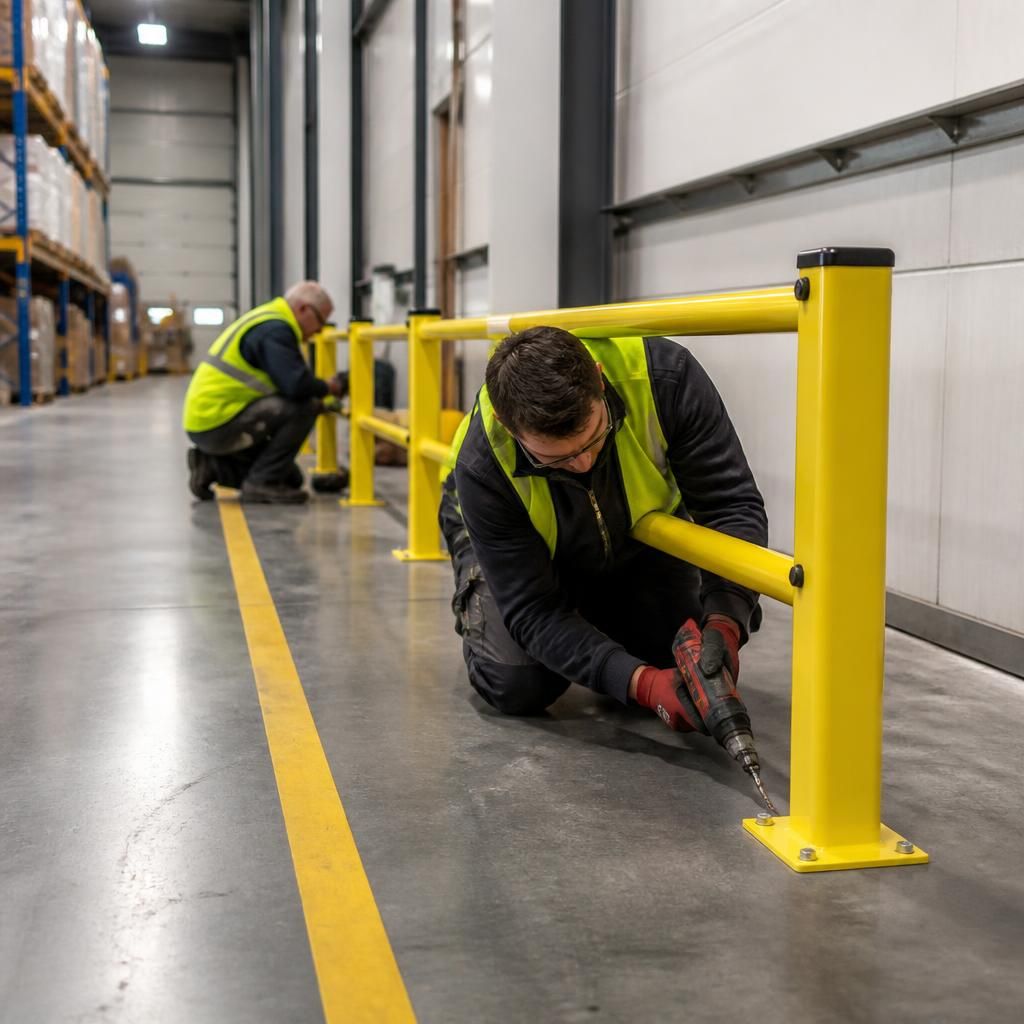
Pedestrian safety barriers can be installed in stages when several areas need protection. This limits the number of routes affected at one time and lets you keep unaffected parts of the site in use.
We can set out the proposed sequence in the written proposal and working drawings. You can then compare each stage with stock movements, access requirements and the surrounding layout before installation begins.



