Are temporary pedestrian safety barriers suitable for warehouse work areas?
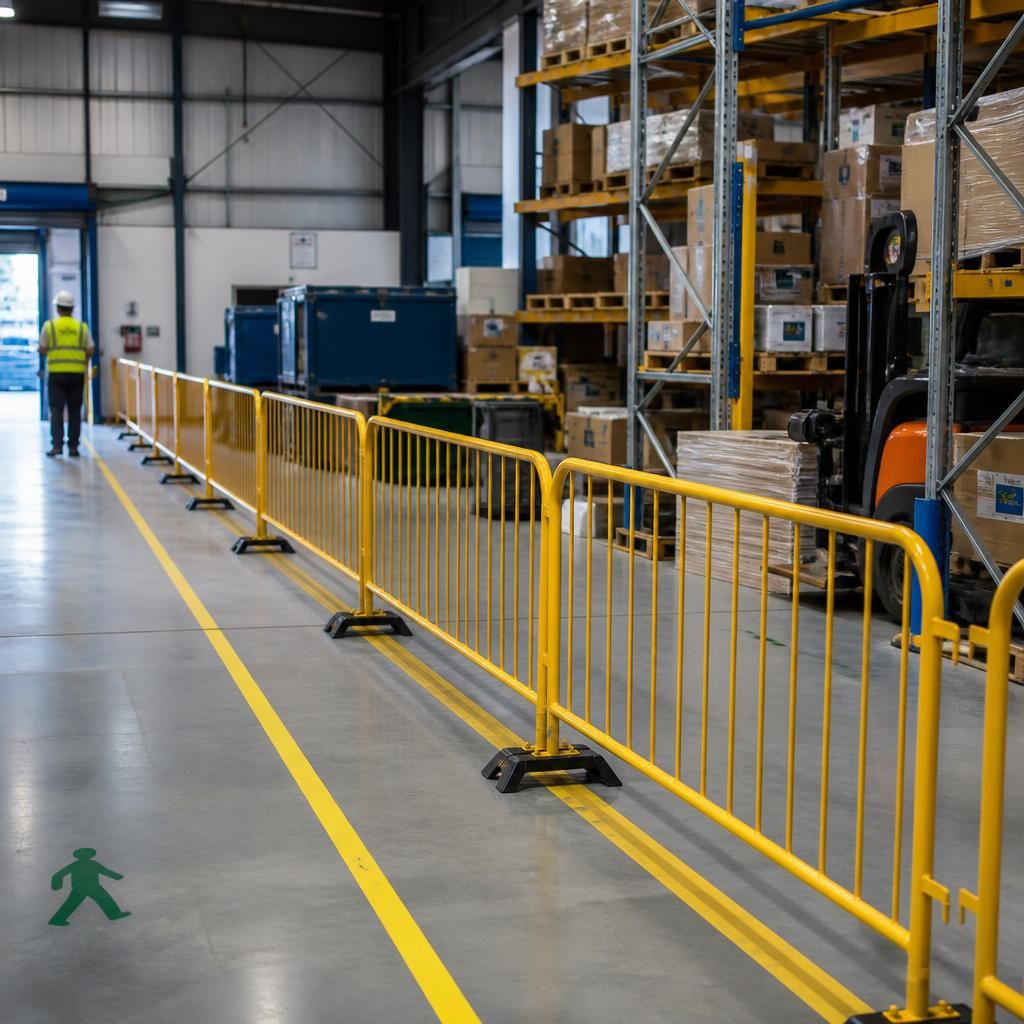
Temporary pedestrian safety barriers may suit warehouse work areas when routes or layouts change, provided they remain stable and suit the site risks. We can assess the area through consultation and survey before proposing an appropriate arrangement.
Temporary pedestrian safety barriers can suit warehouse work areas when you need controlled separation for a defined period. Their suitability depends on the barrier arrangement, movement around it and the hazards within the area.
They can support short-term changes such as maintenance work, stock reorganisation, equipment moves or altered pedestrian routes. The arrangement should give people a clear path without forcing them into vehicle lanes, storage locations or active work areas.
- Pedestrian movement: Check that people can enter, leave and pass through the area without squeezing past barriers or taking unsafe shortcuts.
- Vehicle interaction: Consider forklifts, pallet trucks and delivery movements near the proposed line. Temporary barriers may not suit locations exposed to impacts without suitable protection and positioning.
- Barrier stability: The base, connections and floor condition should suit the area. Movement, uneven surfaces and repeated contact can affect the arrangement.
- Access requirements: Gates or removable sections may be needed where staff, stock or equipment must pass regularly. Access should not depend on moving barriers into live traffic routes.
- Visibility: The barrier should remain visible around corners, storage areas and vehicle approaches. Clear sightlines help people understand the intended route.
- Work duration: A temporary arrangement should be reviewed if the work area remains in place longer than expected or becomes part of the normal layout.
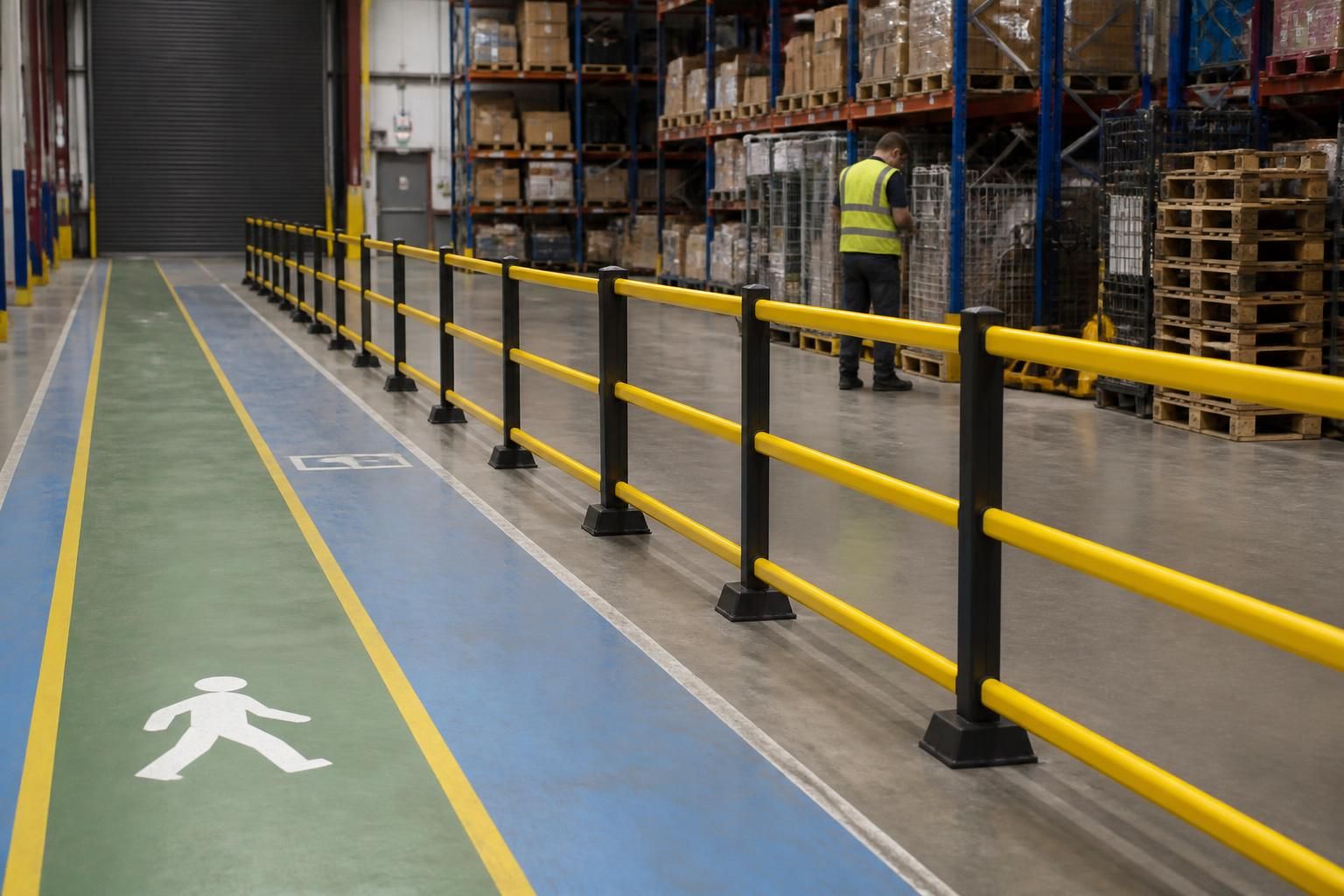
Temporary pedestrian safety barriers are less suitable where the area needs a permanent segregation line, frequent heavy contact protection or structural support. In those cases, a different safety barrier arrangement may better match the site requirements.
They should also avoid blocking fire equipment, emergency routes, loading access or essential operational doors. Marking and positioning need to work with the wider warehouse layout, rather than creating a separate obstruction.
We can discuss the proposed use through a no-obligation consultation, including a site meeting and survey where required. We then prepare a written proposal and working drawings for the agreed arrangement.
Where the project requires several stages, we can coordinate installation and project management through final commissioning. This gives you a defined basis for comparing temporary and more permanent pedestrian separation before work begins.
Temporary pedestrian safety barriers can suit phased warehouse work where the boundary changes under a controlled plan.
Before use, agree who may reposition sections, how changes are recorded and when the revised arrangement is checked. This prevents informal moves from weakening pedestrian separation.