


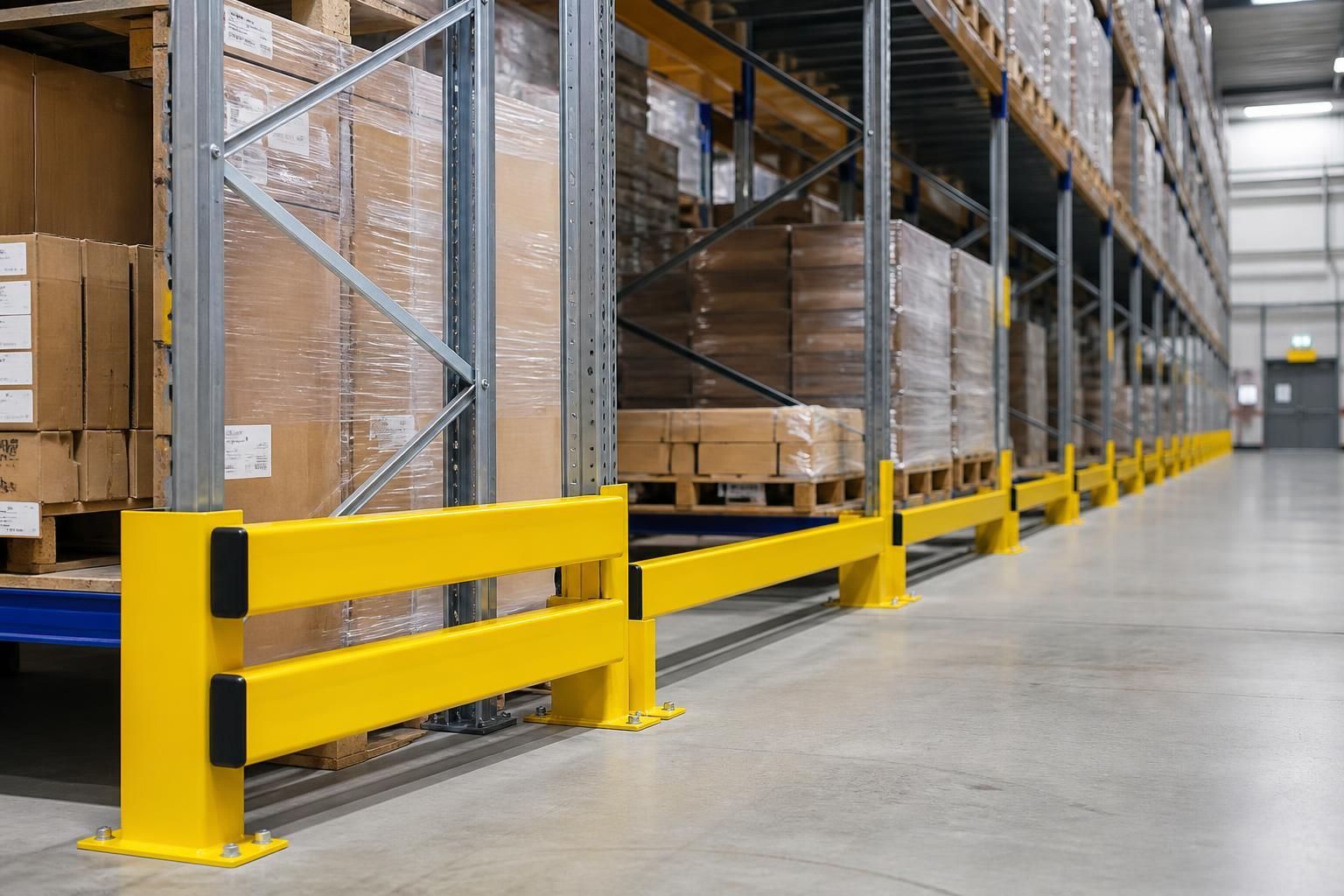
What cost factors should you compare when choosing pallet racking protection barriers?
When choosing pallet racking protection barriers, compare material, design, fixing requirements, installation and expected lifespan, not just the purchase price. A site survey and written proposal can clarify which costs suit your stock, layout and workflow.
Pallet racking protection barriers should be compared by complete project cost, not by the price of one barrier. The main differences often come from coverage, quantities, site conditions, included services and future maintenance.
Compare the protection coverage
First, check which rack positions the quotation protects. One price may cover rack ends only, while another includes exposed columns, corners, crossing points and pedestrian interfaces.
Ask for the number of barriers, their locations and the protection boundary shown on the drawings. This prevents a low unit price from concealing a smaller scope.
Also consider the consequences of leaving vulnerable points unprotected. A layout with frequent forklift movements may need more protection points than a quieter storage area. The right comparison reflects the risk across the whole working area.
Check that quotations use the same specification
Two barriers can look similar while differing in dimensions, fixing arrangements, clearances and surface finish. Compare these details line by line before judging the price.
- Barrier length, height and position
- Clearance from racking and traffic routes
- Number and type of fixings
- Compatibility with the floor and rack arrangement
- Any required corner, end or linking components
- Finish and protection requirements for the working environment
A like-for-like comparison helps you identify whether a cheaper quotation omits an item or uses a different specification. Working drawings can make these differences easier to review.
Allow for the existing site conditions
Access around the racks, floor condition and nearby services can affect the work involved. So can restricted aisles, operating equipment and the position of doors or other fixed features.
Ask which site assumptions support the price. A quotation based on clear access may change if the work requires additional preparation or altered working arrangements.
Site information should also confirm that the barriers fit the available space. Protection that reduces essential clearance may create an operational problem, even if its purchase price appears low.
Separate supply from the full project cost
Check whether the quotation includes delivery, unloading, installation, waste removal, drawings and project management. These items may appear separately or as exclusions.
Where several workplace changes form one project, coordination can affect the overall cost. Pallet racking protection barriers may need to work alongside safety infrastructure, partitioning, line marking or other layout changes.
A written proposal should identify what we will supply and what remains with you or another contractor. This gives you a clearer basis for comparing quotations.
Consider disruption as a project cost
Installation can affect access to aisles, loading areas and storage positions. Compare the proposed working sequence, access requirements and any need for temporary arrangements.
A lower quotation may not represent better value if it excludes planning for restricted access. Ask how the work will be coordinated with the warehouse layout and workflow.
Where required, project management can cover proposal and tender stages through installation and final commissioning. Confirm which stages are included in the quoted price.
Compare aftercare and inspection provisions
Protection barriers remain part of the working environment after installation. Forklift contact, layout changes and general wear can create future repair or replacement requirements.
Check whether the supplier explains inspection arrangements, reporting and remedial work. Also ask how replacement parts or damaged sections will be priced.
The lowest initial price may not be the lowest overall cost if future repairs are difficult to arrange. Clear records of the installed protection can support later checks and changes.
Review the quotation terms
Compare validity periods, payment stages, delivery assumptions and any conditions attached to the price. Spartan Direct quotations are valid for 14 Business Days from issue.
Agreed dates should also be read carefully. The terms state that we use all reasonable endeavours to meet agreed dates, but dates are estimates and time is not of the essence.
Check how defects, alterations and cancellations are handled. For material defects notified under the terms, we may repair or replace materials without charge, or refund the relevant price, at our sole discretion.
Use a written comparison checklist
Before choosing pallet racking protection barriers, record the following for each quotation:
- Total number of barriers and protected locations
- Specification and fixing details
- Included drawings, surveys and project management
- Installation assumptions and access requirements
- Delivery, disposal and other excluded costs
- Inspection, repair and replacement arrangements
- Quotation validity and applicable terms
Spartan Direct can discuss the requirements, review site conditions and prepare written proposals with working drawings. That process gives you a clearer comparison of protection scope and total project cost before you commit.
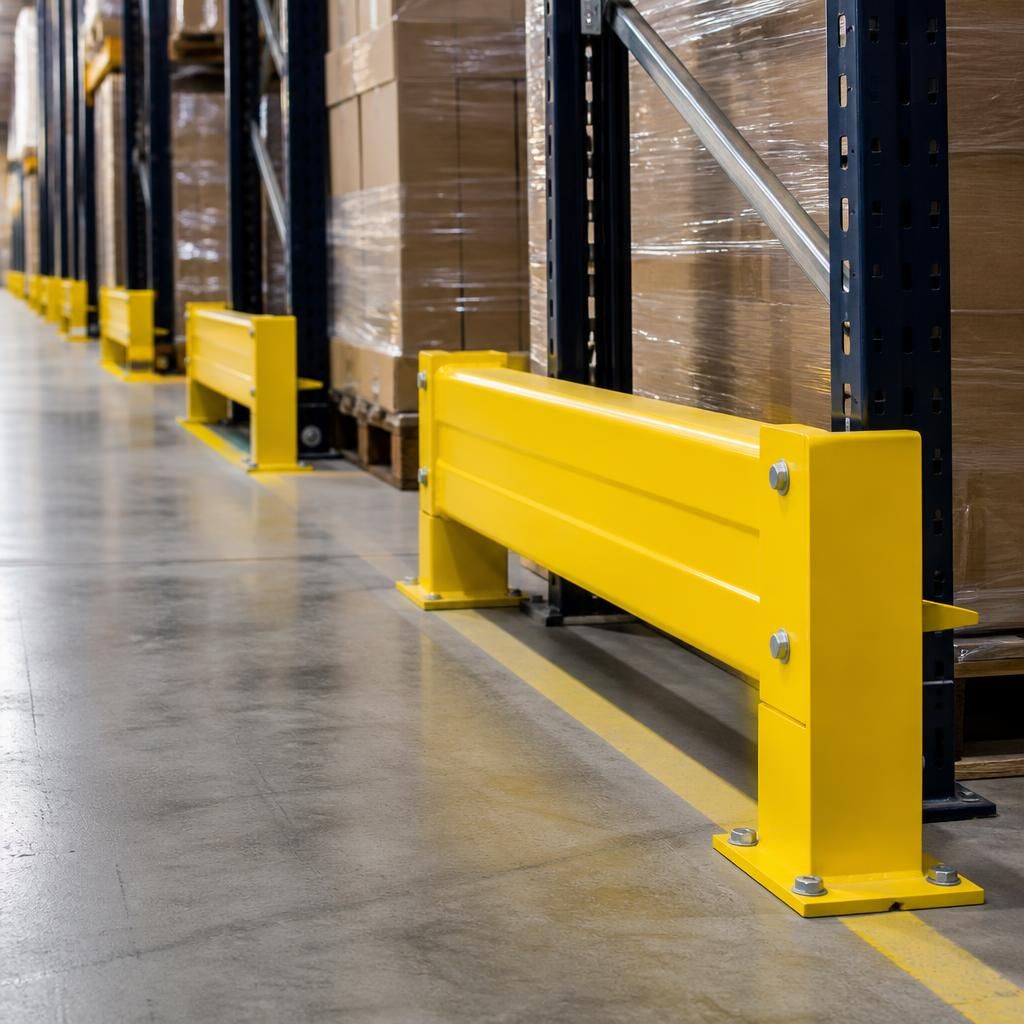
Consider the working environment, not only the barrier’s purchase price. Moisture, cleaning routines and outdoor exposure may affect the finish and future maintenance requirements.
Ask suppliers to explain why the proposed material and finish suit the site. This helps you compare long-term upkeep as well as the initial quotation.



