


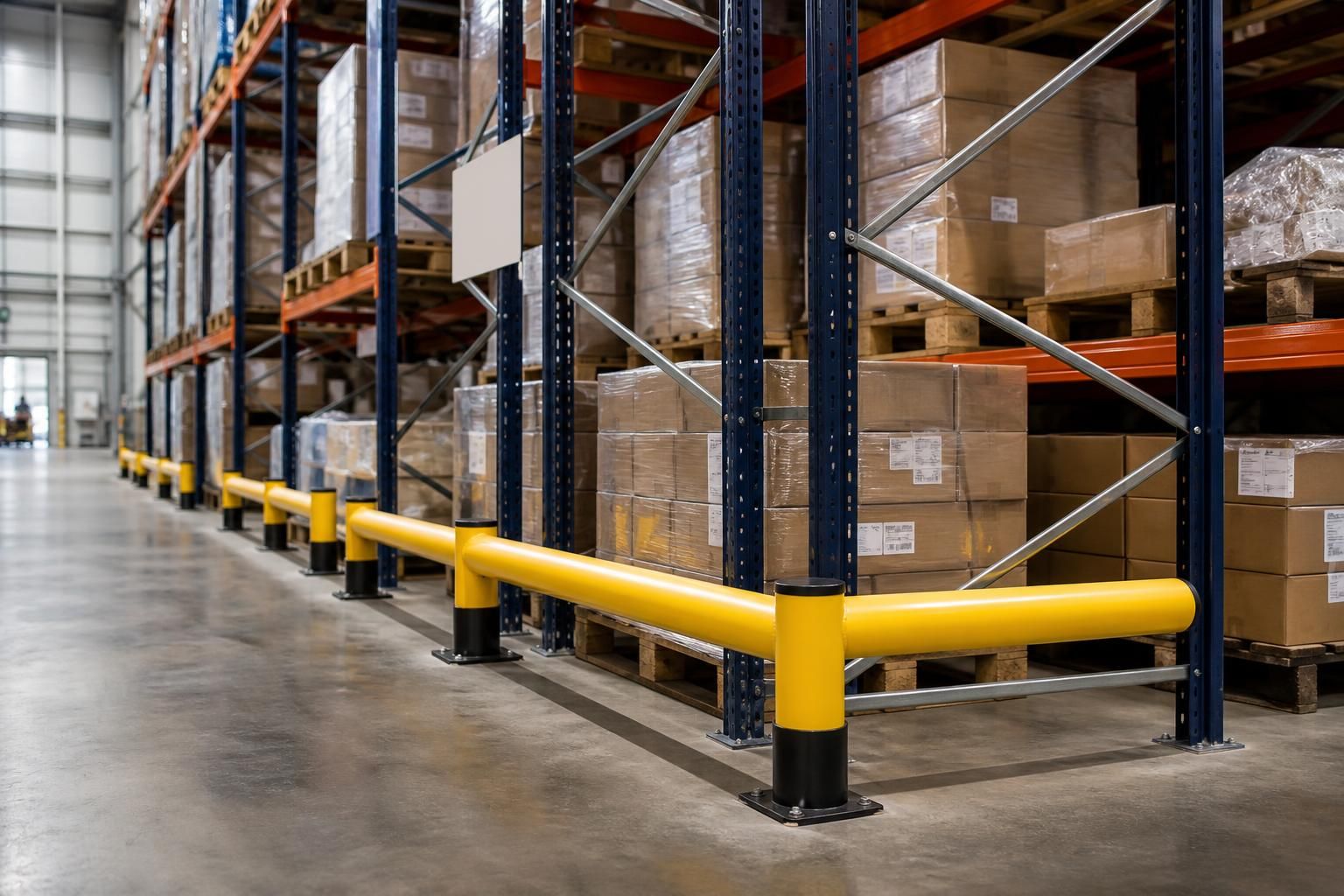
What compliance details should pallet racking protection barriers include?
Pallet racking protection barriers should document impact protection, visibility, dimensions, fixing method, clearances and suitability for racking and traffic conditions. A site survey and working drawings help confirm placement, access and layout compatibility before installation.
Compliance details for pallet racking protection barriers should show how the barrier controls identified vehicle, pedestrian and racking risks. A product description alone does not demonstrate suitability for a working warehouse.
Risk assessment information
- Identify the vehicles using each route, including counterbalance trucks, reach trucks and pallet trucks.
- Record traffic direction, reversing movements, turning points and areas where pedestrians cross vehicle routes.
- Explain the potential consequences of contact with uprights, frames, stored goods or adjacent work areas.
- State which risk the barrier controls, and identify any remaining risks requiring separate controls.
This information links the selected pallet racking protection barriers to actual warehouse activity. It also helps you review the arrangement when vehicles, stock or workflows change.
Product and performance records
The documentation should identify the barrier type, manufacturer or supplier reference, intended use and declared performance basis. Where an impact rating applies, record the test conditions and assumptions behind it. Do not treat a rating as universal protection for every vehicle, speed or collision direction.
Records should also state any restrictions. These might include prohibited fixing locations, required separation from racking components, unsuitable floor conditions or limits on alterations. Clear restrictions help prevent later changes from undermining the original assessment.
Racking and building interfaces
Compliance information should explain how the barriers interact with racking frames, floors, columns, doors, walls and other equipment. It should identify who is responsible for checking the supporting structure and floor before installation.
Where barriers connect to or sit close to racking, the record should confirm that access for loading, unloading and inspection remains practical. It should also show that the protection does not create a new obstruction for pedestrians or material-handling equipment.
Installation and handover evidence
A suitable handover record should include the approved drawing revision, installed locations, product references and installation date. It should record any agreed departures from the original proposal, including the reason for each change.
Include installation instructions, fixing requirements, maintenance guidance and contact details for reporting damage. If the work forms part of a wider project, keep the barrier information with the racking, flooring, partitioning and workplace segregation records.
Photographs can support the record, particularly at concealed fixing points or locations affected by restricted access. They should support written information rather than replace it.
Inspection and damage controls
Compliance details should define what users must look for after impact or during routine checks. Examples include displaced sections, damaged fixings, cracks, distortion, looseness and changes that reduce the protected area.
Set out who reports damage, how the affected area is controlled and who decides whether repair or replacement is required. A barrier that appears usable may still need assessment after a significant impact.
Keep inspection findings, corrective actions and replacement records with the site’s safety documentation. This provides a traceable history and helps identify repeated contact at particular locations.
Signage and operating information
Where operating instructions or warning signs are needed, the compliance record should identify their locations and purpose. Signs should support the agreed traffic controls rather than suggest that barriers remove the need for safe driving and pedestrian management.
Make sure users can identify protected routes, restricted areas and reporting arrangements. Replace information that becomes inaccurate after a layout or workflow change.
Review after changes
Review the barrier arrangement after changes to racking, aisle use, vehicle types, floor levels, storage methods or pedestrian routes. Do not relocate protection without checking the revised risks and installation requirements.
Spartan Direct Limited, formed in 1982, can discuss these records during a no-obligation consultation. A site meeting may lead to a written proposal and working drawings, with project management through installation and commissioning where required.
The aim is a clear compliance trail: why protection was selected, where it was installed, how it should be used and what happens after damage or change. That information supports safer decisions throughout the barrier’s working life.

Pallet racking protection barriers should remain easy to see against the warehouse background, stored stock and floor markings. Record how colour, profile and lighting support visibility at each protected location.
- Check that the barrier remains visible from approaching vehicle routes.
- Keep its outline clear of stored goods, packaging and temporary equipment.
- Review visibility after lighting, stock or aisle arrangements change.
This detail helps drivers and pedestrians recognise protected racking before they reach the hazard.



