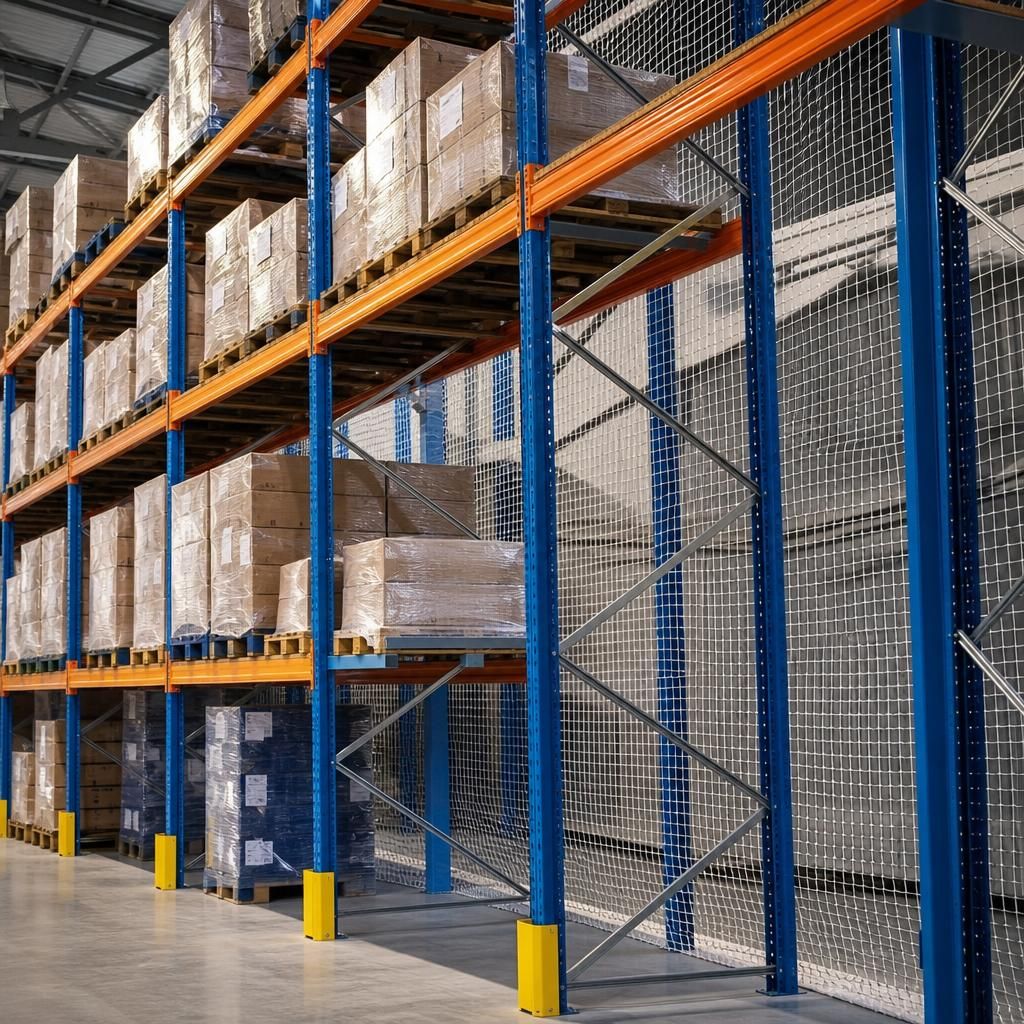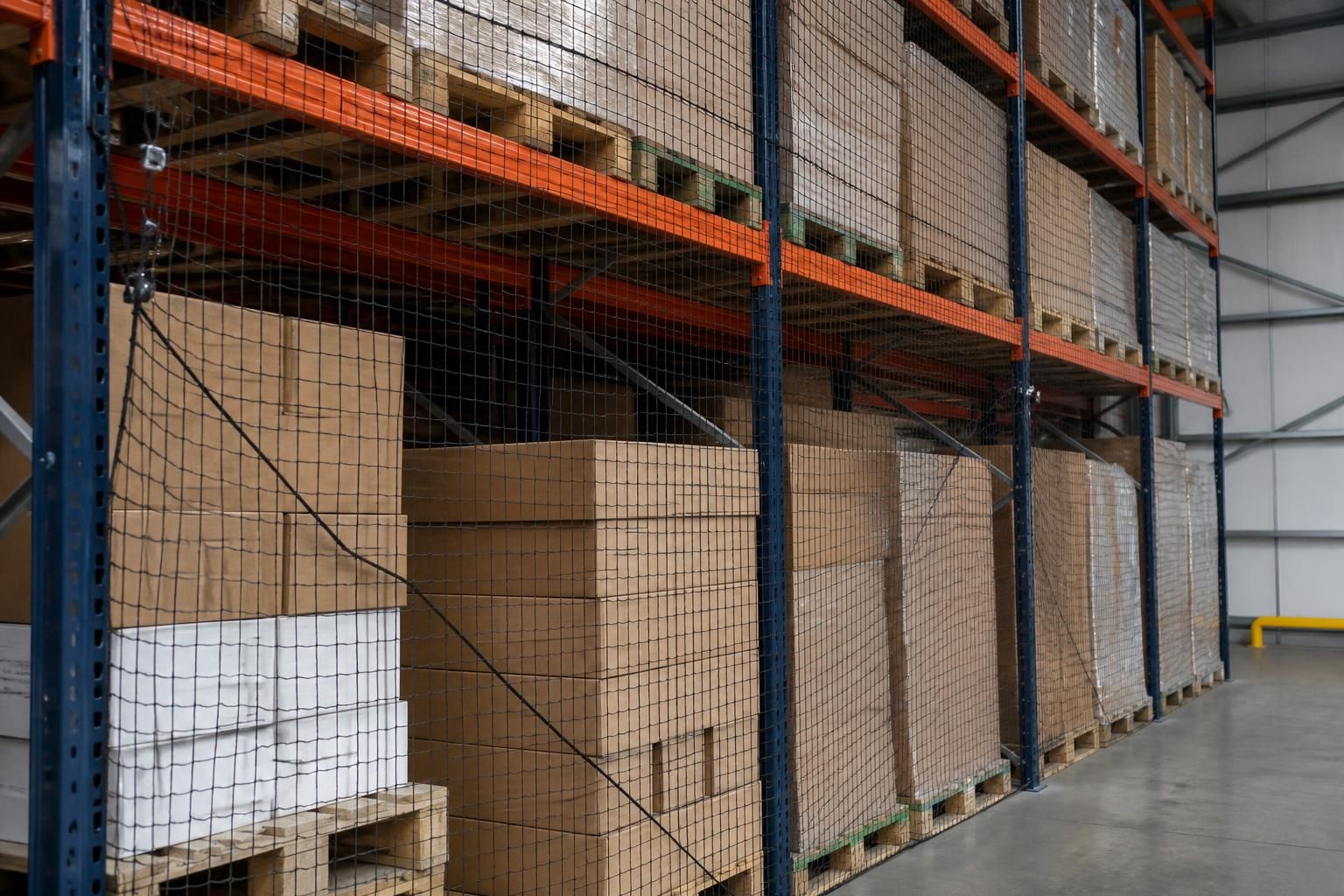
Are pallet rack safety nets suitable for preventing pallets falling from racking?
Pallet rack safety nets can help contain falling pallets or goods, but they are not suitable for every racking layout. Their suitability depends on the racking design, pallet loads, access requirements and warehouse workflow.
Yes, pallet rack safety nets can be suitable for preventing falling pallets, but only where the netting system matches the racking, loads and working method. A net can contain pallets or loose goods that move through an open rack side or rear. It should not be treated as a substitute for sound racking, correct loading, inspections or safe warehouse practices.
Safety nets are most suitable when:
- Stored pallets could move towards an unprotected rear or side of the rack.
- People, equipment or work areas are located near the potential fall zone.
- The racking layout leaves enough space for secure fixing and safe access.
- The pallet dimensions and load characteristics are known.
- The required protection does not obstruct picking, replenishment or stock visibility.
The netting must suit the expected impact. A small, stable carton load creates different requirements from a tall, uneven or heavy pallet. Consider pallet condition, load overhang, stacking method and the height from which goods could fall. The fixing points also need to transfer the load safely into the racking structure or supporting building elements.
A net may not be suitable as the only control when:
- Pallets can strike the net with substantial force.
- Loads regularly overhang the beams or become unstable.
- Forklift movements could contact the netting or its fixings.
- The net would restrict emergency access, maintenance or stock handling.
- Other protection is needed around pedestrians, loading bays or vehicle routes.
In these situations, the assessment may need to consider a different arrangement. This could include rack end protection, column guards, safety barriers or changes to the storage layout. Those measures address different risks, so a barrier that protects a pedestrian route does not automatically prevent a pallet falling through the rack.
Check the complete racking arrangement before choosing netting. Review the frame dimensions, beam levels, aisle positions, pallet sizes and available clearance. Check how the system interacts with sprinklers, lighting, conveyors, doors and other warehouse equipment. The assessment should also consider how staff will inspect the net, remove damaged sections and access stock safely.
Netting must remain correctly tensioned and securely fixed. Damage, pulled fixings, loose edges and changes to the racking can reduce its protective function. A pallet impact should prompt an inspection before the area continues in normal use. Keep inspection findings and remedial work with the site’s racking safety records.
Safety nets also work best when loading rules are clear. Position pallets squarely, keep loads within the intended storage position and prevent unstable goods from projecting into the fall zone. Suitable racking protection cannot correct an unsuitable pallet or unsafe handling practice.
We assess pallet racking protection as part of the wider storage layout. A no-obligation consultation may include a site meeting and survey, followed by written proposals and working drawings. These documents can show the proposed net position, fixing approach, access arrangements and any related safety barriers or rack protection.
Where a project requires several protection measures, we can coordinate the proposal, drawings, installation and project management through final commissioning. The right choice depends on the specific racking and workflow, rather than the presence of netting alone. For warehouses in the West Midlands, an assessment can establish whether pallet rack safety nets provide suitable containment or whether another protection arrangement is needed.
Safety nets should support a defined fall-control plan. Map the possible fall path, then identify where a displaced pallet could travel and what it could reach. This helps determine the net’s position, height and coverage, rather than treating each rack bay as an isolated area.
Include adjoining aisles, work areas and equipment in that review. A net may contain goods at the rack face while leaving another exposure at an open end, transfer point or change in rack direction. The proposed arrangement should therefore be checked across the complete run before installation.