



How should industrial barrier protection be maintained?
Industrial safety barriers should be visually checked at planned intervals and after impacts, with damaged barriers, fixings or floor connections repaired or replaced promptly. Keep inspection records and review protection when layouts, traffic routes or loads change.
Maintain industrial barrier protection through a documented care plan covering the barrier components, floor connections, surrounding area and traffic controls. This keeps protection suitable for the risks identified at your site.
Check the complete barrier assembly
Maintenance should cover more than the visible rails or posts. Examine end sections, corners, gates, protective hoops, fixings, anchor points and any attached components. Look for movement, distortion, cracking, corrosion, missing parts and changes in alignment.
Check the floor around each fixing. Cracked or damaged concrete can affect the connection between the barrier and the floor. Loose anchors, damaged threads or enlarged fixing holes need assessment before the barrier returns to service.
Keep protection visible and accessible
Remove stored goods, packaging and waste that obstruct the barrier or hide damage. Keep pedestrian routes, vehicle routes and emergency access clear. Clean barriers where dirt, oil or residue prevents effective condition checks.
Warning markings should remain clear enough to distinguish protected edges and traffic separation. Replace damaged markings where their condition makes the barrier harder to see or understand.
Manage damage safely
If a barrier no longer provides the intended separation or impact protection, control access around it until the risk is addressed. Do not treat a bent rail, displaced post or loose fixing as cosmetic damage.
A suitable repair depends on the barrier design, the damage and the forces involved. A qualified decision-maker should determine whether the affected component can remain, needs repair or requires replacement. Unauthorised cutting, welding or alteration can change how the barrier performs.
Replacement parts should match the existing system’s purpose and installation requirements. Review the surrounding floor and fixings at the same time, rather than replacing only the most obvious damaged piece.
Keep maintenance records useful
Record the barrier location, inspection date, condition, defect, action taken and person responsible. Include photographs where they clarify the condition or support a repair decision.
Track outstanding actions until they are closed. Repeated damage in one location may indicate a problem with vehicle approach, route separation, visibility or barrier positioning. Investigating that cause can prevent the same defect returning.
Review the maintenance plan
Set inspection intervals according to the site risk, traffic activity, barrier type and consequences of failure. Review the plan after incidents, operational changes, building work or changes to stored materials.
Use the manufacturer’s instructions, the site risk assessment and applicable workplace requirements when setting inspection and maintenance arrangements. Where protection forms part of pedestrian and vehicle segregation, check that the complete arrangement still supports the intended routes.
Spartan Direct can review existing safety infrastructure through a site meeting or survey. We can then provide a written proposal and working drawings where additional or altered protection is required.
For projects involving several workplace changes, we can coordinate proposals, installation and project management through final commissioning where required. This gives you a defined record of the work rather than an isolated replacement.
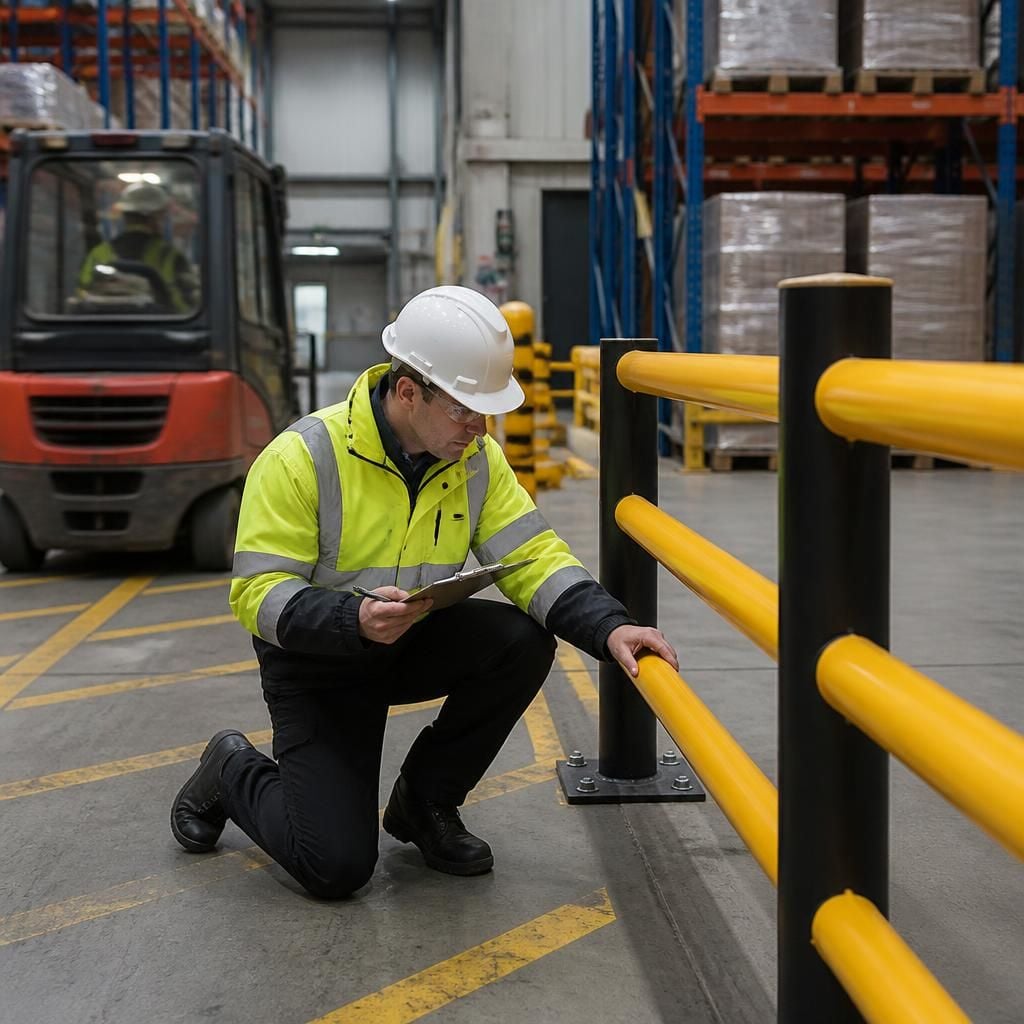
Industrial barrier protection should be inspected without exposing people to moving vehicles. Use the site’s traffic controls, keep observers outside vehicle routes and prevent contact during the check.
Plan maintenance around the working layout, not just the barrier itself. Confirm that inspection access, temporary controls and any repair activity leave pedestrians and vehicles separated throughout the work.



