How is barrier protection fixed to floors and structures?
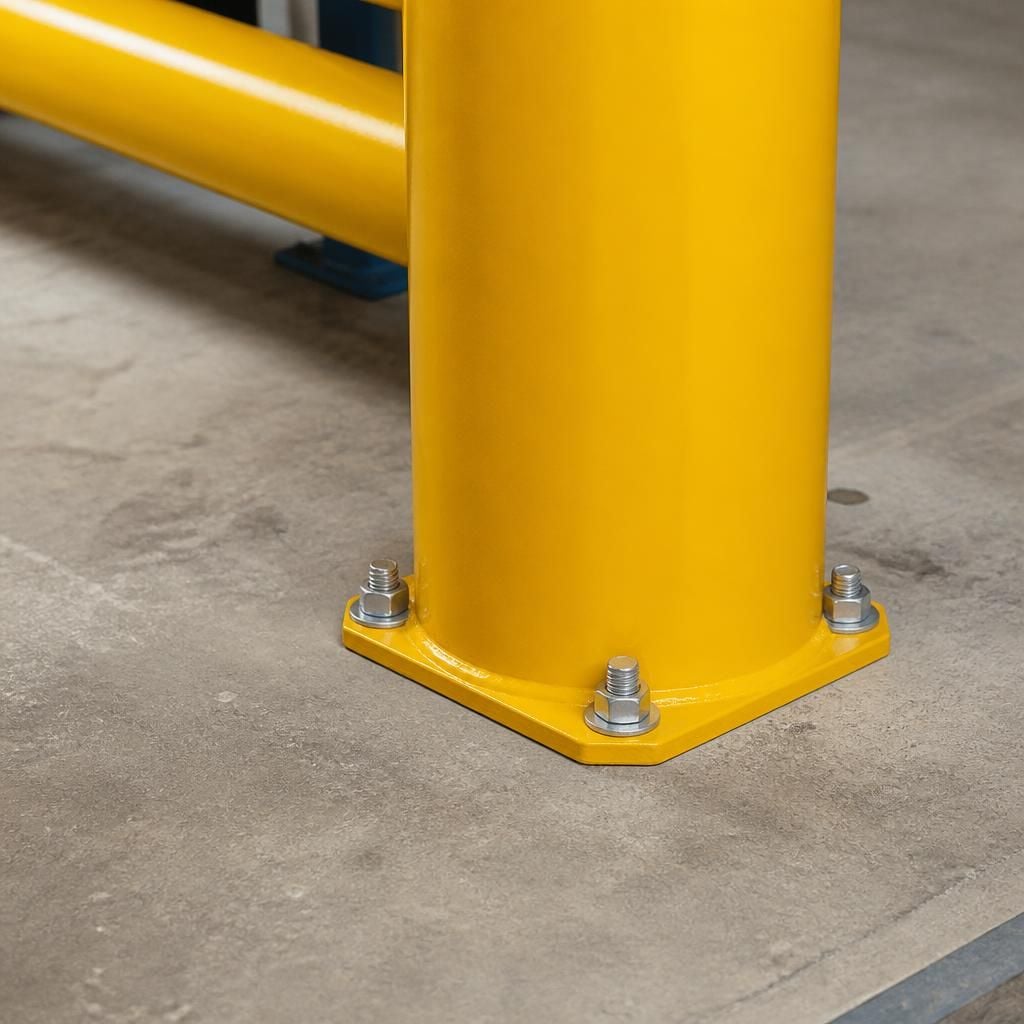
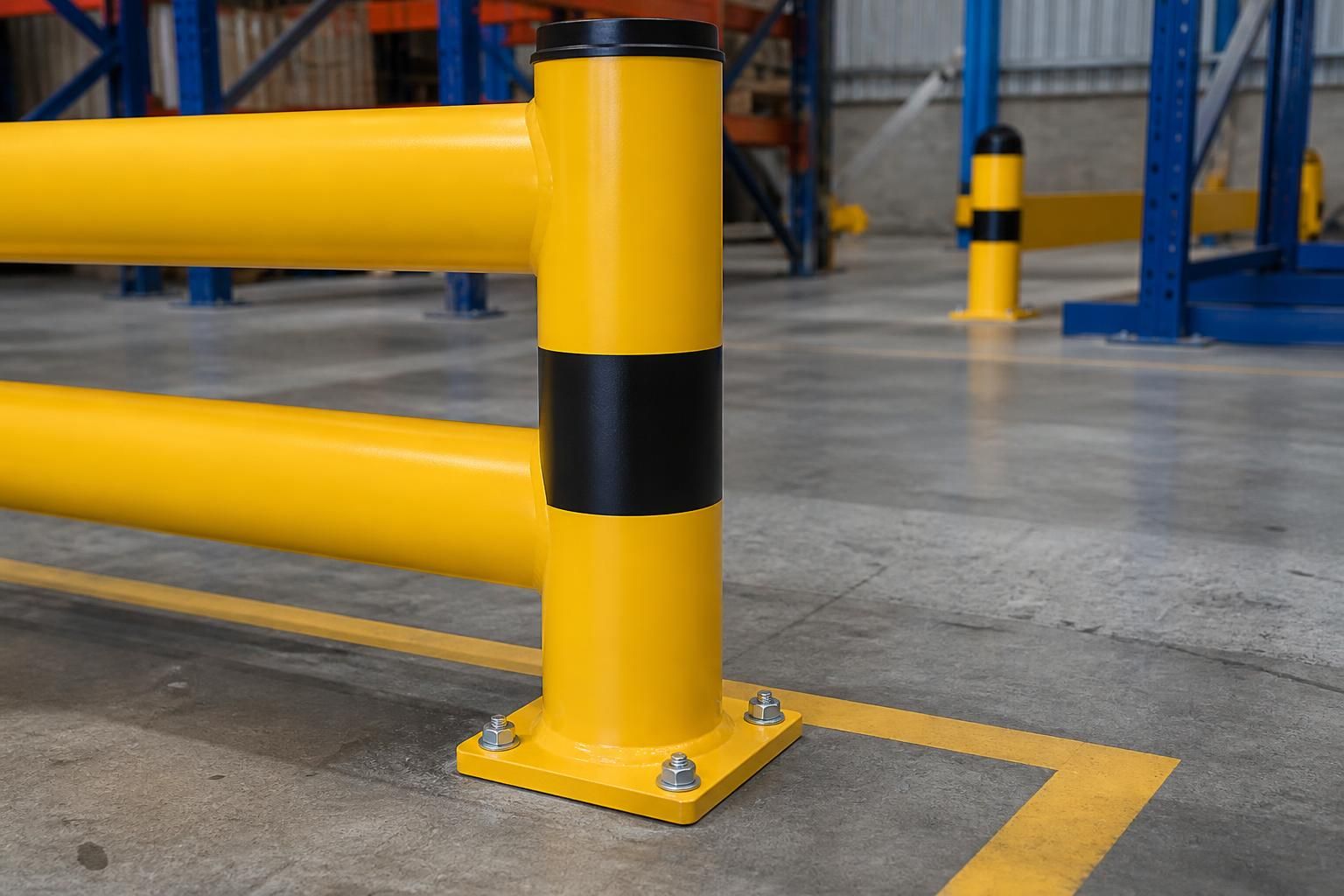
Barrier protection is usually fixed with posts, baseplates and anchors selected for the floor or supporting structure.
We assess the substrate, loads and layout before specifying fixings and installing protection around traffic routes, equipment and working areas.
The fixing method depends on the substrate, the expected impact and the protection layout. A concrete floor may accept mechanical or resin anchors, while weaker structures need further assessment.
Each post transfers impact forces through its baseplate and fixings. The fixing arrangement must therefore suit the slab thickness, concrete condition, edge distances and any reinforcement or services below the surface.
- Mechanical anchors: These expand or lock inside drilled holes. They can provide a firm connection where the concrete has suitable strength and depth.
- Resin anchors: These bond threaded rods inside prepared holes. They can suit situations where expansion pressure could damage the surrounding concrete.
- Through-fixings: Where access permits, bolts may pass through a structural element and use a nut and washer on the opposite side.
- Welded or bolted connections: Protection attached to steelwork needs connection details suited to that structure, rather than standard floor fixings.
We check the floor before drilling. The assessment considers cracks, damaged concrete, slab depth, reinforcement, joints, drainage and concealed services.
Joints and slab edges can affect anchor performance. Posts placed too close to an edge may allow concrete to break away during an impact.
Asphalt, thin slabs and damaged surfaces may not provide enough resistance on their own. A survey can identify the need for a foundation, a different position or another fixing method.
Fixing into a wall, column or steel frame also requires care. Cladding, blockwork, partitions and non-structural panels may not resist vehicle impact.
Before installation, we review the traffic route, barrier height, post positions, access points and clearance around equipment. This helps place protection where it separates people, vehicles and vulnerable assets.
Installation normally involves marking the positions, drilling prepared holes, cleaning them and fitting the specified anchors. Installers then secure the posts and check each connection.
Resin systems require the correct preparation and curing process. Mechanical anchors require the specified hole size, embedment and tightening method.
We record the fixing details within the installation information where the project requires it. Future changes should not involve drilling through unknown services or weakening the original connection.
Where barriers protect pallet racking, machinery or building fabric, the fixing design should reflect the likely impact direction. A single barrier arrangement may not suit every approach route.
A site meeting and survey can establish the substrate and structural constraints. We can then provide a written proposal and working drawings showing the intended barrier positions and fixing approach.
Safety barriers need secure terminations as well as sound floor fixings. Ends, corners and changes in direction can concentrate impact forces at individual posts.
A fixing review should therefore consider the complete barrier run, including openings, returns and connections between sections. This helps prevent gaps that leave people, stock or equipment exposed to approaching traffic.