


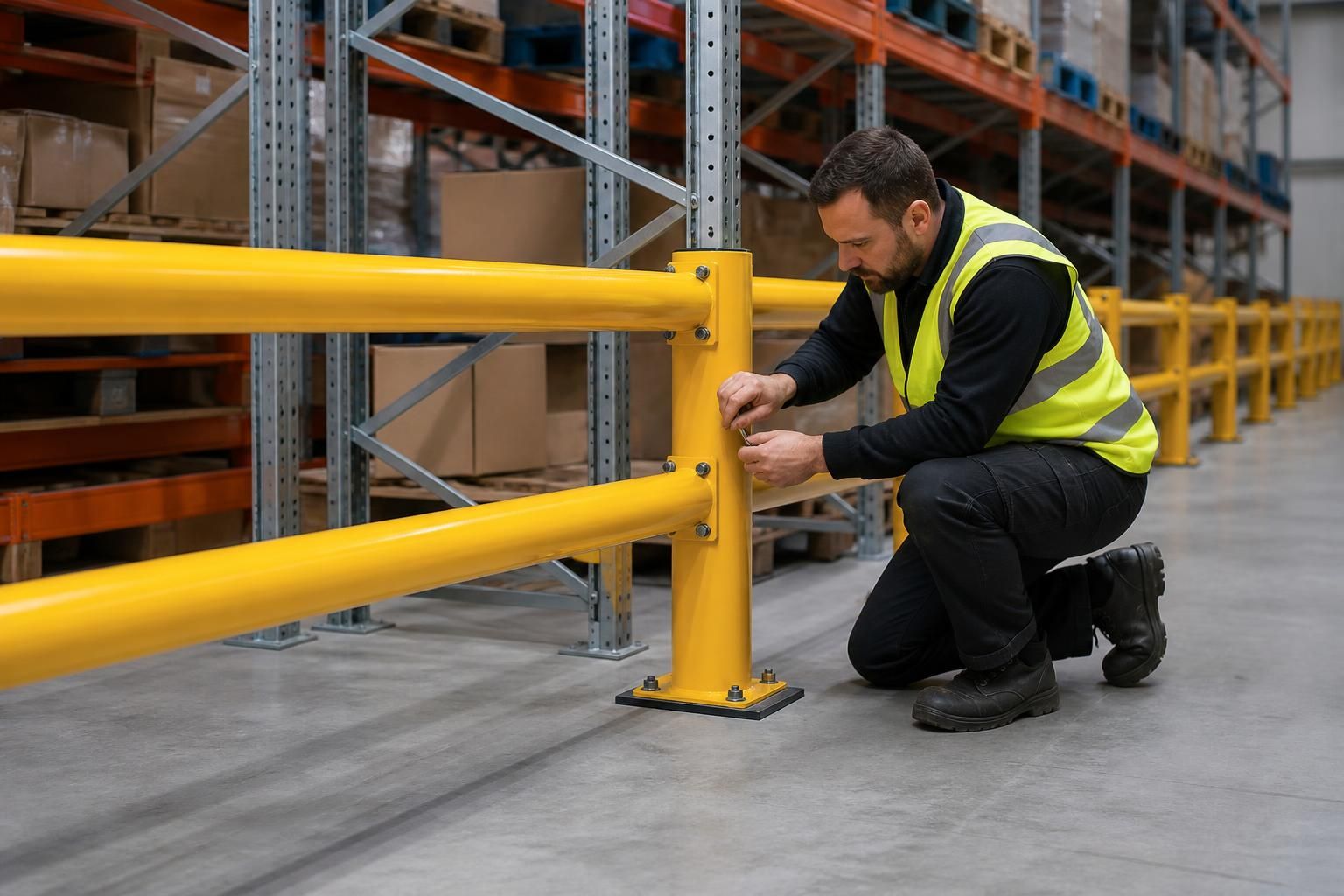
Which barrier protection system allows easiest inspection and maintenance access?
A safety barrier system with visible components and clear access around posts, rails and fixings allows the easiest inspection and maintenance. We assess your site, traffic risks and layout before recommending barrier protection that keeps checks practical without obstructing normal movement.
Bolted modular safety barriers usually allow the easiest inspection and maintenance access. Their separate rails, posts and fixings can be examined individually, while damaged sections may be removed without dismantling an entire run. The final choice still depends on vehicle movements, impact exposure, clearances and the protection required.
Why bolted modular systems are practical
- Accessible fixings make it easier to check looseness, damage and movement.
- Individual rails and posts remain identifiable during inspections.
- Removable sections can provide access to racking, plant, doors or service routes.
- Replacement work can focus on the affected component rather than the complete barrier line.
- Sections can be reviewed when storage layouts or traffic routes change.
Welded or continuous barriers can provide a firm, uninterrupted boundary. However, they may make local repairs more involved if damage affects a connected section. They can also restrict access to equipment or storage behind the barrier unless the layout includes suitable openings.
Bollards provide straightforward access around individual points, such as corners, doorways and vulnerable equipment. They do not create the same continuous separation as rails. Use them where the risk is concentrated rather than across a boundary requiring pedestrian or vehicle segregation.
Removable or gated sections can improve maintenance access where staff need to reach plant, stock or services regularly. They need careful positioning so opened sections do not obstruct vehicle routes or expose people to avoidable traffic risks. We assess those movements before showing access points on working drawings.
Inspection access should cover more than the barrier surface. You should be able to examine the baseplates, anchors, posts, rails and connections. Check that the arrangement does not conceal impact damage, prevent cleaning around posts or block access to adjacent equipment. The inspection route should also allow a competent person to work safely without standing in an active vehicle path.
Maintenance access has similar requirements. Allow room to remove fixings, handle replacement components and reach the protected side where necessary. A barrier placed too close to racking, machinery or a wall may protect the asset but make repairs impractical. Spartan Direct reviews the available clearance alongside stock positions and operating routes.
Choose a system using these comparison points:
- Component access: Can you see and reach every connection without removing unrelated sections?
- Local replacement: Can a damaged rail, post or fixing be addressed separately?
- Route access: Can maintenance staff reach protected areas without crossing unsafe traffic routes?
- Layout flexibility: Can sections be altered if storage, machinery or pedestrian routes move?
- Cleaning space: Is there sufficient room around the base and behind the barrier?
- Record keeping: Can inspection findings identify the exact section needing attention?
We can discuss these points during a no-obligation consultation, supported by a site meeting or survey where appropriate. We then prepare written proposals and working drawings showing the barrier arrangement, access points and relationship with the surrounding layout.
For projects involving workplace segregation, line marking or other safety infrastructure, we can coordinate the relevant proposal, installation and project management where required. This keeps access provisions aligned with the wider warehouse or office layout.
The most maintainable barrier is therefore not simply the strongest-looking option. It is the system that protects the identified area while leaving fixings, components and service routes inspectable. Spartan Direct supplies and installs safety infrastructure for commercial, industrial and office environments across the West Midlands.
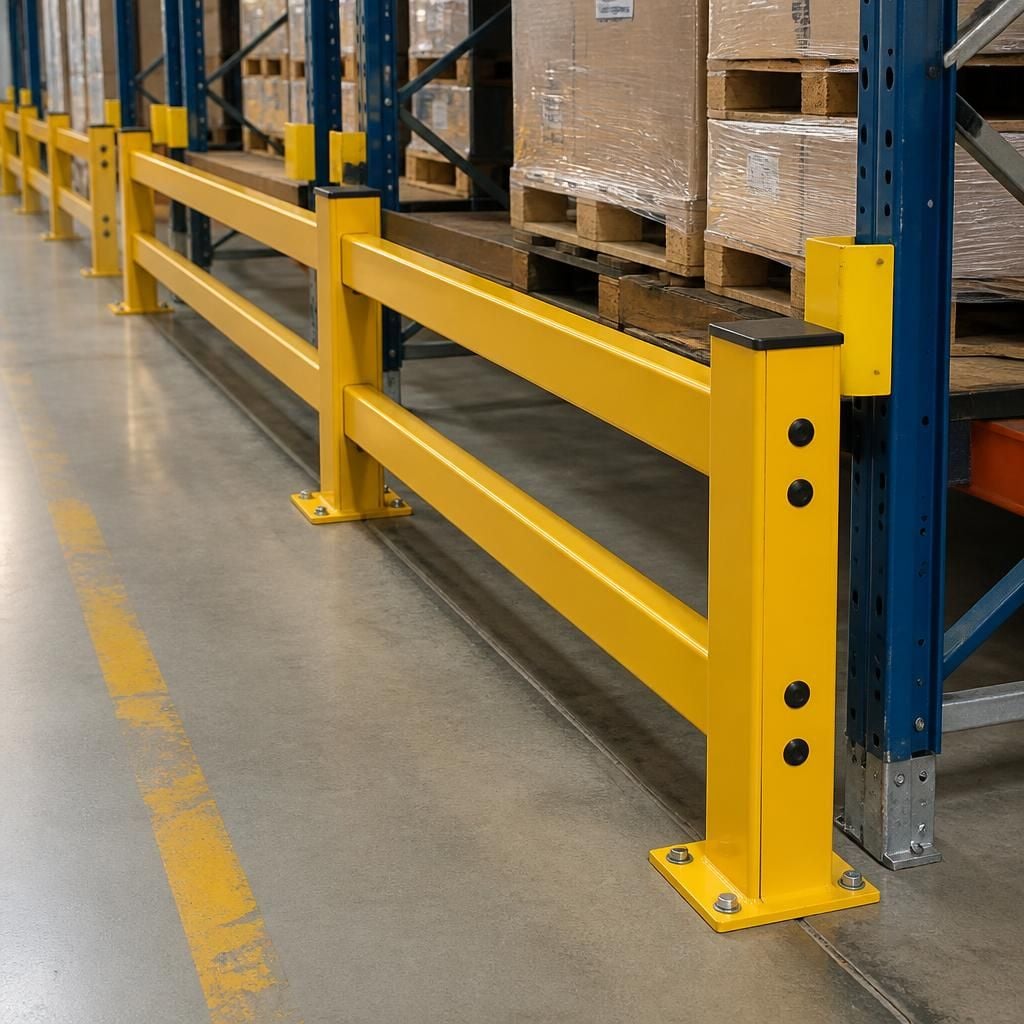
Inspection access should be planned around the task, not just the barrier line. If checks require tools, records or temporary protection, allow a defined working position beside the relevant section. Our working drawings can identify these positions, helping you compare barrier layouts against actual inspection procedures before installation.



