


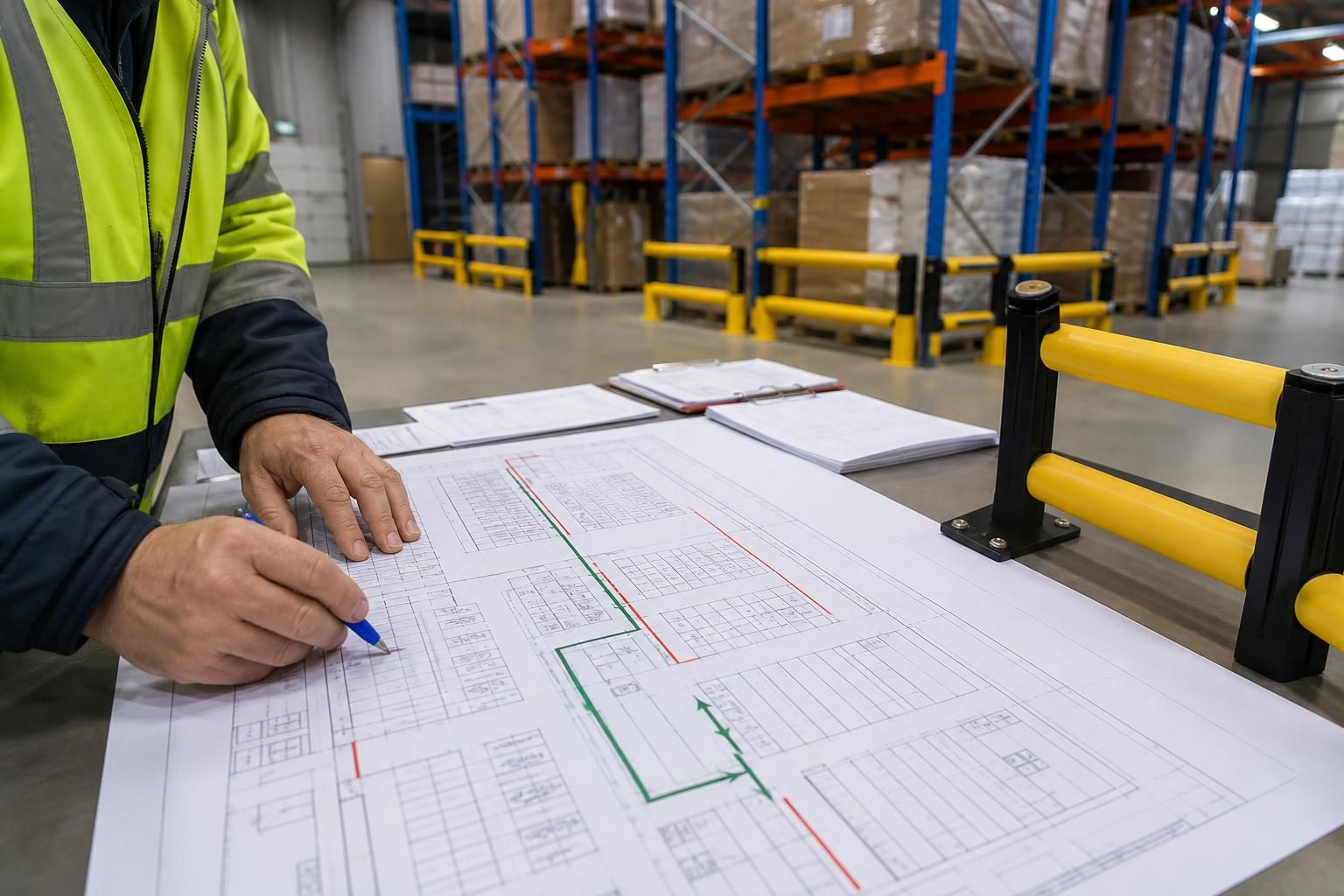
What should be included in a barrier protection systems quotation?
A barrier protection systems quotation should define the surveyed scope, barrier specification, quantities, installation method, site assumptions and itemised costs.
We can support this with a site meeting or survey, written proposal, working drawings, project management where required, and commissioning requirements.
A complete safety barriers quotation should show why each barrier is needed, where it sits, what it includes, and what you must provide before work begins.
For warehouse or office projects, check that the quotation distinguishes protection for people, pallet racking, plant, doors, columns and other vulnerable areas. It should explain the risk addressed at each location, rather than presenting one barrier arrangement for the whole site.
- Purpose and location: The document should identify vehicle routes, pedestrian areas, loading points, storage aisles and restricted zones. A marked plan or drawing should allow you to match each barrier line with its intended function.
- Dimensions and clearances: Check the stated heights, lengths, offsets and aisle clearances. These details should be considered alongside forklift movement, turning space, door operation, emergency access and the position of pallet racking.
- Construction details: The quotation should describe the barrier components, finish, fixing arrangement and any protective end sections. It should also identify the floor or structure receiving the fixings, including any assumption about its condition.
- Impact basis: Ask how the proposed arrangement relates to the vehicles, equipment and traffic movements identified during the site assessment. If the quotation relies on information supplied by you, that assumption should be visible.
- Interfaces with other work: Protection may sit beside pallet racking, partitioning, machinery, doors, line marking or office areas. The quotation should identify interfaces that could affect dimensions, access or installation responsibility.
Clear assumptions are important because a quotation cannot account for concealed conditions or changed information without stating the basis used. Look for specific notes covering:
- floor level, slab condition and fixing suitability;
- access for materials, tools and installation equipment;
- obstructions, services and areas that must remain operational;
- removal or relocation of existing barriers;
- making good, floor repairs, decorations and electrical work;
- any work assigned to you or another contractor.
These notes help separate the quoted work from items that may require further investigation. They also give you a clearer basis for comparing quotations from different suppliers.
The commercial section should identify the price basis and any items excluded from the stated amount. Check whether delivery, installation labour, fixings, access equipment, waste removal and commissioning are included or treated separately. If a design change, additional obstruction or unsuitable floor condition could alter the price, the quotation should explain how that change will be handled.
Spartan Direct quotations are valid for 14 Business Days from issue. If your approval process may exceed that period, record the quotation date and confirm the commercial position before placing an order.
Programme information also needs careful reading. The terms state that agreed dates are estimates only, with all reasonable endeavours used to meet them. Time is not of the essence. A quotation should therefore show proposed sequencing without presenting an installation date as a guaranteed completion deadline.
For an occupied warehouse or office, check how the work is expected to interact with daily operations. The quotation should state any requirements for segregating the work area, keeping routes clear, providing access, or moving stock and equipment. It should not assume that these arrangements are automatically included.
Before accepting, compare the quotation with the final drawings and site information. Confirm that the barrier positions, quantities, clearances, fixing details and exclusions match the agreed requirements. Any difference should be resolved in writing before installation begins.
Where a material defect is notified in accordance with the terms, Spartan Direct may repair or replace the affected materials without charge, or refund the relevant price, at its sole discretion. Keeping the quotation, drawings, order documents and completion information together gives you a clearer record of what was supplied.
For projects involving several workplace protection measures, a written proposal can bring the design information, commercial assumptions and installation responsibilities into one reviewable document. That makes the quotation more useful for budget approval, site coordination and later reference.
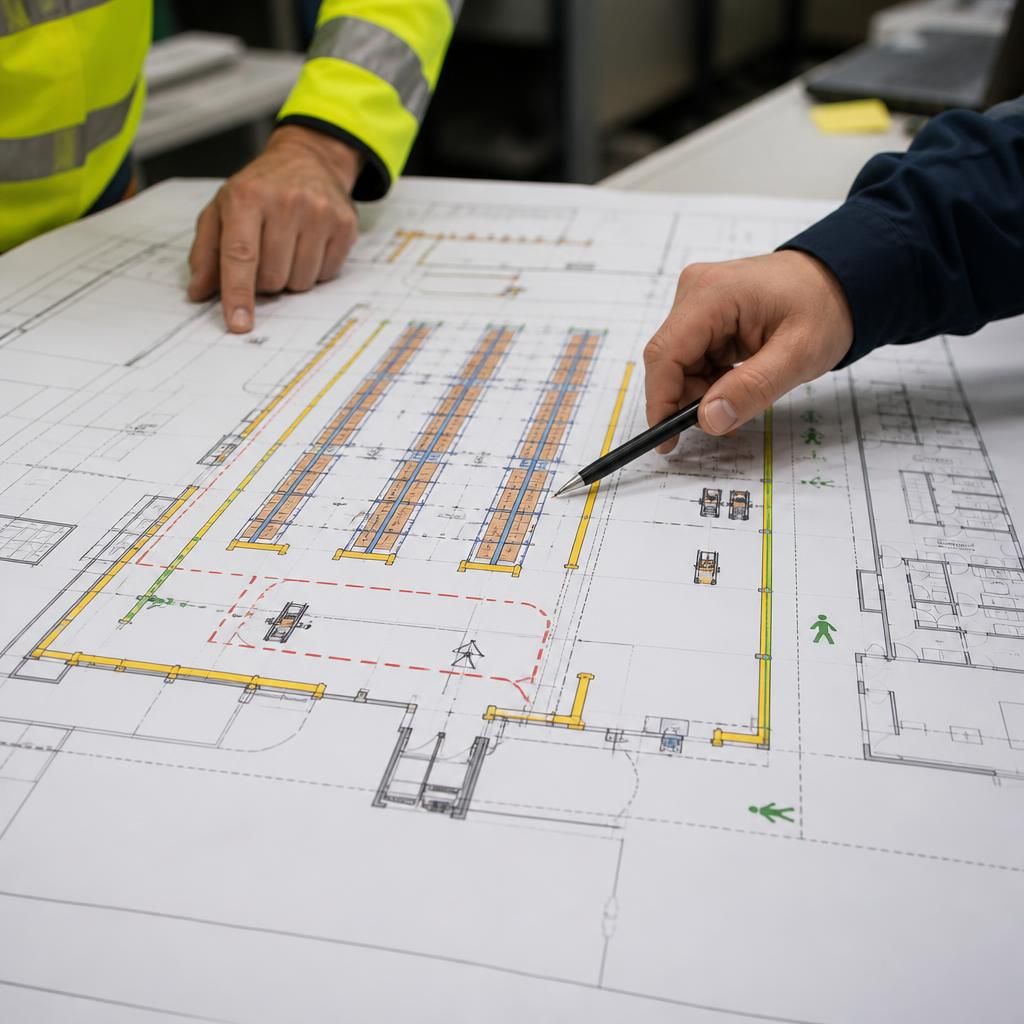
A barrier protection systems quotation should identify the drawing revision used for pricing. Record the issue date, plan reference, scale and areas excluded from the survey. This prevents an earlier layout being approved after routes, racking or equipment change.
Ask for a clear link between drawing callouts and the quotation schedule. Each reference should correspond with the barrier type, length, quantity and fixing detail. If site verification changes the proposal, request the revised drawing and price before approval.



