



What compliance records should accompany barrier protection systems after installation?
After safety barriers installation, keep the working drawings, installation and commissioning records, and inspection reports, with certificates where the supplier provides them. These records should identify the protected areas, inspection findings, defects and corrective actions, so you can demonstrate ongoing control.
After safety barriers installation, your compliance file should show what was specified, where it was installed, how completion was checked, and how defects were managed. Keep the documents together so a later inspection can be traced back to the original installation.
Include a clear installation record. This should identify the site, installation area, completion date, installing party and the barrier protection systems fitted. Record any agreed deviations from the proposal or working drawings, including changes made because of access, clearance, traffic routes or existing structures.
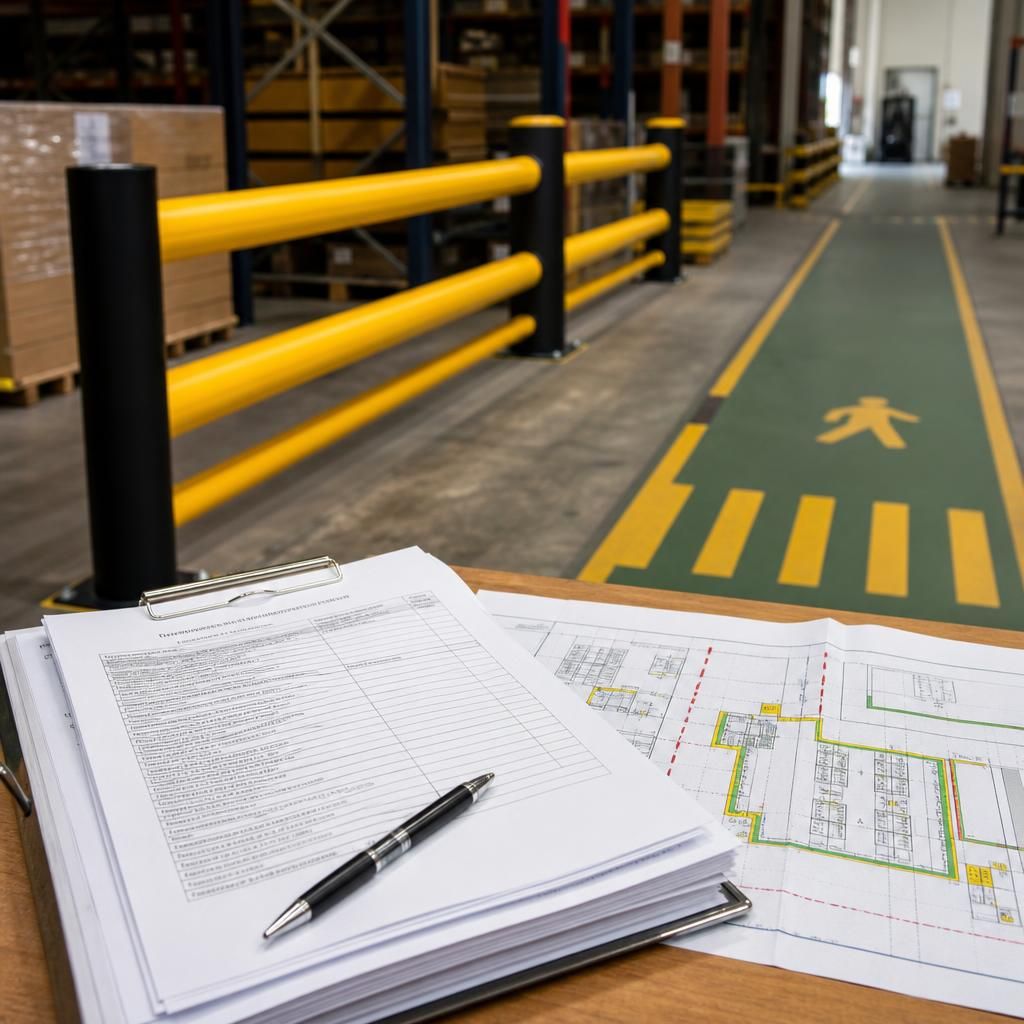
Retain the approved design information. The handover file should contain the relevant layout drawings, barrier positions and protection zones. Marking pedestrian routes, vehicle routes, loading points and restricted areas on the layout helps you compare the installed arrangement with the operating conditions.
Where the layout includes workplace segregation, line marking or barrier protection around storage, keep these elements on the same controlled drawing. A dated revision register can show which drawing reflects the current arrangement.
Record commissioning and handover checks. The commissioning record should confirm that the installed system was reviewed against the agreed scope. It should note incomplete items, access restrictions, damage, remedial work or other matters requiring attention.
Do not treat a signed handover sheet as evidence that every later condition remains acceptable. Forklift movements, stock arrangements, building works and changes to pedestrian routes can alter the risks around safety barriers.
Keep inspection reports with the installation records. Each report should identify the inspection date, inspected areas, findings, damaged or displaced components, and the action assigned to each defect. Include photographs or marked-up layouts where they make the finding easier to locate.
For each corrective action, record its status and completion date. If a defect remains open, note the interim control, responsible person and planned follow-up. This gives you a clearer audit trail than recording only that an inspection took place.
File certificates when they are supplied. A certificate may relate to the materials, installation or another defined part of the work. Check its description, date, scope and issuing party before filing it. Do not assume that a certificate replaces drawings, commissioning records or inspection reports.
Ask the supplier to identify any exclusions. For example, a document may cover the installed barrier protection systems but not surrounding floor conditions, building structures, traffic management or later alterations.
Maintain a controlled record after handover. Store the current drawings, reports and certificates where warehouse, facilities and health and safety personnel can access them. Remove superseded layouts from routine use, while retaining them where your document-control process requires an historical record.
Link each report to the relevant barrier location or asset reference. Consistent references reduce uncertainty when several protection zones use similar components.
Set the inspection approach around actual use. Consider vehicle movements, impact exposure, pedestrian interaction, stock changes, environmental conditions and any previous damage. A written schedule should state what is checked, who records it and how findings are escalated.
After a significant impact, layout change or repair, update the relevant records rather than relying on the original handover file. The revised drawing and inspection report should show what changed and whether further action remains.
Our consultation can include a site meeting and survey, followed by written proposals and working drawings. Where required, we can also coordinate project management through installation and final commissioning. That process gives you an agreed information base for the records you retain.
Before accepting the handover pack, check that it covers every protected area, records outstanding actions and matches the barrier protection systems actually installed. Ask for missing documents or clarifications while the installation details remain clear.
Keep the barrier protection system’s product information with the handover records. Retain stated uses, impact limitations, fixing details and any maintenance instructions supplied for the installed components.
These details help you judge proposed changes against the original specification. If a barrier is moved, replaced or exposed to different traffic conditions, review the information before approving the alteration.



